US News
New York City pools offer free heat relief and community this summer
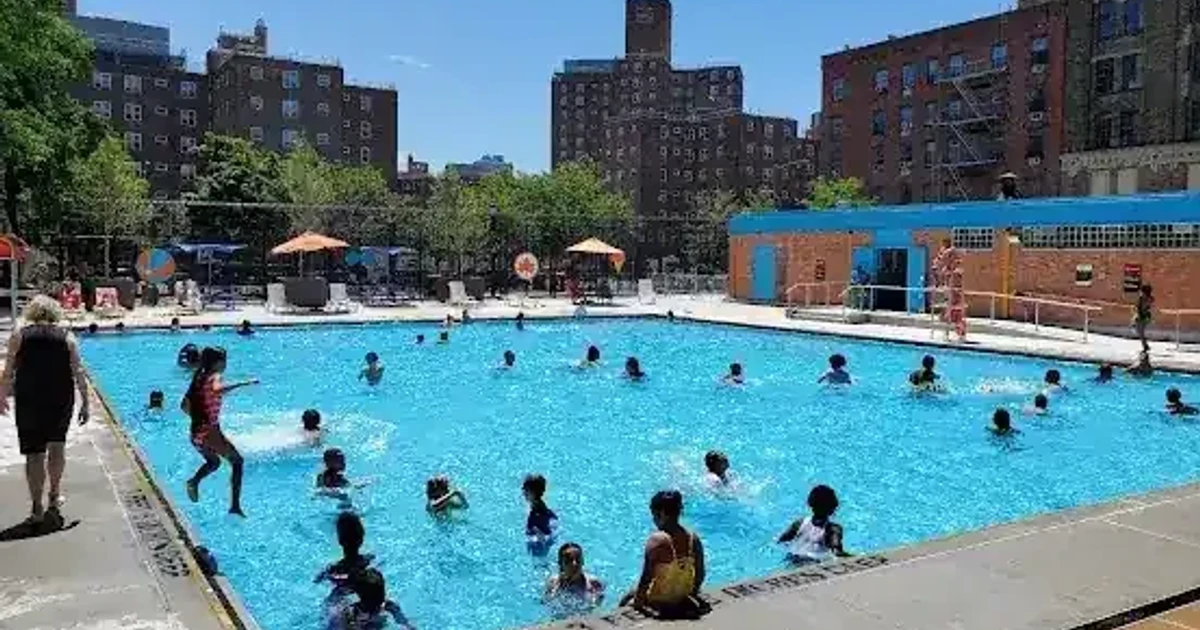
Dry Dock Pool in Lower Manhattan is one of the city’s clearest examples of how a public pool works as infrastructure. It is free, open daily from 11:00 a.m. to 7:00 p.m., and built with both an intermediate pool and a wading pool, giving children and adults different ways to use the same site. During the July 1 through July 4 heat emergency, NYC Parks extended hours at Olympic and intermediate-sized pools until 8:30 p.m., a reminder that these facilities are not just seasonal amenities but part of the city’s response to extreme heat.
A neighborhood pool with a longer history
The land around Dry Dock Playground was once known as the Dry Dock District, a mid-19th-century industrial area named for the iron works and ship fitters that employed more than 2,000 local workers. That history matters because it shows how a place can shift from making and moving things for an industrial city to serving the daily life of residents in a dense one. The pool itself sits inside that continuity, a free civic space in a neighborhood where open, low-cost places to gather are scarce and valuable.
Dry Dock’s physical layout reflects that public mission. NYC Parks lists the main pool at 75 feet by 60 feet and 3 feet deep, with a 30-by-20-foot wading pool that is 1.5 feet deep. The design makes the site usable across age groups and swimming levels, which is exactly the sort of detail that turns a pool into neighborhood infrastructure rather than a splash pad for occasional use.
A citywide system built for heat, recreation and routine
Dry Dock is one site in a much larger network. NYC Parks operates 53 outdoor pools, including 17 mini-pools, along with 12 indoor pools at recreation centers. Outdoor pools are free and run from late June, after city schools let out for summer, through the Sunday after Labor Day. The city’s public pool season is therefore not an add-on to summer, but one of the few universal services that opens right when heat, school break and crowded apartments make it most necessary.
The scale is substantial. City officials say more than 1 million people visited city pools last summer, and on especially hot days some pools reach capacity and force visitors to wait in line. That combination of free access and heavy demand explains why the pools function as pressure valves for the city’s hottest weeks. They absorb crowds, offer a place to cool down and create one of the few free indoor-or-outdoor public experiences that can serve a broad cross-section of New Yorkers at once.
Who depends on these pools most
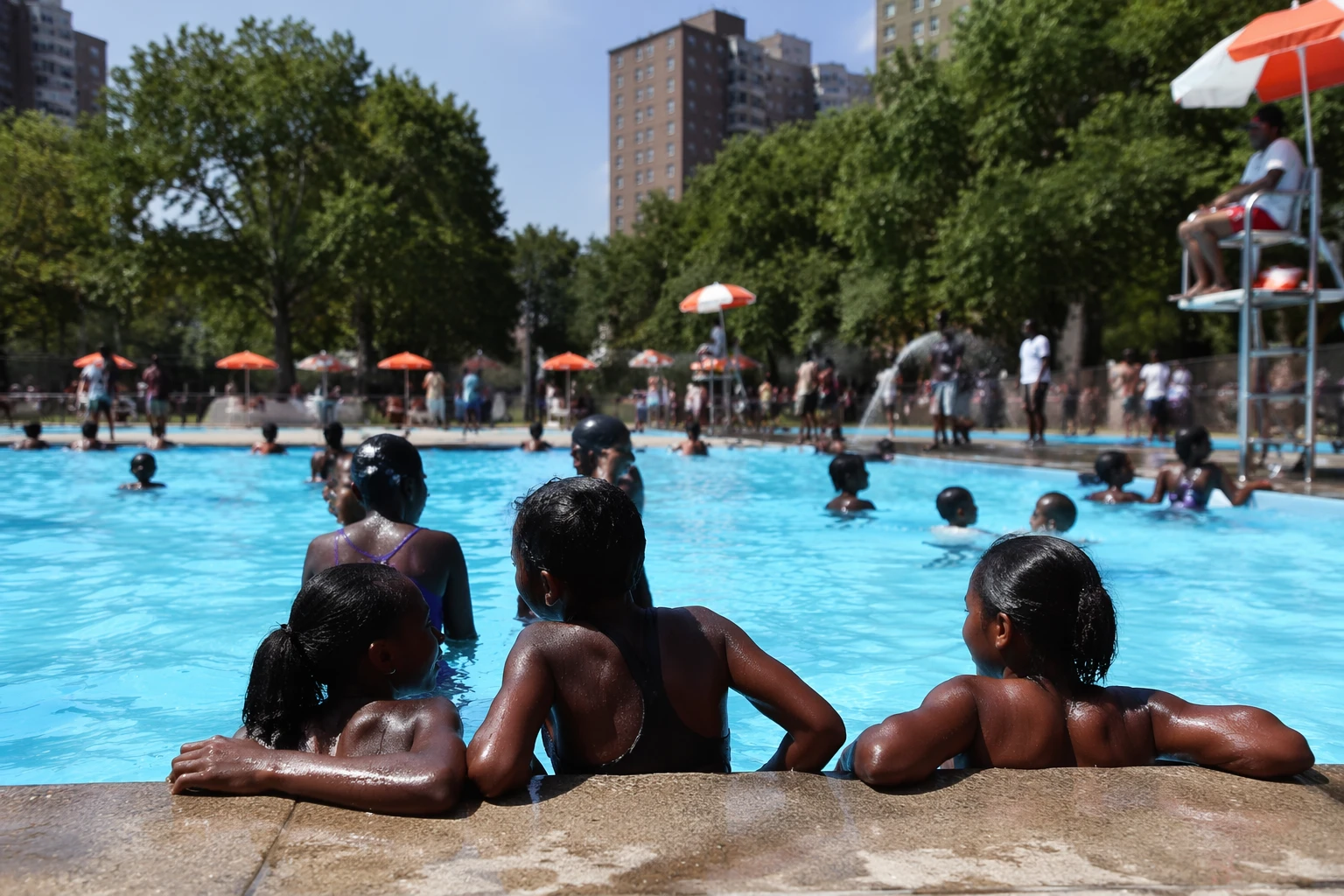
The City Council Data Team has described public pools as a way to provide vacations and recreation for people who cannot leave New York City during the summer months. That framing captures their civic role in a high-cost city, where a pool pass can stand in for a trip many households cannot afford. The same pools also support community bonds, fitness for youth and families, and public safety, while helping residents stay cool during summer heat.
That mix of uses is why pools matter most to the people who have the least flexibility. Families looking for an afternoon that does not cost much, older adults who need a place to move safely, and residents without access to air conditioning all depend on spaces like Dry Dock. The benefit is not abstract: the city is offering a supervised, staffed and free environment in which people can spend hours instead of money.
Programs expanding access this summer
NYC Parks has widened the schedule of what happens at the pools, not just when they open. Free swim lessons will be offered at 18 outdoor pools, with 16,000 spots available, giving the season a public-health function as well as a recreation role. Senior Splash is also returning to five outdoor pools, one in each borough, and the adult lap swim program has grown from five pools to 10, a sign that the city is trying to serve both casual swimmers and people who want regular exercise.
Those additions matter because they turn a pool day into a repeatable habit. Lessons build confidence, lap swim creates a structured routine, and senior programming makes the pools useful across generations. In a city where shared space is expensive to build and even harder to maintain, that kind of programming is one of the few ways to keep a free public place busy, useful and politically visible.
A 90-year public investment
This summer also marks the 90th anniversary of New York City’s WPA-era pools, a milestone city officials are using to underscore how long the city has treated swimming as public infrastructure. That history links the present-day heat emergency to an older idea of government: build places that ordinary people can use without paying admission, and make them durable enough to matter across decades. In New York, the pools still do that work every hot season, one line, one lesson and one crowded afternoon at a time.
Sources
- [1]nytimes.com
- [2]nycgovparks.org
- [3]nyc.gov
- [4]council.nyc.gov
- [5]cbsnews.com
- [6]ny1.com
- [7]6sqft.com