Business
New York Times misses digital subscriber estimates, shares slide lower

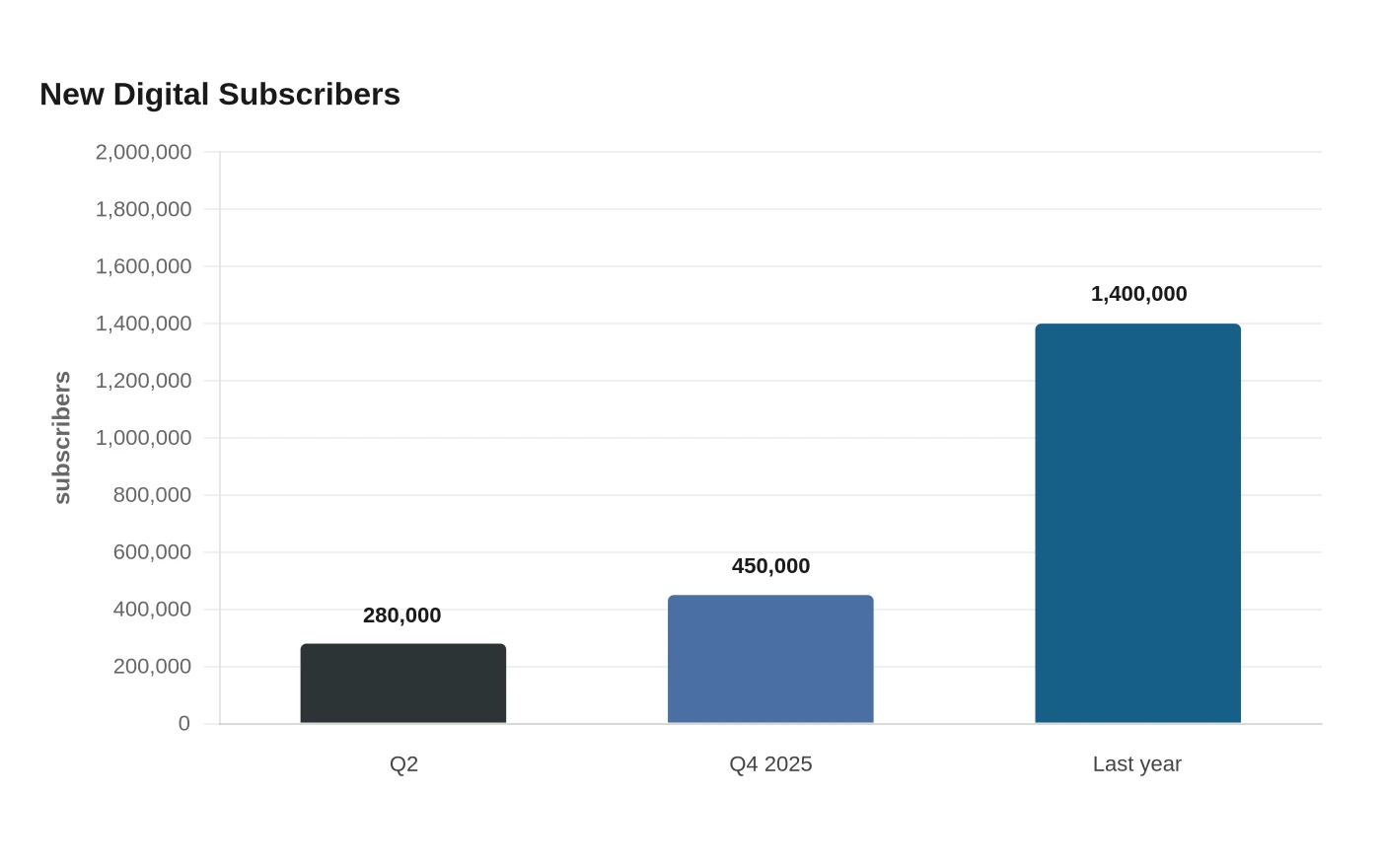
The New York Times added 280,000 net digital-only subscribers in the second quarter, falling short of the 295,300 that analysts had expected and sending the company’s shares down about 6% before the bell. Some premarket trading showed the stock lower by more than 8%, a sharp reaction to a number that suggested the company’s subscriber machine is not accelerating as quickly as investors had hoped.
The miss landed at a sensitive moment for one of the best-known subscription publishers in the country. The New York Times Company has spent years pushing a bundle built around news, games, cooking and other lifestyle products, a mix designed to deepen engagement and lessen reliance on advertising. That strategy helped fuel growth last year, but the latest quarter raised a harder question for the market: whether blockbuster news cycles still convert into durable paid digital growth once the most loyal readers have already signed up.

The company’s 2025 annual report said deeply reported journalism and lifestyle products attracted 1.4 million new digital subscribers last year, bringing total subscribers to 12.8 million. In its fourth-quarter 2025 earnings release, the company said it added about 450,000 net digital-only subscribers, lifting total subscribers to 12.78 million. Against that backdrop, the second-quarter gain of 280,000 looks more like a slowdown than a stumble, but for investors it still points to a maturing growth curve.

That shift matters because premium media valuations now depend less on raw audience size than on sustained subscriber momentum. The New York Times remains one of the strongest brands in digital news, yet weaker additions in a period packed with major news suggest that attention alone does not guarantee conversion. Readers may sample coverage during breaking-news surges, but many do not necessarily commit to recurring payments at the pace Wall Street wants.

The pressure is not unique to one company. Publishers are operating in a crowded market where big tech firms and AI platforms affect search and referral traffic, while trust in news continues to weaken. In that environment, even a company with a broad product bundle and a large installed base can face slower growth if discretionary spending tightens and new customers become harder to win. The quarter showed that the subscription model still works, but its limits are becoming harder for investors to ignore.
Sources
- [1]reuters.com
- [2]m.investing.com
- [3]nytimes.com
- [4]nytco-assets.nytimes.com
- [5]straitstimes.com
- [6]aol.com