US News
New York Times review says inspection firm repeatedly broke city rules
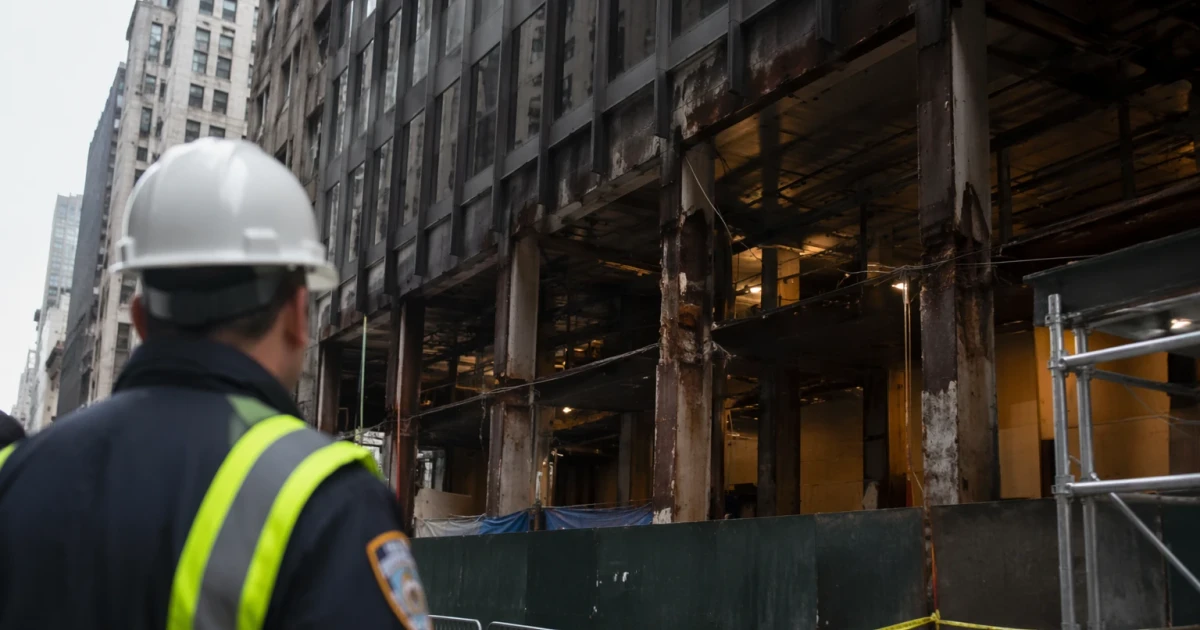
A Midtown Manhattan high-rise was evacuated after buckling columns raised fears of structural instability, even though the building had already accumulated complaints and violations. City records reviewed by The New York Times show that Domani Inspection Services, the firm tied to the project, had repeatedly been accused of breaking New York City rules.
The building was part of a major office-to-residential conversion, one of several efforts in Midtown Manhattan to turn empty office towers into housing to help ease the city’s shortage. That goal gave the project added urgency, but the safety failure pushed attention back to the chain of oversight behind it: a private inspection firm, the contractors that hired it, and the city agency meant to catch problems before they became emergencies.
Court records show Domani was retained as a special inspection agency on a New York City project involving 63rd & 3rd NYC, LLC. The papers say Domani was contracted to inspect exterior masonry work and associated reinforcement, and appellate motions filed in 2026 show the firm remained a party to related litigation. That places Domani inside the safety process for work that depended on strict compliance with city rules.
The Department of Buildings says its Buildings Information System lets residents and reporters search a property’s complaints, violations, applications and inspections, and see whether problems are active or resolved. The department says it oversees roughly one million buildings and properties across New York City, and that violations must be corrected and proof of the correction provided before they can be removed from a property record.
That system is under strain. A 2025 audit from the Office of the New York City Comptroller found that the Department of Buildings relies almost exclusively on 311 complaints for enforcement. The same audit found that some communities were disproportionately affected by penalties tied to DOB enforcement, underscoring how unevenly the city’s inspection and penalty system can land.
The Midtown case now sits at the intersection of those failures. A private firm with prior citations was still entrusted with safety-critical work, city records had already stored complaints and violations on the property, and the regulator overseeing the city’s building stock had a system that depends heavily on public complaints to trigger action. For residents in similar towers, the question is no longer only whether a single building was inspected, but whether the city’s oversight structure can consistently catch danger before columns buckle.
Sources
- [1]nytimes.com
- [2]abc7ny.com
- [3]a810-bisweb.nyc.gov
- [4]nyc.gov
- [5]nycourts.gov
- [6]comptroller.nyc.gov