Sports
Newell’s Old Boys academy, where Messi and Rodríguez were forged
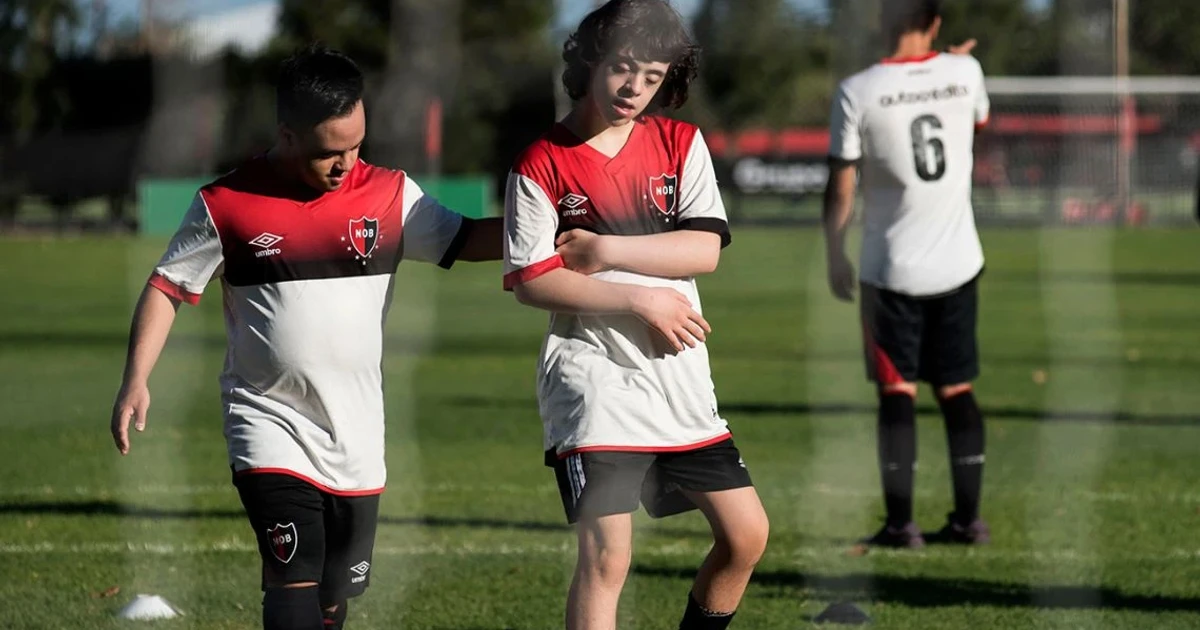
Newell’s Old Boys is not just a famous club in Rosario. It is one of Argentina’s most durable talent factories, a place where the jump from neighborhood pitches to the biggest stages has been made by players like Maxi Rodríguez and Lionel Messi. Founded on 3 November 1903, later inaugurated in 1911, and credited by its own history with 28 official championships, the club carries the institutional weight that makes its academy matter far beyond nostalgia.
A club built to produce more than memories
FIFA has described Newell’s as a club steeped in talent and tradition, and that reputation sits on a simple but powerful pipeline: local boys enter a youth system that is already part of the country’s football identity, then move into a first team that still means something in Argentina and abroad. The academy is not an isolated machine. It is embedded in Rosario, a city where football is woven into daily life and where the line between street play and organized development has always been unusually thin.
That matters because Newell’s is not merely exporting players. It is helping define how Argentine football reproduces itself. The club’s success has been built on the repeated conversion of local potential into elite performance, with youth formation acting as the bridge between the city’s informal football culture and the professional game.
Rosario’s football culture is part of the system
In Rosario, the idea that boys grow up dreaming of football and learning it in potreros, on streets, and through neighborhood clubs remains central to local identity. FIFA highlighted that environment in a recent interview with Rodríguez, and the point goes beyond romantic imagery. A city that lives football through schoolyards and rough pitches creates a constant supply of players who are technically inventive, competitive, and accustomed to pressure long before they reach a formal academy.
Newell’s sits at the center of that ecosystem. Its academy benefits from a city where scouting is not limited to polished tournaments or elite academies, but extends to the rhythms of neighborhood football itself. That broad base gives the club access to a deeper talent pool, while the prestige of Newell’s helps keep young players inside a pathway that can lead to the first team and, eventually, Europe.
Maxi Rodríguez as the academy’s blueprint
Maxi Rodríguez is one of the clearest examples of how the system works. Born in Rosario on 2 January 1981, he came through Newell’s youth ranks and debuted in the first division for the club on 14 November 1999. From there, his career followed the classic Argentine export route, with spells at Espanyol, Atlético de Madrid, and Liverpool before several returns to Newell’s, where he finished his professional career.
His record with Argentina gives that pathway added weight. Rodríguez played 57 matches and scored 16 goals for the national team, appeared in three World Cups, reached the 2014 final in Brazil, and won the 2001 FIFA World Youth Championship with the under-20 side. Those numbers show what a successful local development system can produce: not just a club player, but a national-team figure capable of influencing the biggest tournaments in the sport.
Rodríguez’s trajectory also shows why Newell’s academy is so respected inside Argentina. The club did not merely polish a talent already formed elsewhere. It shaped a player who was good enough to move through Spain and England, yet still retained enough connection to Rosario to return home. That cycle, of formation, export, and return, is one of the clearest signs of a sustainable football pipeline.
Messi and the symbolic pull of Newell’s
Lionel Messi gives the academy its global halo. He, too, came through Newell’s, and he has spoken publicly about playing there as a childhood dream and a lingering unfinished ambition. That detail matters because it explains why the club’s academy carries such force in Argentina’s football imagination: it is not only a place where players are made, but a place they continue to imagine as the origin point of their career.
Messi and Rodríguez came from the same football culture, even if their paths diverged almost immediately afterward. One became the defining player of his generation; the other became a national-team hero and a symbol of resilience for Argentine footballers who leave and return. Their shared roots in Newell’s show how a single academy can produce different types of elite careers without losing its identity.
What Newell’s reveals about Argentina’s talent machine
Newell’s Old Boys shows that Argentina’s football advantage is not accidental. It is built on a combination of urban football culture, a credible youth structure, and clubs with enough history to make young players believe the pathway is real. The 28 official championships, the 1903 founding date, the 1911 inauguration, and the list of graduates are not separate facts. Together, they explain why Newell’s remains a reference point for development in a country that keeps producing top-level players.
The broader lesson is that Argentina’s talent factory depends on institutions that can absorb neighborhood football and convert it into professional quality. Newell’s has done that for more than a century, and the careers of Rodríguez and Messi show how powerful that model can be when scouting, coaching, and local culture all point in the same direction.
Sources
- [1]telemundo.com
- [2]fifa.com
- [3]newellsoldboys.com.ar
- [4]en.wikipedia.org
- [5]conmebol.com
- [6]inside.fifa.com