Entertainment
Newsom Issues Symbolic Ban on Kid Rock in California
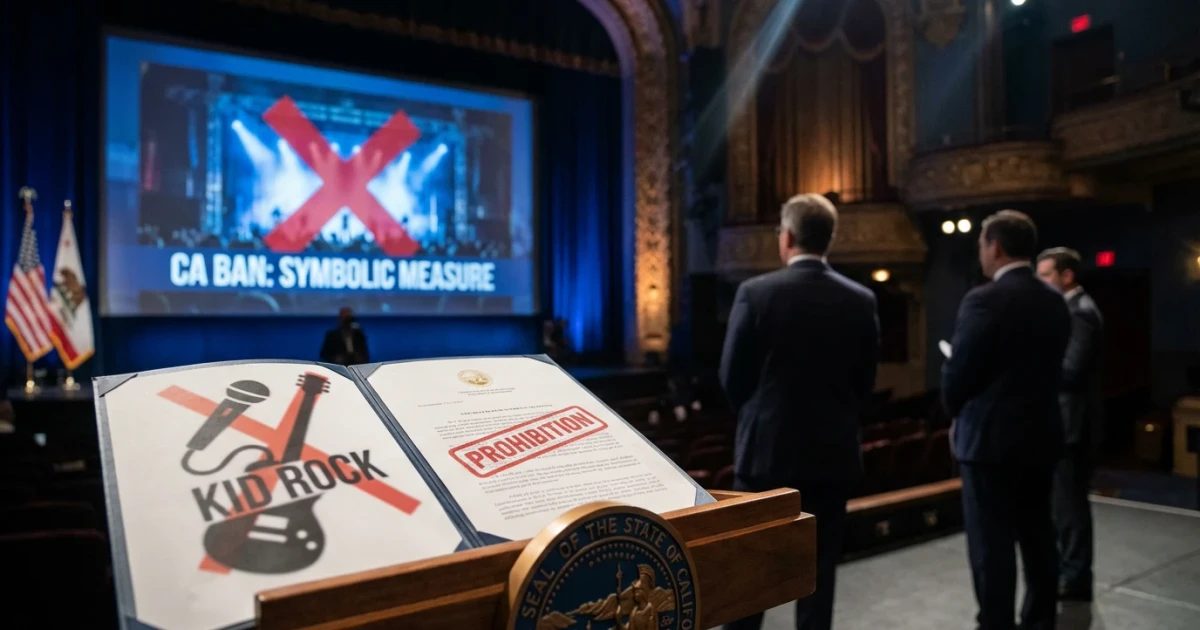
California Governor Gavin Newsom has enacted a symbolic 'ban' on musician Kid Rock from entering the state, according to reporting from The Daily Beast. The move, which has not been codified into law, has captured national attention and reignited conversations around political satire, celebrity influence, and the boundaries of executive authority.
Background and Context
The Daily Beast reported that Newsom’s announcement comes amid heightened tensions between California’s progressive leadership and outspoken conservative celebrities like Kid Rock. While the official details of the 'ban' remain largely symbolic, the gesture was widely interpreted as a statement against Kid Rock’s public persona and recent political activities.
- Kid Rock has been a vocal supporter of right-wing political causes and has frequently courted controversy with his statements and performances.
- Governor Newsom has previously used public announcements and symbolic actions to signal California’s values in the national political arena.
Political and Cultural Implications
While the ban does not carry legal weight and there is no formal enforcement mechanism, the act underscores the ongoing cultural divide between California’s leadership and certain segments of the entertainment industry. The Daily Beast characterized Newsom’s move as a form of political theater, intended to highlight California’s opposition to what it views as divisive public figures.
Legal experts note that any attempt to bar an individual from a state for political reasons would face immediate constitutional challenges, particularly regarding free speech protections. Instead, Newsom’s symbolic action appears designed to rally his political base and send a message about the types of public conduct the state wishes to discourage.
Reactions and Public Debate
Reactions to Newsom’s announcement have been polarized:
- Supporters argue that it sends a clear signal about California’s commitment to tolerance and inclusivity.
- Critics, including many on social media, claim that even a symbolic ban sets a troubling precedent for free expression and injects unnecessary partisanship into cultural discourse.
As of publication, Kid Rock has not released a public statement responding to the ban. Analysts note that such symbolic gestures often generate significant media coverage and can deepen political rifts, but rarely result in practical policy changes.
Looking Ahead
The episode reflects a broader trend of using symbolic actions to draw attention to political and cultural disagreements. Observers suggest that as election season approaches, similar gestures—aimed at both supporters and detractors—are likely to become more common across the political spectrum.
For those interested in exploring the legal and cultural issues at play, resources such as the Digital Markets Act and ongoing debates over content moderation provide deeper context for understanding the boundaries of political speech and state authority.
While Newsom’s symbolic ban on Kid Rock is unlikely to have real-world consequences, it exemplifies the ways in which entertainment and politics continue to intersect—and how public figures use high-profile gestures to shape the national conversation.