Health
NHS trial of new tests could speed endometriosis diagnosis warnings

NICE has recommended two non-invasive tests, EndoSure and Endotest, for NHS use in primary care during a three-year evidence-generation period, in a bid to shorten the long waits many endometriosis patients still face before they are diagnosed. The draft early use healthtech guidance is aimed at GP settings, where diagnosis is often slowed by limited test accuracy and differences in clinical expertise.
The central question is whether the tests can work well enough, and be used widely enough, to change that pattern. NICE’s consultation material says early economic modelling suggests EndoSure and Endotest could be cost-effective over the long term, but the evidence remains uncertain because there is still limited information on their clinical benefits and on quality of life before and after diagnosis. That makes the next three years of evidence collection crucial to whether the tests can move beyond promise.
Endometriosis affects around one in 10 women of reproductive age in the UK, and Endometriosis UK says about 1.5 million women and people assigned female at birth are living with the condition. The group’s latest figures put the average time from a first GP visit to diagnosis at 9 years and 4 months, up from 8 years in 2020. It says the delay is even longer for some communities, with people from ethnically diverse backgrounds waiting 11 years on average.

The scale of the problem reaches beyond individual patients. Endometriosis UK estimates the condition costs the UK economy £8.2bn a year through treatment, lost work and healthcare costs. The Royal College of Obstetricians and Gynaecologists has said sustained investment is urgently needed in research and in faster diagnostic tools such as ultrasound and biomarkers, alongside more effective treatments.
That warning comes as the wider gynaecology backlog remains deep. The college says nearly three quarters of a million women across the UK were still waiting for essential gynaecology care in 2026, and it has warned that delays can worsen pain, strain relationships, disrupt work and make day-to-day life harder.
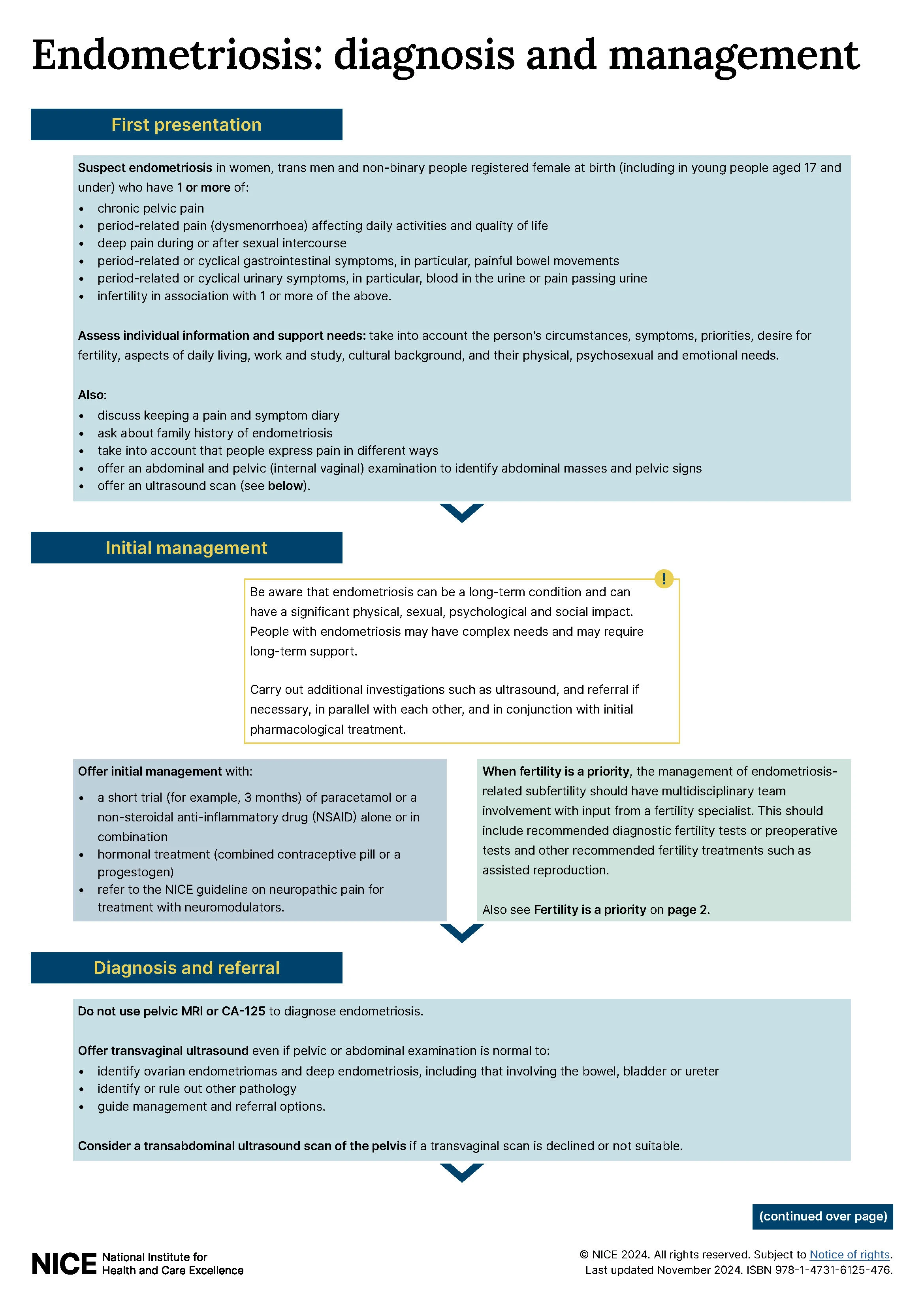
NICE’s early-use pathway is designed to give promising technologies earlier access while more data is gathered. For patients who have spent years cycling through appointments, the tests could offer a faster route to answers, but their real value will depend on whether GP practice use can deliver reliable results and cut through the delays that have defined endometriosis care for too long.
Sources
- [1]bbc.co.uk
- [2]nice.org.uk
- [3]endometriosis-uk.org
- [4]rcog.org.uk