Health
NIH study finds immune attack on nervous system may drive Long COVID

Some long COVID symptoms may trace to a measurable immune attack on the nervous system, offering a more concrete explanation for a condition that can leave patients with brain fog, fatigue and trouble concentrating long after the original infection has passed. The finding does not explain every case, but it gives researchers a specific biological pathway to pursue in patients whose symptoms have lingered for months.
A team led by Yale and Mount Sinai investigators examined blood from 147 people and found that antibodies from people with long COVID, as well as some who had recovered from COVID, were more likely than antibodies from healthy controls to react with human nervous-system tissue. Yale said the work was co-led by Akiko Iwasaki, a Sterling Professor of Immunobiology at Yale School of Medicine, and David Putrino, professor of rehabilitation and human performance and the Nash Family Director of the Cohen Center for Recovery From Complex Chronic Illness. The study was published in Cell on May 28, 2026, and the National Institutes of Health highlighted the findings on June 17, 2026.

The researchers then tied certain autoantibodies to specific symptoms. Antibodies targeting the locus coeruleus were linked with loss of taste and smell, nausea and joint pain, adding detail to a syndrome that Yale says has produced more than 200 reported symptoms. That symptom map matters because the Centers for Disease Control and Prevention defines long COVID as a chronic condition that appears after SARS-CoV-2 infection and lasts at least three months, with symptoms that can include dizziness, fatigue, brain fog and muscle or joint pain.
To test whether the antibodies could do more than correlate with symptoms, the scientists infused purified antibodies from 87 long COVID participants into healthy mice. The animals developed changes that mirrored patient complaints: mice exposed to antibodies from people with chronic pain became more pain-sensitive, mice linked to dizziness showed balance problems, and some animals fatigued more quickly on a treadmill. A separate Cell Reports Medicine paper also reported that IgG from long COVID patients triggered pain-like behavior in mice, with some activity still detectable two years later.
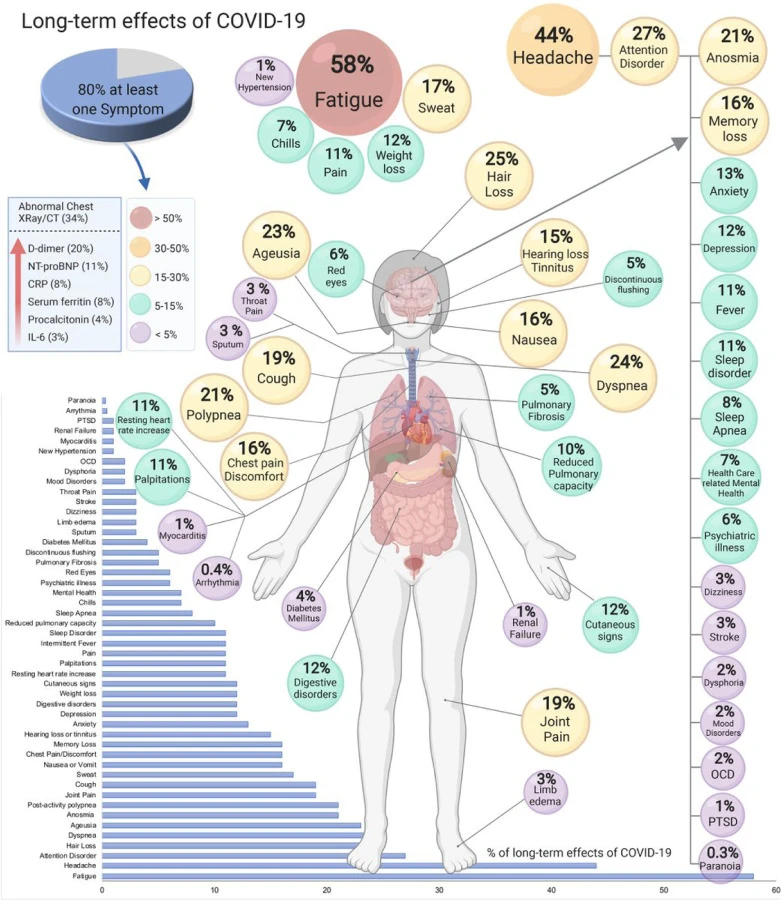
The findings strengthen the case that long COVID is biologically heterogeneous rather than one single disorder. Yale’s broader Mount Sinai-Yale cohort included more than 215 long COVID patients, and the lab has said the condition may involve persistent viral remnants, autoimmunity, dormant virus reactivation, dysbiosis and tissue damage. That matters for treatment: Mount Sinai said therapies already used in autoimmune disease, including intravenous immunoglobulin and FcRn inhibitors, could be candidates for some patients, though the researchers said more study is needed before the results change routine care. The work builds on a 2023 NIH report that 12 patients with persistent neurological symptoms after COVID showed immune-cell differences and autonomic dysfunction, but the new antibody-transfer experiments move the field closer to a clearer mechanism.
Sources
- [1]nih.gov
- [2]news.yale.edu
- [3]mountsinai.org
- [4]cdc.gov
- [5]medicine.yale.edu
- [6]ninds.nih.gov
- [7]cell.com