Health
North Carolina Sees Uptick in Legionnaires’ Disease Cases
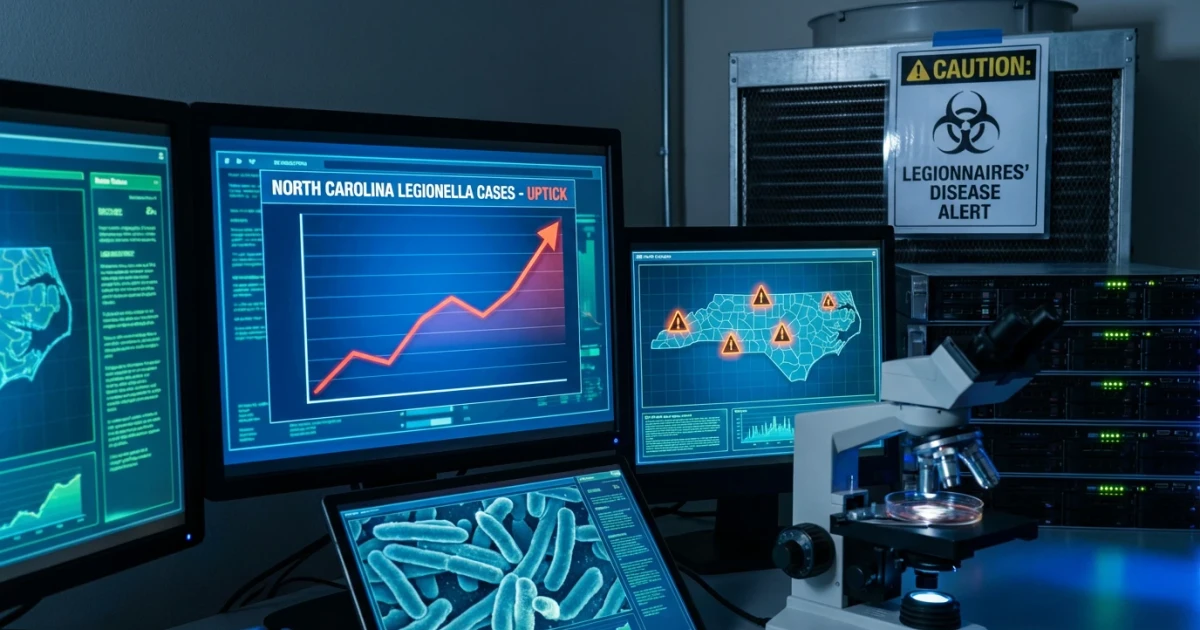
North Carolina health officials are issuing renewed warnings after a recent increase in Legionnaires’ disease cases across the state, according to alerts from both the U.S. Department of Health & Human Services and local health departments. The spike has prompted calls for heightened vigilance among healthcare providers, building operators, and the public as cases trend upward in 2026.
Understanding Legionnaires’ Disease
Legionnaires’ disease is a severe form of pneumonia caused by Legionella bacteria, typically contracted by inhaling aerosolized water droplets from sources such as cooling towers, hot tubs, or complex plumbing systems. The Centers for Disease Control and Prevention (CDC) fact sheet details common risk factors, including age over 50, smoking, and compromised immune systems.
- Symptoms often include cough, fever, muscle aches, and shortness of breath.
- Legionnaires’ disease is not spread from person to person.
- Prompt diagnosis and antibiotic treatment are crucial for recovery.
Recent Trends and State Data
Data from the North Carolina Department of Health and Human Services (NC DHHS) show a gradual increase in reported Legionnaires’ disease cases over the past several years. National numbers mirror this trend, with the CDC reporting a significant rise in cases since 2000. According to the CDC’s Morbidity and Mortality Weekly Report, the U.S. saw a fivefold increase in Legionnaires’ disease incidence from 2000 to 2018.
North Carolina, like much of the Southeast, has seen seasonal upticks in cases, particularly during warmer months. Health officials are urging clinicians to consider Legionnaires’ disease in patients presenting with pneumonia-like symptoms, especially if those patients have known exposure to large or complex water systems.
Public Health Response and Prevention
In response to the rising numbers, both state and federal officials are amplifying efforts to identify sources of exposure and encourage preventive maintenance of water systems. The CDC’s official case definition helps guide surveillance and response strategies for outbreaks and sporadic cases.
- Building owners are reminded to follow water management programs that reduce the risk of Legionella growth.
- Health care facilities, especially those serving vulnerable populations, are under particular scrutiny for water system safety.
- The public is advised to seek medical care for persistent pneumonia symptoms, especially after recent travel or exposure to large buildings, hotels, or healthcare facilities.
Ongoing Challenges and Looking Ahead
While Legionnaires’ disease remains relatively rare, the steady increase in cases poses ongoing challenges for public health surveillance and prevention. Environmental factors, aging infrastructure, and increased awareness and testing have all been cited by CDC analysts as contributors to the upward trend. Outbreak investigations frequently lead to improved safety protocols in affected facilities, but sporadic cases highlight the need for continued vigilance statewide.
As North Carolina health officials continue to monitor and respond to the current rise in cases, they reiterate the importance of public awareness, early diagnosis, and preventive maintenance as key tools in reducing the impact of Legionella infections.