Technology
North Korean hackers build AI tools to speed cyberattacks
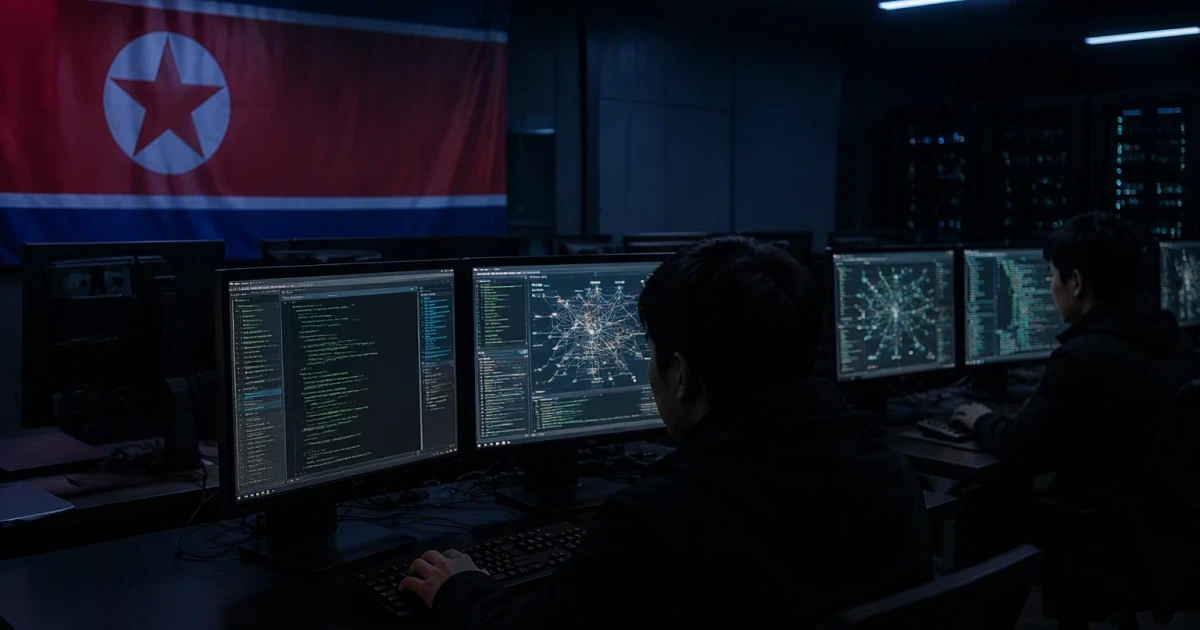
A North Korean hacking group built AI tools on its own attack servers to analyze stolen files and automate parts of its cyber operations, a move that could make phishing, malware adaptation and reconnaissance faster to scale. The unit was identified as Kimsuky, a cyber-espionage group tied to Pyongyang’s military intelligence.
The setup was offline, not a public chatbot, and it ran on machines the group controlled. That mattered because it let the hackers sort through stolen material, draft phishing messages with fewer language mistakes and automate some malware development tasks, reducing one of the clues defenders often use to spot fraudulent messages.
The broader risk is not that AI invents entirely new cyberattacks, but that it lowers the barrier to well-worn ones. Generative systems can help threat actors draft convincing lures, scan targets faster, summarize stolen data, create malicious code variations and test defenses at greater speed, making existing campaigns harder to detect and easier to mass-produce. Companies, governments, defense contractors and financial institutions are already dealing with credential theft, deepfake-enabled social engineering and malware delivery schemes, all of which gain from that kind of automation.
North Korea has long leaned on state-backed hacking to raise money, gather intelligence and disrupt adversaries, and governments and security researchers have linked its cyber units to cryptocurrency theft, espionage campaigns and supply-chain intrusions. Under sanctions, those operations can bring hard currency as well as strategic leverage, giving any AI-assisted breakthrough added value for Pyongyang.
The development is likely to intensify pressure on technology firms and cybersecurity vendors to improve monitoring, model safeguards and threat-intelligence sharing as offensive and defensive AI continue to advance together. For policymakers, the challenge is no longer only blocking access to sensitive systems; it is also understanding how a sanctioned state can weaponize AI inside covert digital operations already built for stealth and scale.
Sources
- [1]reuters.com
- [2]thehackernews.com
- [3]techtimes.com
- [4]aljazeera.com