Business
Novo Nordisk Shares Fall After Obesity Drug Misses Expectations
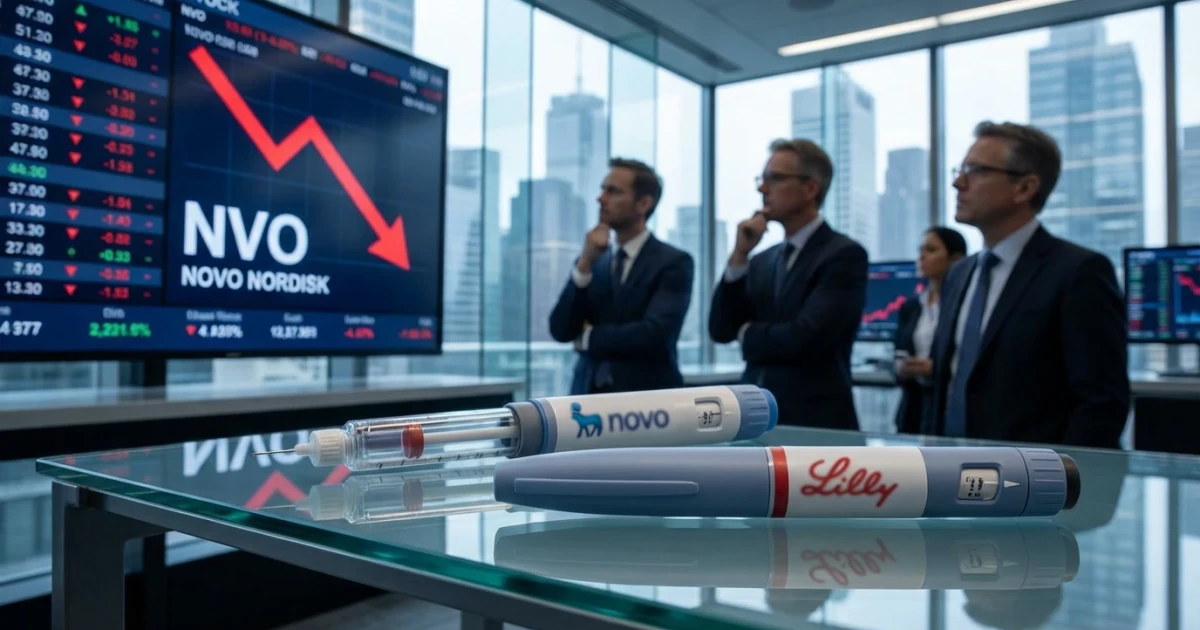
Novo Nordisk saw its shares tumble this week after disappointing trial results for its next-generation obesity drug failed to surpass the efficacy of Eli Lilly's Zepbound. The news intensified the rivalry between the two pharmaceutical giants, highlighting the challenges and stakes in the rapidly growing obesity treatment market.
Trial Results Spark Market Reaction
Shares of Novo Nordisk dropped significantly following the announcement that its experimental weight-loss medication, designed as a successor to Wegovy, did not outperform Zepbound, Eli Lilly’s leading obesity drug, in late-stage clinical trials. Investor's Business Daily reported that Novo Nordisk’s stock fell sharply in after-hours trading, reflecting investor concerns about the competitive landscape and future growth prospects.
Zepbound, Eli Lilly’s GLP-1 agonist approved for weight management, has quickly become a dominant product in the sector and has been described by analysts as the "kingpin" of obesity medications. Novo Nordisk, which pioneered the market with Wegovy, had hoped its next-generation therapy would leapfrog the competition.
Obesity Drug Market Intensifies
The global market for obesity drugs has surged in recent years, fueled by new breakthroughs in GLP-1 therapies. According to Statista's obesity drugs market statistics, industry revenues are expected to double by 2031, driven by increasing rates of obesity and high demand for effective treatments. Both Novo Nordisk and Eli Lilly have posted record sales from their flagship drugs, with Eli Lilly’s financials showing a notable boost from Zepbound, and Novo Nordisk’s earnings heavily tied to Wegovy's success.
- Eli Lilly’s Zepbound has consistently delivered strong efficacy in clinical trials, helping patients achieve significant weight loss and driving rapid market adoption.
- Novo Nordisk’s Wegovy, while still a major player, now faces pressure as the company’s next-generation candidate failed to deliver a clear advantage in head-to-head studies.
- Industry analysts, as noted in Investor’s Business Daily, see this as a setback for Novo Nordisk’s effort to reclaim the top spot in obesity therapeutics.
Investor and Industry Implications
The disappointment for Novo Nordisk comes at a time when both companies are vying for dominance in a sector that has seen exponential revenue growth. Evaluate Vantage forecasts that the market could exceed $100 billion in annual sales within the next decade, making innovation and pipeline performance critical for long-term leadership.
According to the Wall Street Journal, the trial data has led some investors to question Novo Nordisk’s future trajectory, while Eli Lilly’s Zepbound continues to set the benchmark for efficacy and commercial success. Novo Nordisk’s shares were among the most actively traded in Europe following the news, reflecting high investor sensitivity to developments in this competitive space.
Looking Ahead
While Novo Nordisk remains a key player thanks to Wegovy’s established market position, the latest results mean that Eli Lilly’s Zepbound is likely to stay ahead for the foreseeable future. Investors and analysts will be closely watching upcoming data releases, pipeline developments, and regulatory filings from both companies. For patients and providers, the ongoing competition may bring additional choices, but also highlights the complexity of developing truly superior therapies in the obesity field.
For more on the financial health and pipeline prospects of both companies, readers can explore the official SEC filings for Eli Lilly and Novo Nordisk’s financial disclosures.
As the race for obesity drug supremacy continues, the pharmaceutical industry and investors alike are keeping a close eye on the next big breakthrough.