Science
NSF plans to shift science funds to White House tech agenda
The National Science Foundation is planning to move money out of its core science programmes to pay for a White House Office of Science and Technology Policy initiative. The move would claw back funds already distributed to peer-reviewed research.
The White House technology drive is tied to Michael Kratsios and a broader agenda spanning artificial intelligence, quantum, biotechnology and other critical technologies. The administration launched the Genesis Mission on Nov. 24, 2025, to accelerate AI for scientific discovery, and that push is drawing on NSF money that would otherwise support investigator-led science.
A June memo cut budgets for hundreds of basic science programs, including a 30% reduction for a mathematics and physical sciences unit and a $200 million cut in biology. Program managers were told to pull back award recommendations already in the queue and not to tell principal investigators about the changes. The cuts made room for NSF X-Labs, a $1.5 billion initiative.
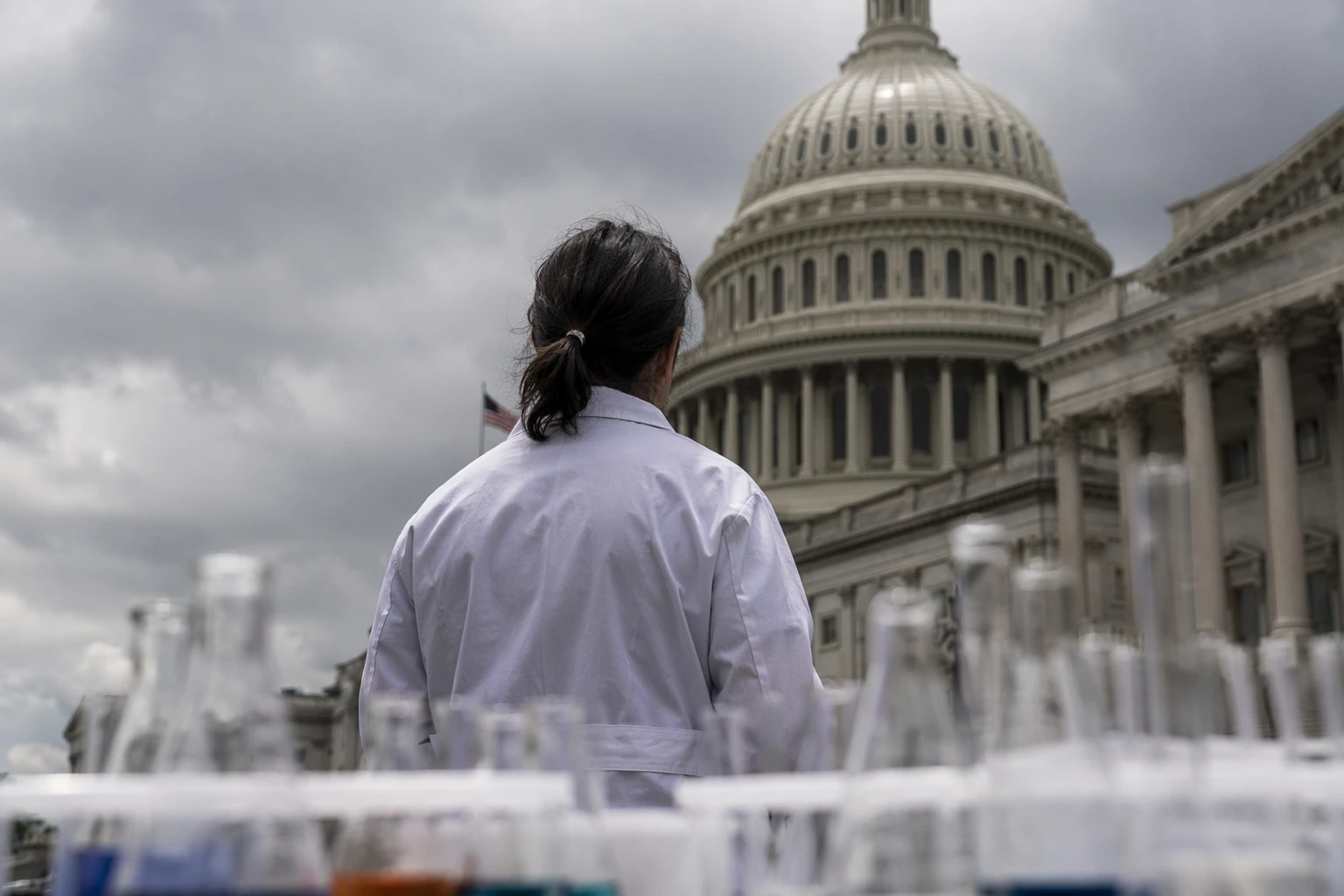
NSF support often anchors multiyear plans, and delays can mean hiring freezes, postponed experiments and student support pushed into limbo. By June 2026, NSF had awarded roughly half as many grants as it had at the same point in fiscal 2025, and only about one-eighth of the total new grants it had issued by then the previous year. Ninety-three percent of NSF’s budget supports research, education and related activities.
NSF’s fiscal 2026 budget request was $3.903 billion, and the final appropriations outcome left the agency with a 3.4% cut overall, far smaller than the presidential request but still a reduction. Sethuraman “Panch” Panchanathan resigned as NSF director in April 2025, Trump planned to nominate Jim O’Neill to lead the agency, the board that directs and approves NSF funding decisions was eliminated in April 2026, and postdoctoral funding for Earth scientists disappeared in May. Trump’s fiscal 2027 budget request would cut NSF’s science and research budget by more than half.
Sources
- [1]nature.com
- [2]eos.org
- [3]aaas.org
- [4]nsf.gov
- [5]whitehouse.gov
- [6]science.org