Technology
Nvidia's AI boom accelerates as rivals race to chip away at its moat
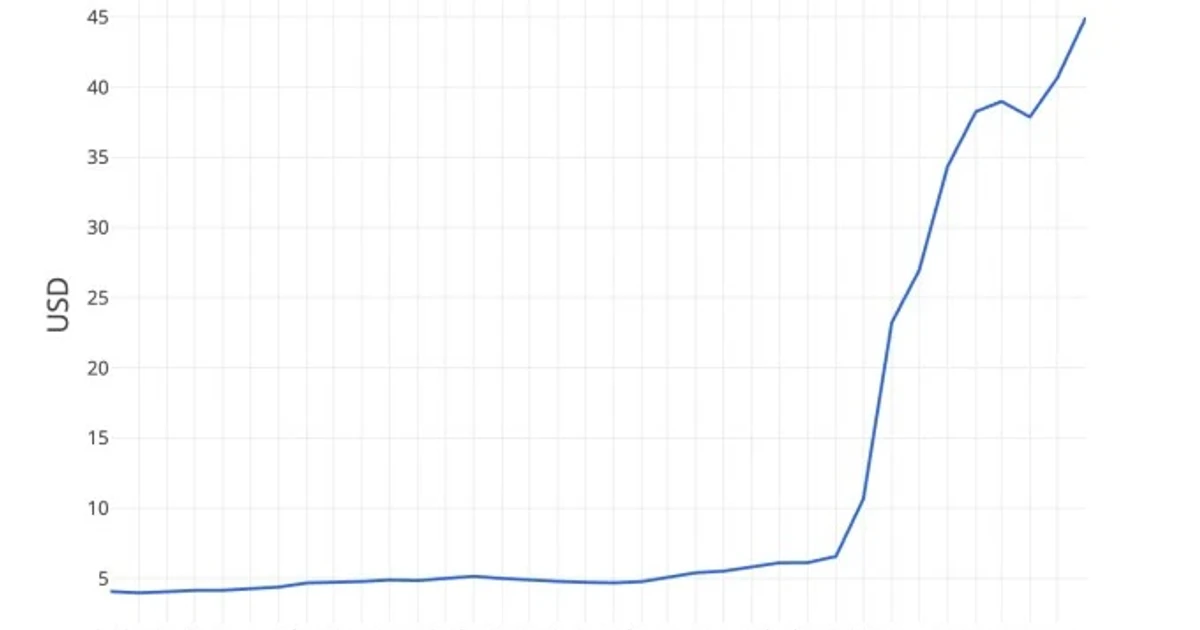
Nvidia has turned the AI buildout into a demand engine large enough to post record sales quarter after quarter, yet the same boom is drawing powerful customers closer to its strongest rivals. From Santa Clara, California, the company is still selling the fastest path into modern compute, but the clouds around it are busy building their own silicon to keep more of the economics inside their own walls.
The scale of Nvidia’s boom
Nvidia’s fiscal 2025 numbers show how far the market has shifted toward AI infrastructure. The company reported full-year revenue of $130.5 billion, up 114% from a year earlier, with data center revenue reaching $115.2 billion, up 142%. In the fourth quarter alone, revenue hit $39.3 billion and data center revenue reached $35.6 billion, both records that underscore how central AI demand has become to the business.
That momentum did not stop at year-end. In the first quarter of fiscal 2026, which ended April 27, 2025, Nvidia reported revenue of $44.1 billion and data center revenue of $39.1 billion. The jump from the prior quarter shows that the buildout was still accelerating even after a year of extraordinary growth, and it leaves little doubt that Nvidia remains the anchor supplier of the AI infrastructure cycle.
Blackwell changes the shape of the business

The numbers matter, but so does what Nvidia is actually selling. The company said it began shipping production systems based on the Blackwell architecture in the fourth quarter of fiscal 2025, and that Blackwell systems were in full production in fiscal 2025. That detail matters because it shows Nvidia moving beyond a simple chip transaction into full-stack AI infrastructure, where the product is not just a GPU but a system designed to be deployed at scale.
Blackwell also tightens the company’s grip on the highest end of the market. When a customer buys an Nvidia system, it is buying more than a part number: it is buying a pre-integrated path to training and serving large models, with hardware, software and packaging aligned around the same platform. That can deepen dependence on Nvidia in the near term, even as it gives the company a larger footprint in how AI clusters are assembled and sold.
The customers are also becoming competitors
The paradox of the current boom is that Nvidia’s biggest customers are among the most determined to reduce their reliance on it. Microsoft has framed its Maia chips as part of a systems approach designed “from silicon to service” for Azure workloads, a signal that it wants more of the stack under its own control. Amazon Web Services markets Trainium as a purpose-built AI chip aimed at lower-cost training and inference at scale, while Google Cloud made its sixth-generation TPU, Trillium, generally available on December 11, 2024.
Taken together, those moves show that hyperscalers are not waiting for the market to settle before acting. They are using Nvidia’s success as proof that the compute layer is valuable, then trying to capture more of that value themselves by designing chips around their own clouds, workloads and cost structures. They still buy Nvidia products in volume, but they are also building an escape hatch.

Where pricing power is really heading
That split behavior is the real story beneath Nvidia’s record revenue. The company has helped create a market in which compute is scarce, expensive and strategically central, but the deepest pricing power may eventually sit with the operators who control the cloud, the workload distribution and the customer relationship. Nvidia can sell the shovel, the mine and parts of the machinery, but Microsoft, AWS and Google Cloud are trying to own more of the ground under the mine.
This is why the moat looks powerful and contested at the same time. Nvidia’s scale, especially in data center revenue, shows that it still sets the pace for the AI buildout. But the investments around Maia, Trainium and Trillium suggest that the next phase of the boom may reward the platforms that can internalize demand, cut dependency and turn AI infrastructure into a margin-protecting service rather than a single-vendor purchase.
What the next phase of the boom looks like
The market is moving from a rush to buy capacity toward a fight over who captures the economics of that capacity. Nvidia’s Blackwell systems show it can package compute as an end-to-end product, while the cloud giants’ custom chips show they are determined to keep the economics from flowing entirely to one supplier.

• Nvidia’s near-term advantage remains its scale, with fiscal 2025 data center revenue of $115.2 billion and first-quarter fiscal 2026 data center revenue of $39.1 billion.
• Microsoft, Amazon Web Services and Google Cloud are all investing in custom silicon so they can tune AI infrastructure around their own services instead of relying only on Nvidia hardware.
• The outcome will be decided less by one quarter’s revenue than by who controls the full stack, from chip design and system integration to cloud deployment and pricing.
Nvidia built the market that everyone wants to own a piece of, and that is exactly why the fight around it is intensifying. The company still sits at the center of the AI economy, but the companies surrounding it are learning how to turn that center of gravity into their own advantage.
Sources
- [1]techcrunch.com
- [2]investor.nvidia.com
- [3]publicnow.com
- [4]azure.microsoft.com
- [5]aws.amazon.com
- [6]blog.google