World
Ocean surface temperatures hit record June high, Copernicus warns

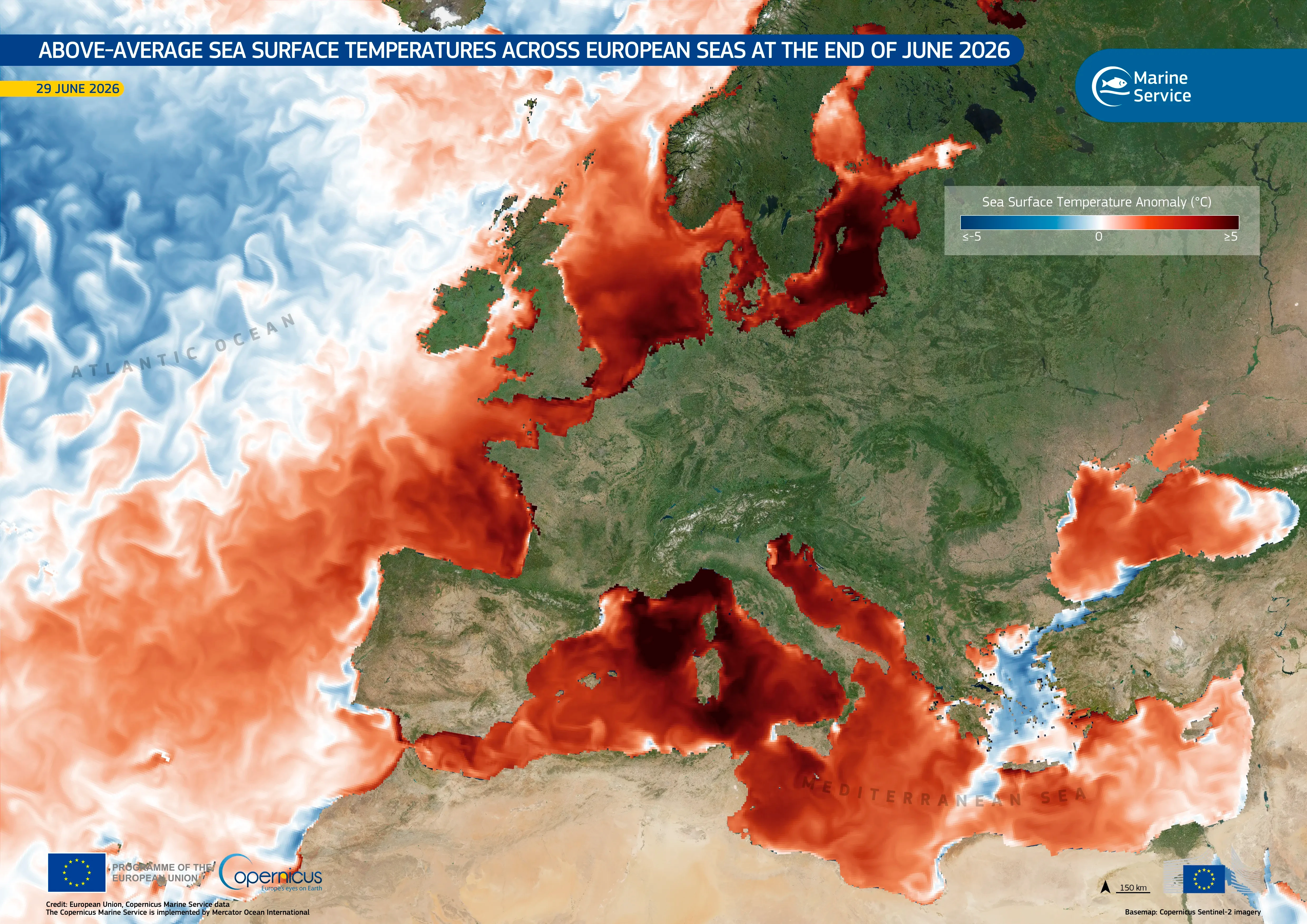
Temperatures at the ocean surface reached a June record of 20.98C, and two Copernicus services independently confirmed the high as marine heatwaves spread across much of the world’s waters. Sea surface temperatures hit 20.86C on June 21, above the June record set in 2023 and 2024, while the Copernicus Marine Service recorded 21.0C outside the polar regions.
The record capped six months of near-unprecedented ocean warmth in 2026. Average sea temperatures in the first half of the year were 20.04C, only slightly below the same-period high set in 2024, while marine heatwaves expanded steadily and eventually affected about 82% of the global ocean. The Mediterranean, the central North Atlantic and the equatorial Pacific emerged as hotspots.

Carlo Buontempo, director of the Copernicus Climate Change Service, said the current conditions could mark “the beginning of a new phase” and warned that the world could be moving into “uncharted territory.” He said that with ocean temperatures at these levels and El Niño on the horizon, more temperature records were likely to fall in the coming months.
Warmer oceans add fuel for stronger Atlantic storms, heighten the risk of dangerous coastal flooding, and increase the pressure on insurers already pricing hurricane exposure along the Gulf and Atlantic coasts. They also raise the odds of extreme heat onshore, because the ocean is absorbing roughly 90% of the excess heat from human greenhouse-gas emissions before that energy circulates back into the atmosphere.
El Niño could intensify those effects further in 2026 and into next year. The climate cycle, driven by unusually warm waters in parts of the Pacific, can reshape weather far beyond the tropics, bringing floods in Peru, droughts in parts of Africa and wildfires in Australia. In the United States, that same pattern can complicate hurricane outlooks, strain coastal communities and rattle fisheries that support seafood supply chains and food prices.
2024 was the warmest year on record and the first to exceed 1.5C above pre-industrial levels, while the annual average sea surface temperature over the extra-polar ocean reached 20.87C. Copernicus Marine Service data show the number of marine heatwave events has doubled since 1982.
Sources
- [1]nbcnews.com
- [2]phys.org
- [3]rocketnews.com
- [4]climate.copernicus.eu
- [5]marine.copernicus.eu