Business
Oil falls as Asian shares rise on easing Middle East tensions

Oil prices fell sharply and Asian equities rose as traders responded to a calmer Middle East backdrop and a ferocious first day of trading for Chinese chipmaker ChangXin Memory Technologies, or CXMT. The move suggested investors were pulling back from the worst-case scenario for energy supplies, at least for now, and shifting money back into risk assets.
U.S. strikes on Iran were paused, and that helped push oil down more than 5% after prices had climbed to a five-week high earlier in the week on fears that conflict could disrupt supply routes through the Red Sea and the Strait of Hormuz. The retreat in crude eased pressure on inflation expectations, a relief for consumers and businesses that had been bracing for a higher fuel bill and a broader hit to shipping and input costs.
Asian shares mostly advanced on July 27 as the Iran-U.S. truce calmed trading sentiment. A separate global markets wrap showed stocks mixed and U.S. Treasury yields lower, underscoring how quickly investors moved out of defensive positioning once the immediate geopolitical risk faded. The pattern was familiar: when oil breaks lower after a supply scare, markets often treat it as a sign that the economic damage may be less severe than feared.
CXMT gave that shift a second push. Reuters identified the company as China’s memory chipmaker and DRAM champion, and said its Shanghai listing was set after Asia’s biggest IPO of the year, a deal worth about $8.6 billion. Retail investors oversubscribed the offering by more than 200 times, and the stock surged 466% in its Shanghai debut. Other market calculations put the first-day jump at roughly 471%, 472% or about 500%, depending on the method used.
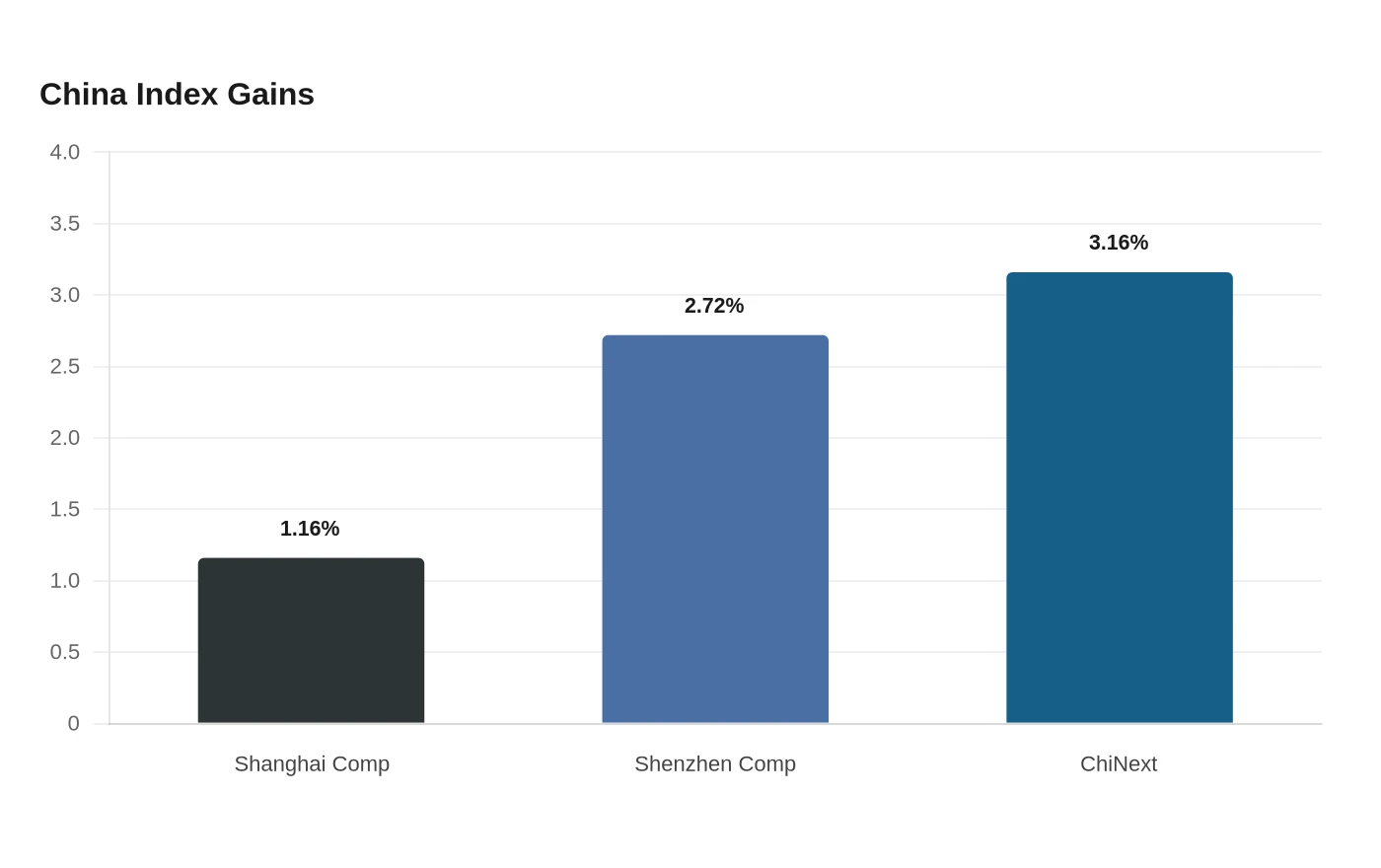
The enthusiasm spilled into mainland indexes. The Shanghai Composite closed up 1.16% at 3,858.25, the Shenzhen Component rose 2.72% to 14,148.73 and the ChiNext index gained 3.16% to 3,590.79, according to Aju Press. For China’s technology market, the debut reinforced the appeal of firms tied to strategic industries and domestic policy support even as broader China tech sentiment had been volatile.
Taken together, the day’s moves pointed to a market that was willing to believe in a narrower conflict risk and a stronger growth story at the same time. Cheaper oil offered near-term relief for inflation and consumer costs, while CXMT’s blowout debut showed that capital is still willing to chase strategic technology names when geopolitical pressure eases. The remaining question for investors is whether that combination marks only a temporary relief rally or the start of a broader turn in global risk appetite.
Sources
- [1]apnews.com
- [2]reuters.com
- [3]chosun.com
- [4]cnbc.com
- [5]m.ajupress.com