Business
Oil prices fall as Iran war nears end, gas relief still months away
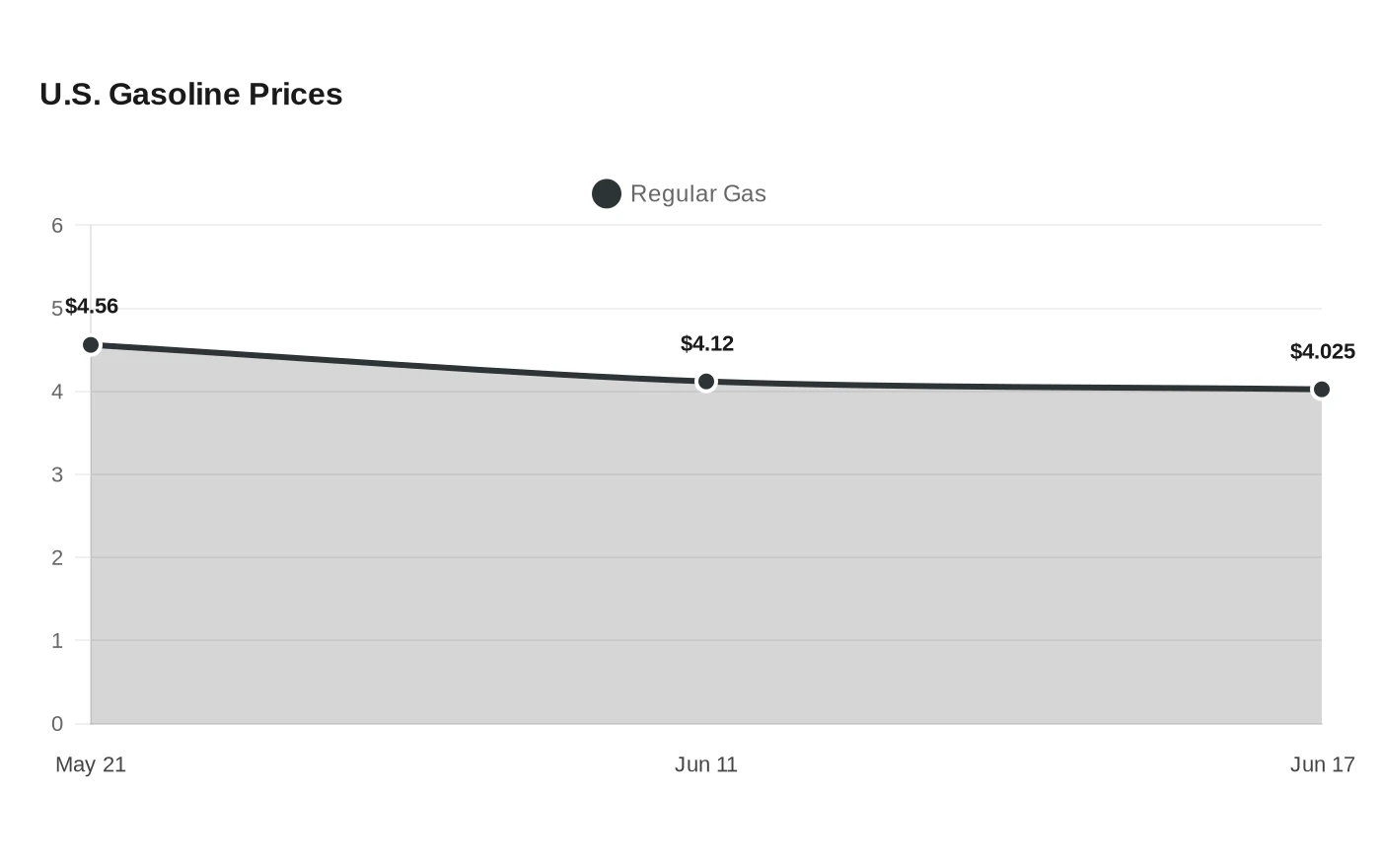
Oil prices have started to slide as markets bet the Iran war is winding down, but the relief at U.S. gas stations is moving on a much slower clock. AAA said the national average for regular gasoline fell from $4.56 on May 21 to $4.12 on June 11 and to $4.025 on June 17, yet energy analysts say a full return to pre-war pricing could still take months because crude markets, tanker traffic and fuel inventories do not reset overnight.
The U.S. Energy Information Administration said shipments through the Strait of Hormuz could resume in the third quarter of 2026 if the waterway reopens and oil trade begins to normalize, but traffic may not return to pre-conflict levels until early 2027. In its June Short-Term Energy Outlook, the agency said OECD liquid fuels inventories could fall to just under 2.3 billion barrels by December 2026, the lowest since 2003, even under assumptions that supply gradually comes back. For June and July, the EIA said Brent could average $105 a barrel if the Strait of Hormuz remains effectively closed in the near term.

That lag matters because the pump usually follows crude with a delay. Refiners need time to rebuild inventories, tanker routes have to clear, and emergency reserves must be replenished before retailers can pass along deeper discounts. Arjun Murti, partner at Veriten and author of the Substack newsletter Super-Spiked, has been tracking how those bottlenecks can keep gasoline elevated long after headlines turn calmer.
The market reaction has been swift. Oil prices fell to a three-month low after Donald Trump said the United States and Iran had signed a memorandum of understanding aimed at ending the war and reopening the Strait of Hormuz. But the path back to normal shipping is expected to be gradual, not immediate, especially after weeks of disrupted flows through one of the world’s most important chokepoints.
The economic hit has already spread beyond drivers. Higher fuel costs have squeezed U.S. farmers, especially grain and soybean growers, and the global airline industry has nearly halved its 2026 profit forecast because of conflict-driven fuel expenses. Even as gasoline prices eased in early June, consumer sentiment improved only modestly, with inflation fears tied to the Middle East conflict still hanging over households. For now, the most visible benefit of the ceasefire talks is not a return to cheap gas, but the first signs that the worst price shock may be easing.
Sources
- [1]cbsnews.com
- [2]gasprices.aaa.com
- [3]eia.gov
- [4]reuters.com
- [5]energypolicy.columbia.edu