Health
Online dermatology visits match in-person care for atopic dermatitis, study finds
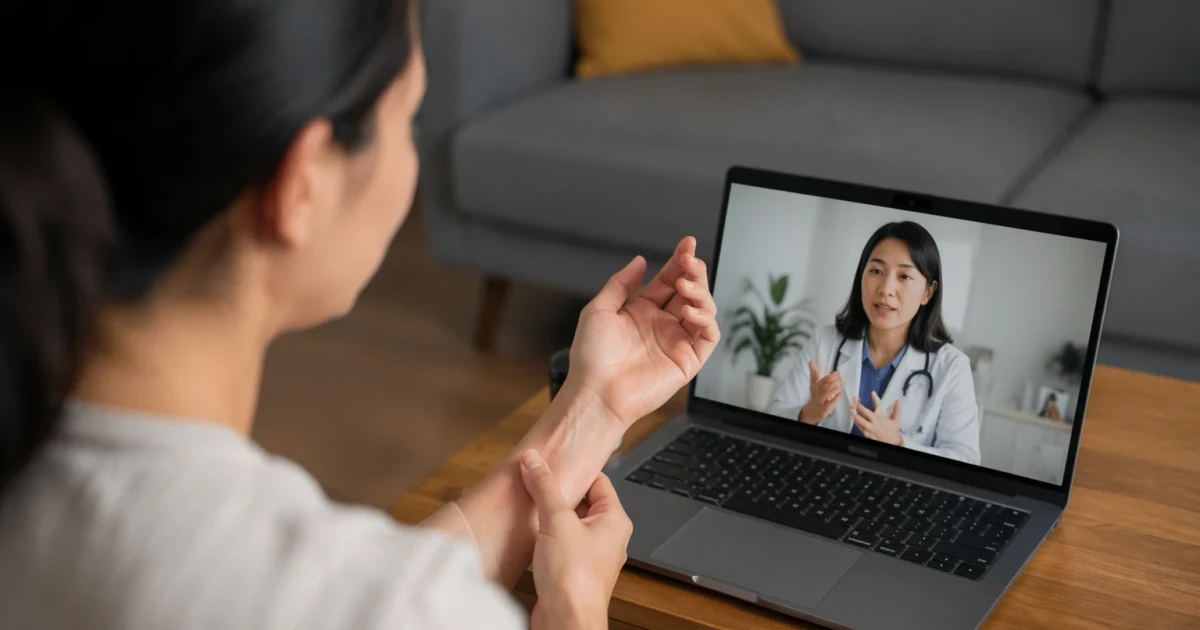
An online, team-based dermatology model matched in-person care for atopic dermatitis while getting patients through their first evaluation faster, a result that could matter most for people who live far from specialists or struggle to get an appointment. In a 12-month pragmatic equivalence trial of 300 patients treated at eight outpatient clinics in California, the virtual arm performed as well as office visits on patient-centered outcomes and shaved minutes off the start of care.
The study, registered as NCT03981926, followed children and adults enrolled from August 2019 to May 2024. Participants had physician-diagnosed atopic dermatitis, with a mean age of 34.6 years and 70.3% female. Researchers randomized 149 patients to team-based connected health, or TCH, and 151 to in-person treatment.
What set the online model apart was its structure. Patients submitted medical histories and skin photographs through a secure asynchronous platform, and dermatologists reviewed the material along with primary care clinicians before making assessments and treatment recommendations. That coordinated approach, described in the online papers from JAMA Dermatology and the Journal of Investigative Dermatology, was designed to do more than replace an office visit with a video call. It linked patients, primary care practitioners and specialists in a single care pathway.
On the clinical side, the trial found equivalence. The JAMA Dermatology report used 12-month change in EASI as the primary outcome, with quarterly POEM and validated vIGA assessments, while the Journal of Investigative Dermatology paper focused on quality of life and access. Quality of life improved by essentially the same amount in both groups, measured with the Dermatology Life Quality Index or Children’s DLQI and with EQ-5D-5L scores, and the difference stayed within the trial’s preset equivalence margins.
The access gains were more modest but concrete. The baseline evaluation took 51.6 minutes in the online group, compared with 65.9 minutes for in-person care. Follow-up retention topped 95%, which strengthens the comparison and suggests patients were able to stay engaged whether they started care online or in clinic.
The findings point toward a model that could ease travel burden and shorten waits without lowering the standard of care, especially in underserved or rural communities where access to dermatologists remains thin. The trial also builds on earlier JAMA Dermatology work on direct-access online care for atopic dermatitis, which had already shown equivalent clinical outcomes, and it reinforces a broader gap in specialty care: scalable collaborative systems remain hard to build, even when the clinical case for them is strong.