Technology
OpenAI floats 5% U.S. stake as AI profits face scrutiny

OpenAI has discussed giving the U.S. government a 5% stake, a move that would put Washington directly inside the capital structure of one of the most valuable AI companies. At OpenAI’s March 31, 2026 post-money valuation of $852 billion, that holding would be worth about $42.6 billion. The proposal would make the federal government a financial participant in the AI boom at the same time it is trying to manage the risks that come with it.
The idea lands as President Donald Trump pushes a broader argument that Americans should not be left out of the upside from artificial intelligence. Last month, Trump said he was exploring options to give the public a stake in leading AI companies, and the White House says his AI agenda is meant to promote innovation and security. Trump issued Executive Order 14409 on June 2, 2026, on advanced AI innovation and security, and the White House later said the Department of War announced agreements in May with eight AI companies to deploy their capabilities on classified networks.
OpenAI has been tightening its own relationship with the federal government. On June 26, 2026, the company previewed GPT-5.6 Sol, Terra and Luna and said the models would begin with a limited preview for a small group of trusted partners before a broader rollout in the coming weeks. OpenAI said the preview came as part of its ongoing engagement with the U.S. government. The company’s structure remains a nonprofit-controlled capped-profit model, and it says its mission is to ensure AGI benefits all of humanity. OpenAI also disclosed in March that it had closed a $122 billion funding round, underscoring the scale of any government holding.
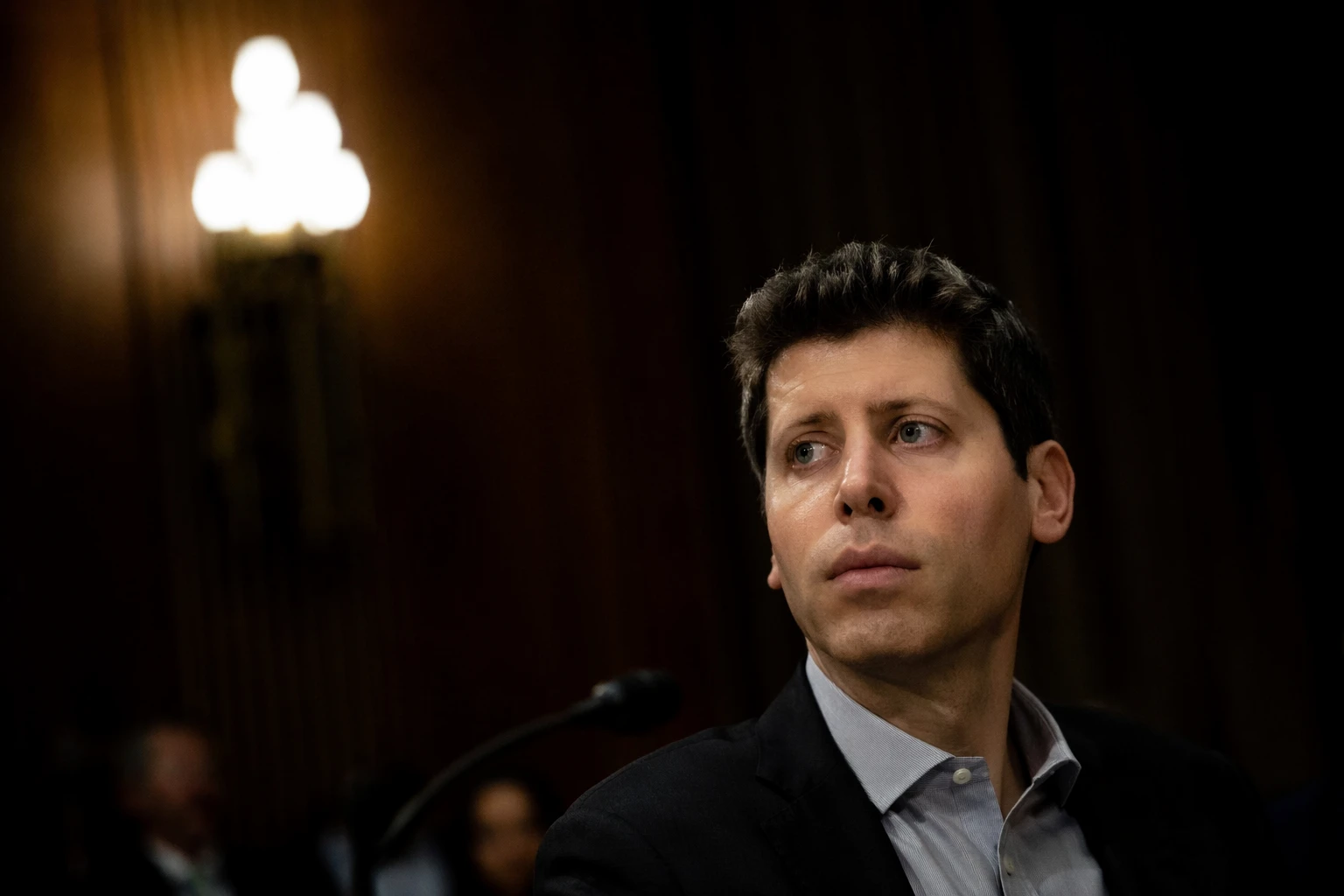
The stake discussion involved Sam Altman, Howard Lutnick, Scott Bessent and Bernie Sanders. OpenAI has also suggested that other U.S. AI companies could hand over similar stakes, although it is unclear whether they would agree. The company previously floated the idea of a public wealth fund to invest in AI companies and distribute proceeds to citizens, while Anthropic has discussed a digital dividend funded by taxes on the AI sector.
A direct federal stake would raise hard governance questions for regulators, procurement officials and antitrust enforcers who may be asked to oversee the same firms the government owns. It would also sharpen conflict-of-interest concerns if national-security agencies are buying access to frontier models while Washington holds equity in the companies that sell them. Alaska’s Permanent Fund offers the closest domestic comparison: the state’s 2025 dividend was set at $1,000 for more than 600,000 eligible residents, a model built on public ownership of resource wealth rather than a direct stake in a private AI company.
Sources
- [1]money.usnews.com
- [2]cnbc.com
- [3]openai.com
- [4]whitehouse.gov
- [5]pfd.alaska.gov
- [6]reuters.com