Technology
OpenAI Signs Pentagon Deal After Rivalry With Anthropic
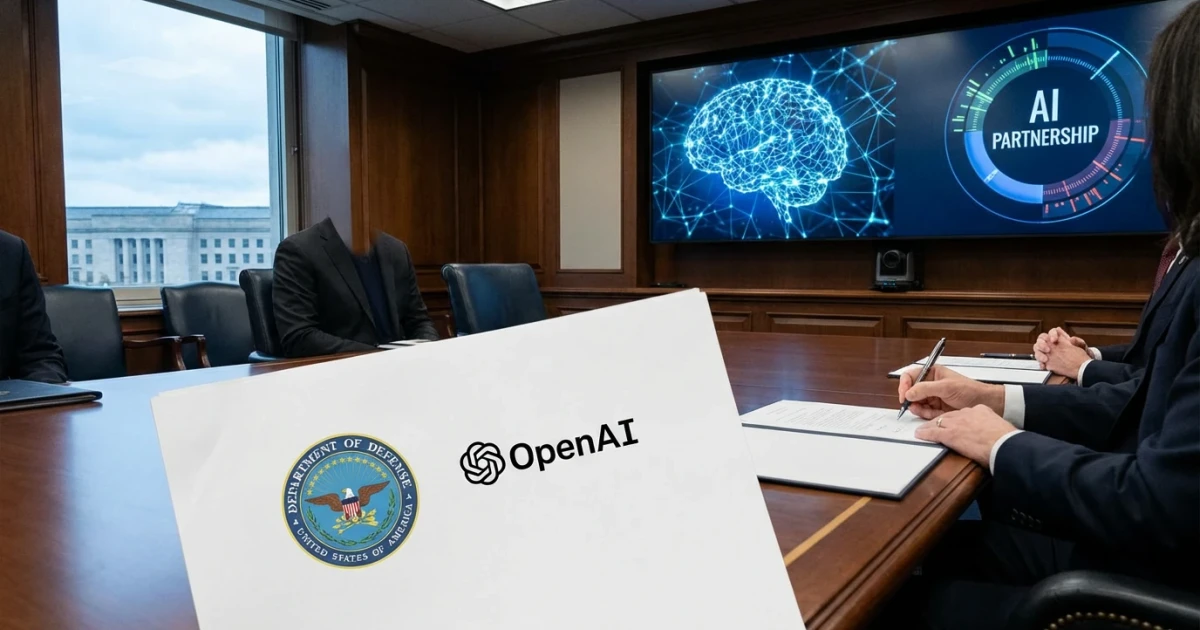
OpenAI, one of the world’s leading artificial intelligence companies, has reached a formal agreement with the U.S. Department of Defense (DoD), according to a New York Times report published Wednesday. The deal, which comes in the wake of a high-profile dispute with rival AI firm Anthropic, reflects the U.S. government’s growing reliance on advanced AI technologies for national security and defense applications.
OpenAI’s Defense Collaboration: Scope and Context
The agreement grants the Pentagon access to OpenAI’s cutting-edge models, including those powering its widely used chatbot and generative tools. The specifics of the partnership have not been made public, but the arrangement is expected to cover a range of research, analytics, and operational support functions. OpenAI’s technology is increasingly being used to analyze large datasets, support decision-making, and enhance simulation and training programs.
The announcement follows a period of uncertainty after Anthropic, another major AI company, reportedly declined to pursue similar work with the U.S. government. As reported by the New York Times, the clash between the two companies centered on ethical concerns and the appropriate use of artificial intelligence in military contexts.
Ethical Considerations and Industry Rivalry
According to the New York Times, Anthropic’s leadership raised concerns about the deployment of AI in sensitive defense operations, citing potential risks and the importance of robust risk management frameworks. OpenAI, by contrast, has argued that responsible engagement with the government can help shape the safe and effective use of AI technologies. The company has emphasized its commitment to safety protocols and alignment with federal guidelines for trustworthy AI development.
The competition between OpenAI and Anthropic reflects broader debates within the tech industry about the role of private firms in military projects. While some worry about the risks of AI misuse, others believe that collaboration with the Pentagon is essential to ensure American leadership and oversight of powerful technologies.
Implications for U.S. Defense and AI Policy
The agreement is part of a wider push by the U.S. government to integrate AI into defense operations, as outlined in federal AI initiatives and the Executive Order on Safe, Secure, and Trustworthy AI. These efforts aim to advance technological capabilities while maintaining high standards for safety, transparency, and accountability. The Department of Defense has allocated significant resources to AI research, as reflected in recent budgetary data, and is actively working with both established firms and startups to accelerate innovation.
- The DoD has awarded hundreds of millions in AI contracts in recent years, covering applications from logistics to cybersecurity.
- The DoD Chief Information Office oversees AI strategy implementation, including partnerships with commercial vendors.
- Government agencies are required to follow the NIST AI Risk Management Framework to ensure responsible deployment of AI systems.
Looking Ahead: Industry and Policy Trends
OpenAI’s deal with the Pentagon is likely to accelerate adoption of advanced AI tools across the defense sector, but it also raises ongoing questions about ethical oversight, transparency, and competition among leading AI firms. As the government seeks to balance innovation with safety, the outcomes of partnerships like this one will shape the future of public-private collaboration in artificial intelligence.
With global competition in AI intensifying and concerns about the potential misuse of technology, the decisions taken by companies like OpenAI and Anthropic—and their willingness or reluctance to work with the U.S. government—will influence both industry norms and public trust.