Technology
OpenAI’s Jalapeño chip aims to cut Nvidia dependence

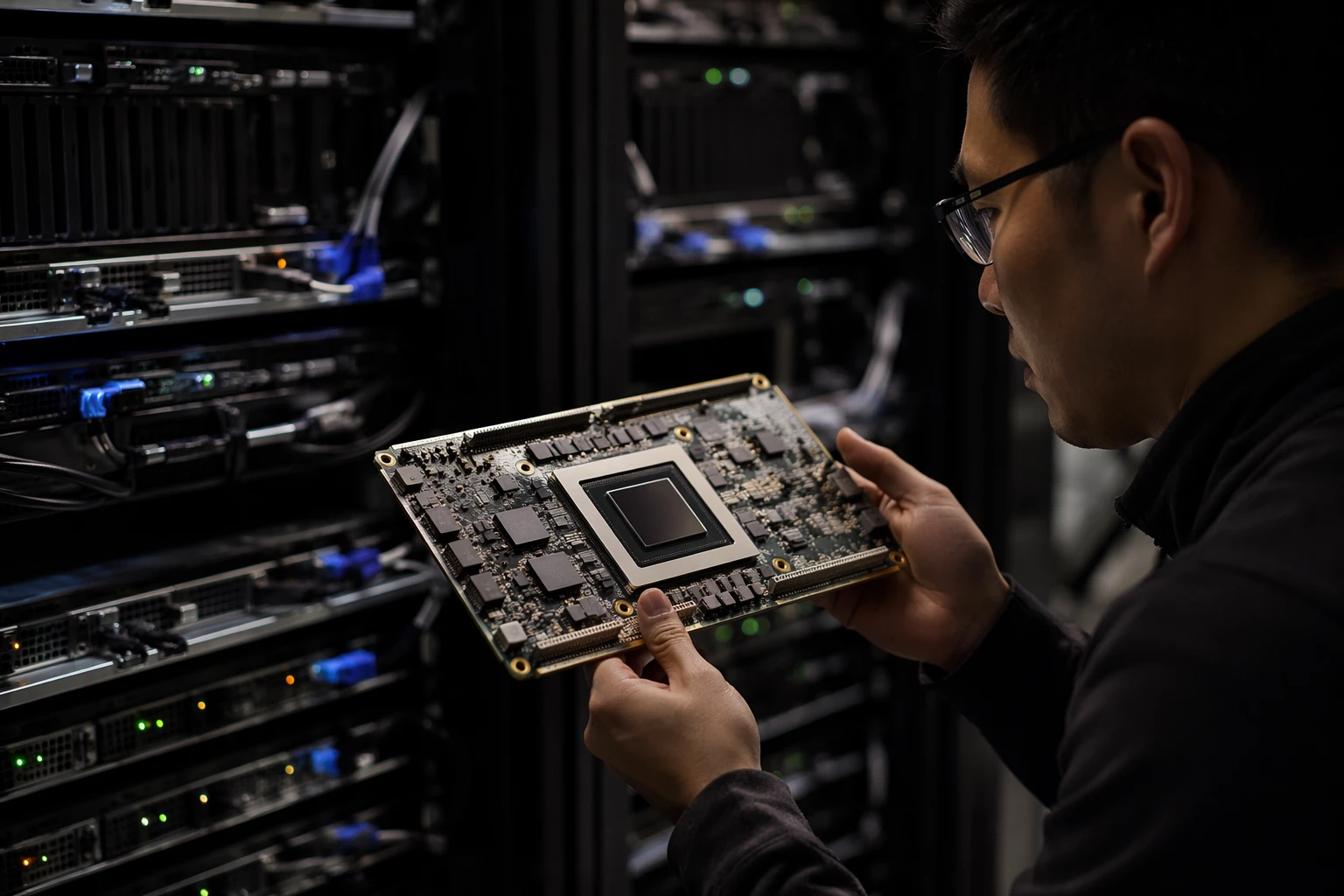
OpenAI and Broadcom unveiled Jalapeño on June 24, placing OpenAI in a fast-growing group of companies trying to own more of the AI stack instead of renting it from Nvidia. The chip is OpenAI’s first Intelligence Processor, built specifically for large language model inference, and the companies said it moved from design to production in nine months.
The strategic logic is control as much as speed. OpenAI and Broadcom said Jalapeño was designed from the ground up for current and future LLMs, with early testing showing performance per watt that is substantially better than the current state of the art. OpenAI said the chip is the first accelerator in a multi-generation compute platform meant for deployment at gigawatt scale with data-center partners, while Broadcom framed the work as part of a broader shift toward custom accelerators and Ethernet-based networking in next-generation infrastructure.
OpenAI’s chip push is part of a wider move to reduce dependence on a single supplier for every phase of AI work, especially inference, where models generate answers after training is complete. OpenAI said in October 2025 that it and Broadcom planned to deploy 10 gigawatts of OpenAI-designed AI accelerators by 2029. Broadcom has also said OpenAI has grown to more than 800 million weekly active users, underscoring the scale of the demand behind the effort. The motive is not just technical bragging rights. It is leverage over cost, power use, supply and the pace at which new systems can be built.
Nvidia still sits at the center of the market it built. The company reported $39.3 billion in revenue for its fiscal fourth quarter ended Jan. 26, 2025, including $35.6 billion from data center chips, and $130.5 billion for the full fiscal year. But the spread of custom silicon suggests that some of Nvidia’s biggest customers want a different relationship with compute: not buying every layer from a dominant vendor, but designing the parts that matter most and keeping more of the margin, control and bargaining power in-house.
That playbook is not new. Google deployed its first TPU internally in 2015, then expanded the chips beyond its own systems. Apple began the same march with the A4 in 2010, building custom chips for the iPhone, Mac and Vision Pro. SpaceX’s investor materials now describe AI Compute as a scalable business and stress a vertically integrated platform that spans architecture, chip design, software, power systems and final assembly. Taken together, those moves do not yet topple Nvidia. They do signal that the AI industry’s largest buyers increasingly want to own the infrastructure layer that once belonged almost entirely to Nvidia.
Sources
- [1]techcrunch.com
- [2]openai.com
- [3]investors.broadcom.com
- [4]nvidianews.nvidia.com
- [5]cloud.google.com
- [6]cnbc.com
- [7]content.spacex.com
- [8]reuters.com