Business
Oracle flags higher 2027 spending and more debt for AI buildout

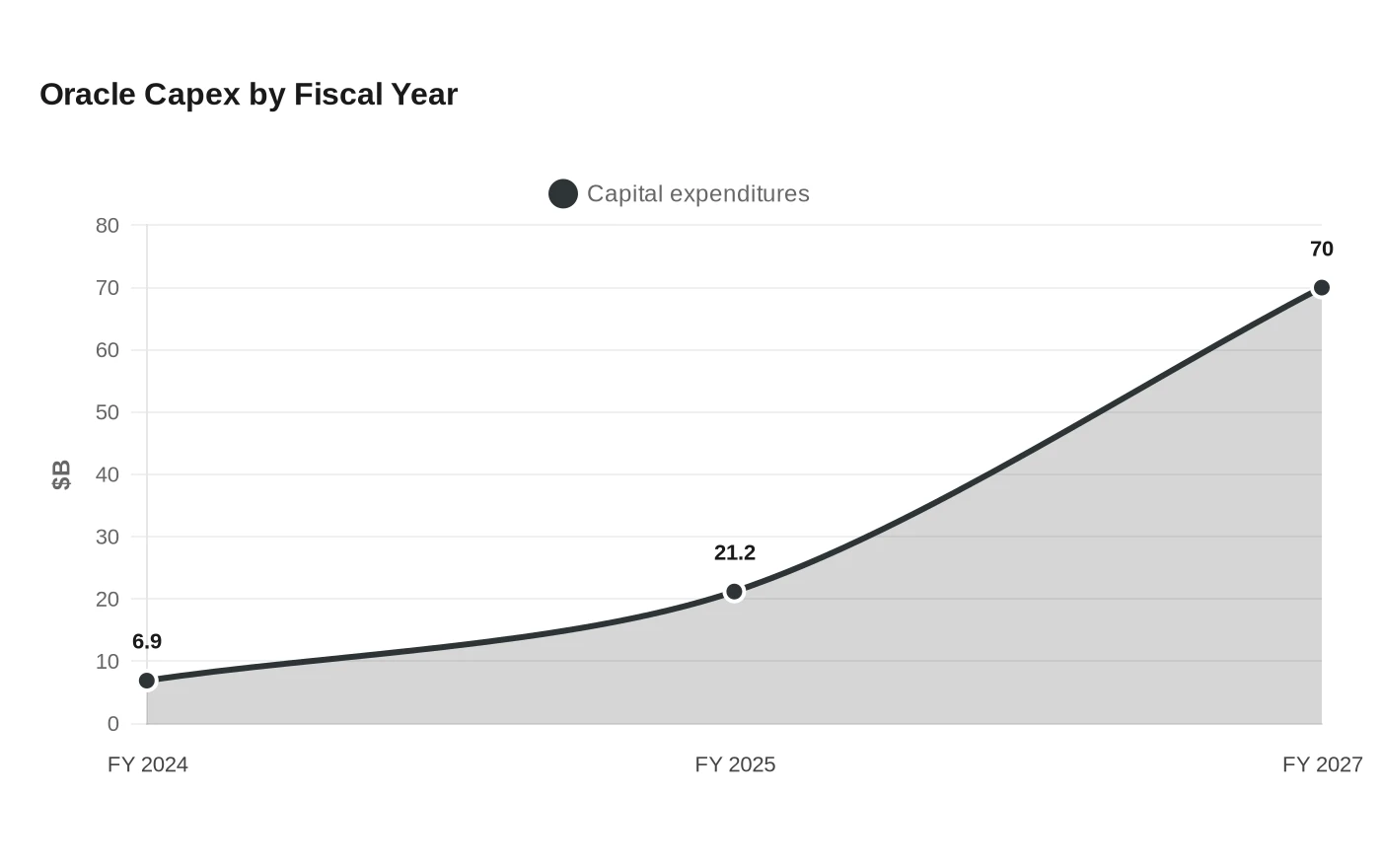
Oracle is betting that the AI boom will reward companies willing to spend first and worry later. The database and cloud giant said it expects about $70 billion in net cash outlay for capital expenditures in fiscal 2027, while planning to raise about $40 billion in debt and equity financing, including a previously announced $20 billion at-the-market equity issuance.
The numbers showed how far Oracle has moved from cautious cloud expansion to a full-scale infrastructure push. Shares fell in after-hours trading after the announcement, a sign that investors are still willing to pay for growth, but not without scrutiny over how much leverage the race for AI capacity will require.
The company’s latest fiscal 2026 results underscored why Oracle feels the pressure to keep building. Total revenue reached $67.4 billion, up 17% from a year earlier. Total cloud revenue climbed 39% to $34.0 billion, while cloud infrastructure revenue jumped 77% to $18.1 billion. Oracle also said remaining performance obligations hit a record $638 billion at the end of the fourth quarter, up from $553 billion in the prior quarter, reflecting a backlog that gives the company a powerful growth pipeline.

Demand for AI infrastructure was especially strong. Oracle said it signed $67 billion in AI infrastructure contracts during the quarter and had $75 billion in combined bring-your-own-hardware or prepaid customer contracts. Those commitments suggest the company is still seeing heavy appetite from large-scale customers, even as the cost of supplying them rises sharply.
The spending path makes the escalation clear. Oracle’s capital expenditures were about $21.2 billion in fiscal 2025, up from about $6.9 billion in fiscal 2024. The jump shows how quickly the company is scaling data centers, chips, networking gear and other hardware needed to compete for AI workloads. That kind of buildout can support long-term revenue, but it also strains free cash flow and raises the stakes for execution if customer demand slows or financing costs climb.
Oracle’s challenge now is the one facing much of the AI sector: turning enormous upfront capital into durable cash generation fast enough to justify the borrowing. The company is signaling that it intends to stay in the arms race, even if that means more debt, thinner near-term flexibility and a tougher test for investors watching the balance sheet as closely as the top line.
Sources
- [1]money.usnews.com
- [2]investor.oracle.com
- [3]cnbc.com
- [4]thestar.com.my
- [5]finance.yahoo.com