Technology
Oratomic raises $300 million to build fault-tolerant quantum computers

Oratomic raised $300 million in a Series A co-led by ARCH Venture Partners, Spark Capital and Khosla Ventures. The Pasadena, California startup is betting that fault-tolerant quantum computers built with neutral atoms may be possible with far fewer qubits than the field once assumed.
Oratomic came out publicly on March 31 after research with Caltech scientists argued that cryptographically relevant machines may require only 10,000 to 20,000 reconfigurable atomic qubits. Its March 30 paper, Shor's algorithm is possible with as few as 10,000 reconfigurable atomic qubits, argued that millions of physical qubits had previously been thought necessary. Under plausible assumptions, discrete logarithms on the P-256 elliptic curve could be run in a few days on a 26,000-physical-qubit system, while RSA-2048 factoring would take one to two orders of magnitude longer.
Oratomic uses optical tweezers to arrange atoms into qubit arrays and to dynamically rearrange them during computation. Recent neutral-atom experiments have already demonstrated universal fault-tolerant operations below the error-correction threshold, computation on hundreds of qubits and trapping arrays with more than 6,000 highly coherent qubits. Caltech researchers reported the largest qubit array ever assembled at 6,100 trapped neutral atoms.
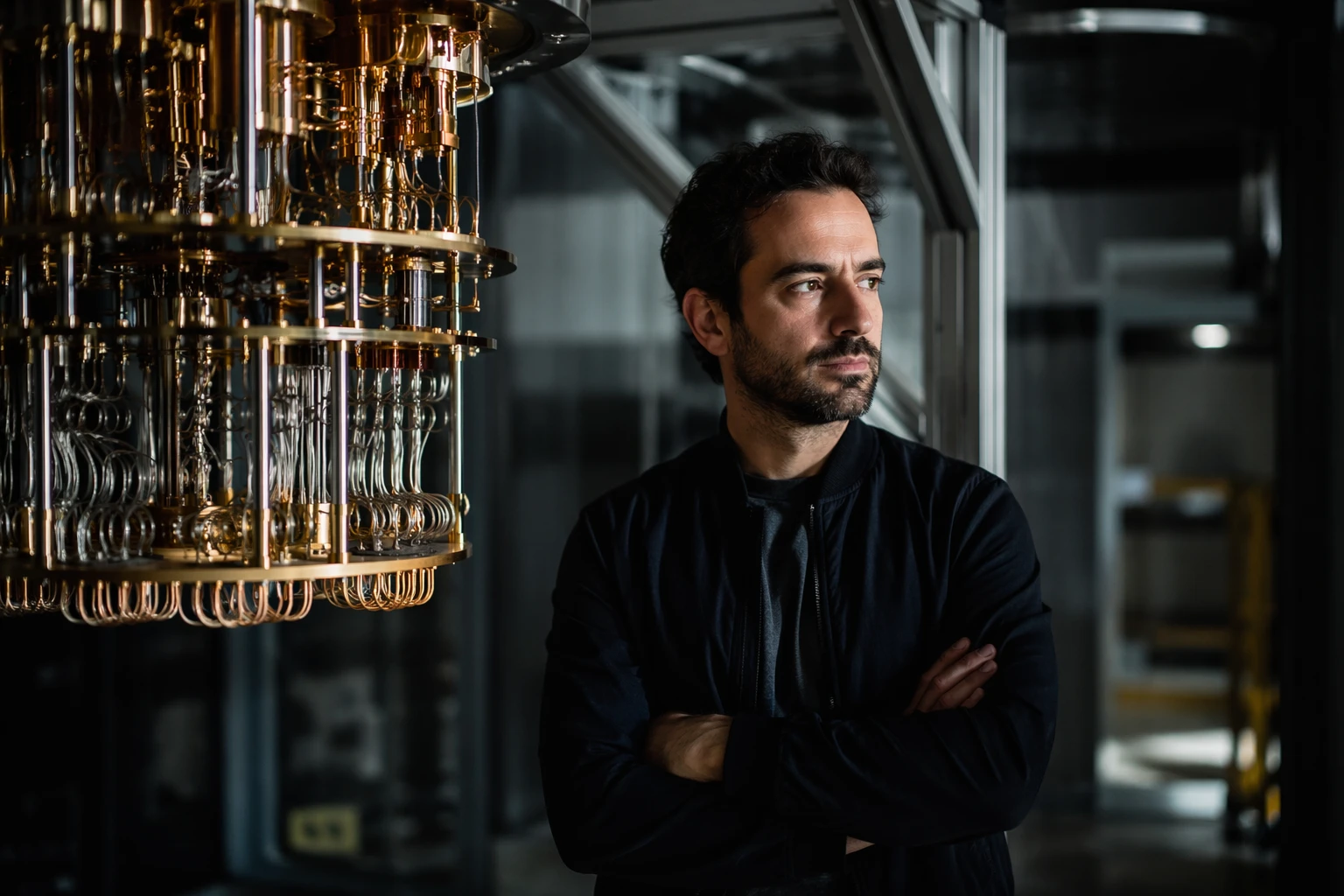
Bluvstein said the group had not expected to start a quantum computing company because the problem seemed too far away. Oratomic should not be confused with PsiQuantum, which is pursuing fault-tolerant quantum computing on a path that targets a million-qubit machine.
The new round also included Bezos Expeditions, Index Ventures, General Catalyst, Lowercarbon Capital, Bain Capital, Formation, Nebular, David and Scott Aaronson, Les Kohn, Baiju Bhatt, Infleqtion, Genius Ventures, 7i Capital and Global Frontier Investments. Khosla Ventures made its largest initial bet in Oratomic after Vinod Khosla looked at a dozen quantum startups over a decade.

Its work could affect cryptography, AI, simulation, chemistry and logistics, and the company wants a commercially useful machine by the end of the decade.
Sources
- [1]techcrunch.com
- [2]prnewswire.com
- [3]arxiv.org
- [4]caltech.edu
- [5]myscience.org
- [6]thequantuminsider.com