Science
Oregon Residents Could Catch Rare Northern Lights Display
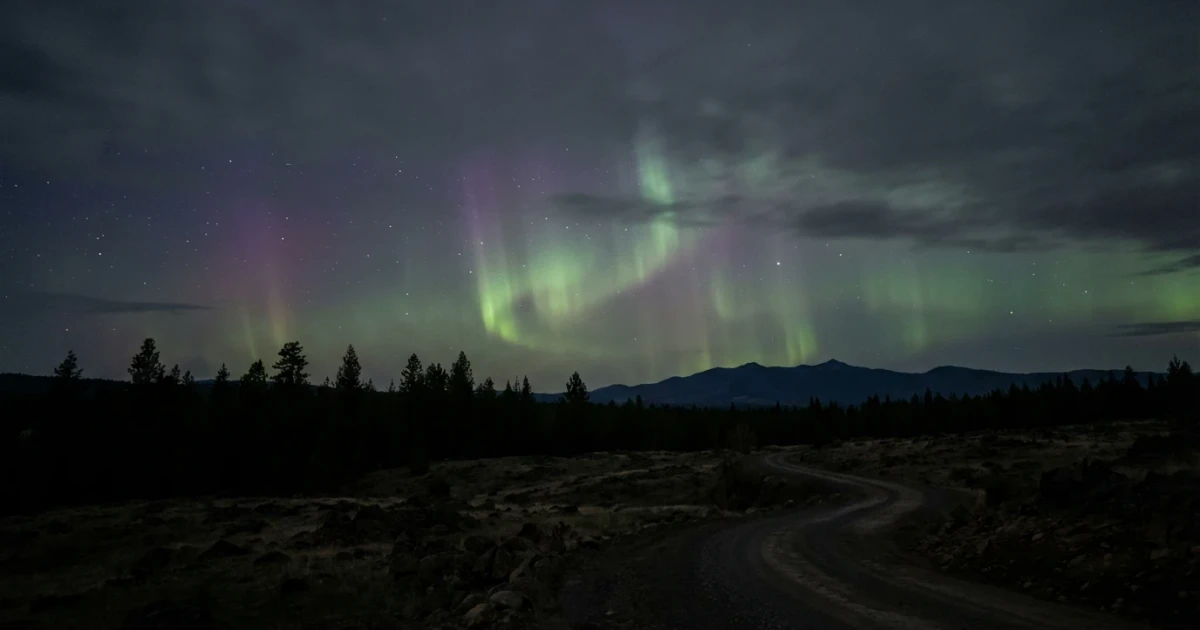
Oregon residents could be treated to a rare sight in the night sky on Wednesday: the northern lights, or aurora borealis. According to OregonLive.com, conditions may align for Oregonians—and other parts of the northern United States—to catch a glimpse of this stunning natural phenomenon.
What’s Causing the Possible Aurora?
The anticipated aurora stems from increased solar activity, which sends charged particles toward Earth. When these particles interact with the planet’s magnetic field and atmosphere, they can produce the colorful, shimmering lights known as the aurora borealis. The NOAA Space Weather Prediction Center monitors these events and issues alerts based on the strength of geomagnetic storms, measured on a scale from G1 (minor) to G5 (extreme).
This week’s forecasted activity has prompted a G1-G2 geomagnetic storm watch. Such storms can extend the aurora’s visibility much farther south than usual, sometimes reaching states like Oregon and even regions as far as New England.
Where and When to Look Up
The best chance to see the northern lights in Oregon will be on Wednesday night into early Thursday morning, when skies are dark and geomagnetic activity is expected to peak. To maximize your chances:
- Head to locations with minimal light pollution, away from city lights
- Look north, toward the horizon
- Check the Aurora 30 Minute Forecast for real-time updates
- Use the Aurora Viewline Map to see how far south the aurora may be visible
Clear weather and dark skies are key. Even with a strong storm, clouds, fog, or city lights can obscure the view. According to OregonLive.com, New Englanders may also have a shot at seeing the aurora, indicating the storm’s broad impact across the northern United States.
How Unusual Is This for Oregon?
While the aurora borealis is a regular spectacle near the Arctic Circle, it’s a rare treat for Oregon. Most of the time, the aurora is confined to high latitudes, but during stronger geomagnetic storms—like those rated G2 or above—the lights can dip into states like Oregon. Historical data from the NOAA SWPC Planetary K-index shows that such southward auroral displays are infrequent, making this week’s opportunity notable for local skywatchers.
How to Track the Aurora in Real Time
For those eager to witness the event, several resources offer live data and forecasts:
- The Geophysical Institute Aurora Forecast provides visibility maps and Kp index predictions
- The NOAA Aurora Forecast gives real-time and short-term predictions
- The NOAA Space Weather Scales Explanation helps interpret alert levels and their implications for visibility
Looking Ahead
While there’s no guarantee that the northern lights will be visible in every part of Oregon, this week’s geomagnetic activity offers one of the best local opportunities in recent memory. Residents are encouraged to check sky conditions, monitor official forecasts, and prepare for a possible light show that could stretch from the Pacific Northwest to the East Coast.