World
Pakistan’s chili farmers adapt as heat, floods and costs bite
Mounds of red peppers filled the floor of Kunri’s Mirch Mandi wholesale market on Oct. 15, 2022, in the town known as Pakistan’s chili capital. Since then, heat and floods have battered fields in Pakistan’s southeastern Sindh province, while water shortages and rising input costs are making each harvest harder to bring in. Farmers are now weighing whether the old way of growing peppers can survive at all.
Kunri sits at the center of Pakistan’s chili economy
Kunri, in Umerkot district, is more than a farming town. It sits at the center of Pakistan’s chili economy, and the scale of the trade is visible at the Mirch Mandi wholesale market in Kunri.
Reuters put the number of people in southern Pakistan who rely on farming and trading chili peppers at around 30,000, which means damage to the crop hits growers, traders, laborers and transporters at once.
Climate shocks are changing what the crop can produce
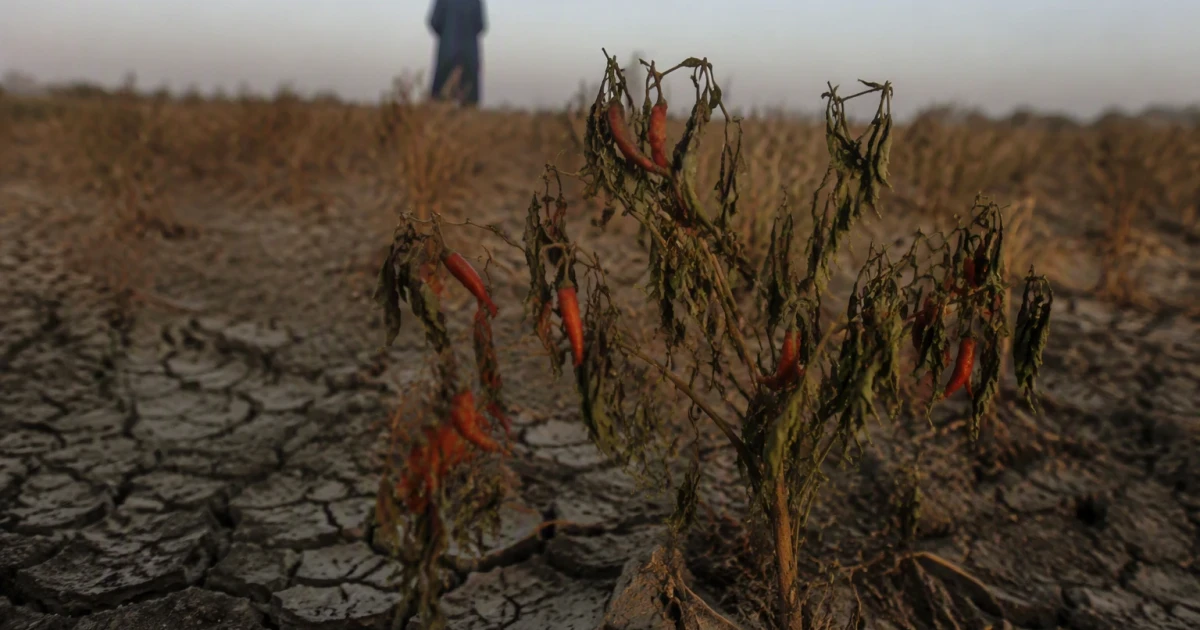
The pressure on chili growers has come in waves. Extreme heat first weakened fields, then floods compounded the damage in 2022. Chili pepper farmers in Pakistan are struggling with extreme climate conditions.
By June 15, 2026, farmers in southeastern Sindh were facing mounting losses from extreme heat and severe water shortages. The strain was showing up in shrinking harvests and declining crop quality. For a crop traded in volume and judged by color, dryness and consistency, lower quality can change how much traders can move through the market and what buyers are willing to pay.
Adaptation is possible, but every fix carries a cost
Farmers in Kunri and the surrounding belt are not standing still. They are changing cultivation methods, adjusting irrigation, and revising crop management in response to hotter weather and less reliable water. Those adaptations are practical, but none of them are free. New irrigation practices, extra water delivery, replanting after losses, and the added labor needed to protect a crop under stress all raise the cost of production.
Farmers can spend more to keep peppers alive through heat and water stress, or they can accept smaller and less reliable harvests. The first path may preserve quality for a while, but it can also deepen debt if fuel, water, seed and labor costs keep climbing. The second path saves cash in the short term, yet it risks hollowing out the crop’s future by making yields too unstable to support a household.
Why the market matters beyond the field
The Mirch Mandi wholesale market is where the region’s crop becomes income, and where lower harvests quickly turn into tighter supply. When the volume of peppers moving through that market falls, the effect can reach food prices, because chili is a basic ingredient in kitchens across Pakistan and a thinner supply leaves less room between farmgate losses and retail costs.
Traders depend on a steady stream of peppers to keep the market moving, and laborers depend on the harvest to find work drying, sorting and hauling the crop.
A region-defining crop now depends on a narrow set of choices
Pakistan’s chili growers are facing a hard arithmetic: more heat, less water and higher costs on one side, and a crop that still anchors a local economy on the other. The choices now include using water more carefully, changing how fields are irrigated, and accepting that some traditional methods may no longer be viable under current conditions.
Sources
- [1]nytimes.com
- [2]reuters.com
- [3]widerimage.reuters.com
- [4]dw.com
- [5]youtube.com
- [6]facebook.com