Science
Penn State researchers extend black hole thermodynamics beyond equilibrium
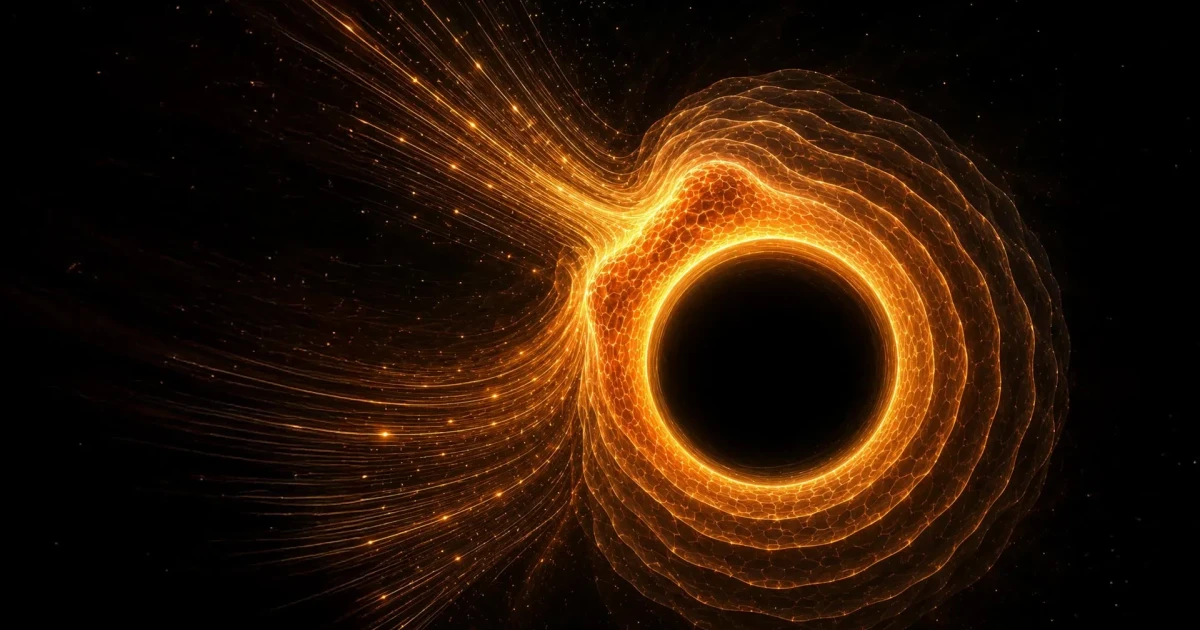
Black holes in the universe do not sit still for long. They merge, grow and eventually evaporate, and Penn State researchers have now written a framework that tries to carry Stephen Hawking’s thermodynamic laws beyond the equilibrium cases that dominated the field for decades.
Their paper, Thermodynamics of Black Holes, Far from Equilibrium, appeared June 24 in Physical Review Letters as an Editors’ Suggestion. Using dynamical horizon segments, the authors extend the first law of black hole mechanics from infinitesimal shifts between nearby equilibrium states to finite changes driven by physical processes. They also argue that the entropy of a dynamical black hole should be identified with the area of those horizon segments.
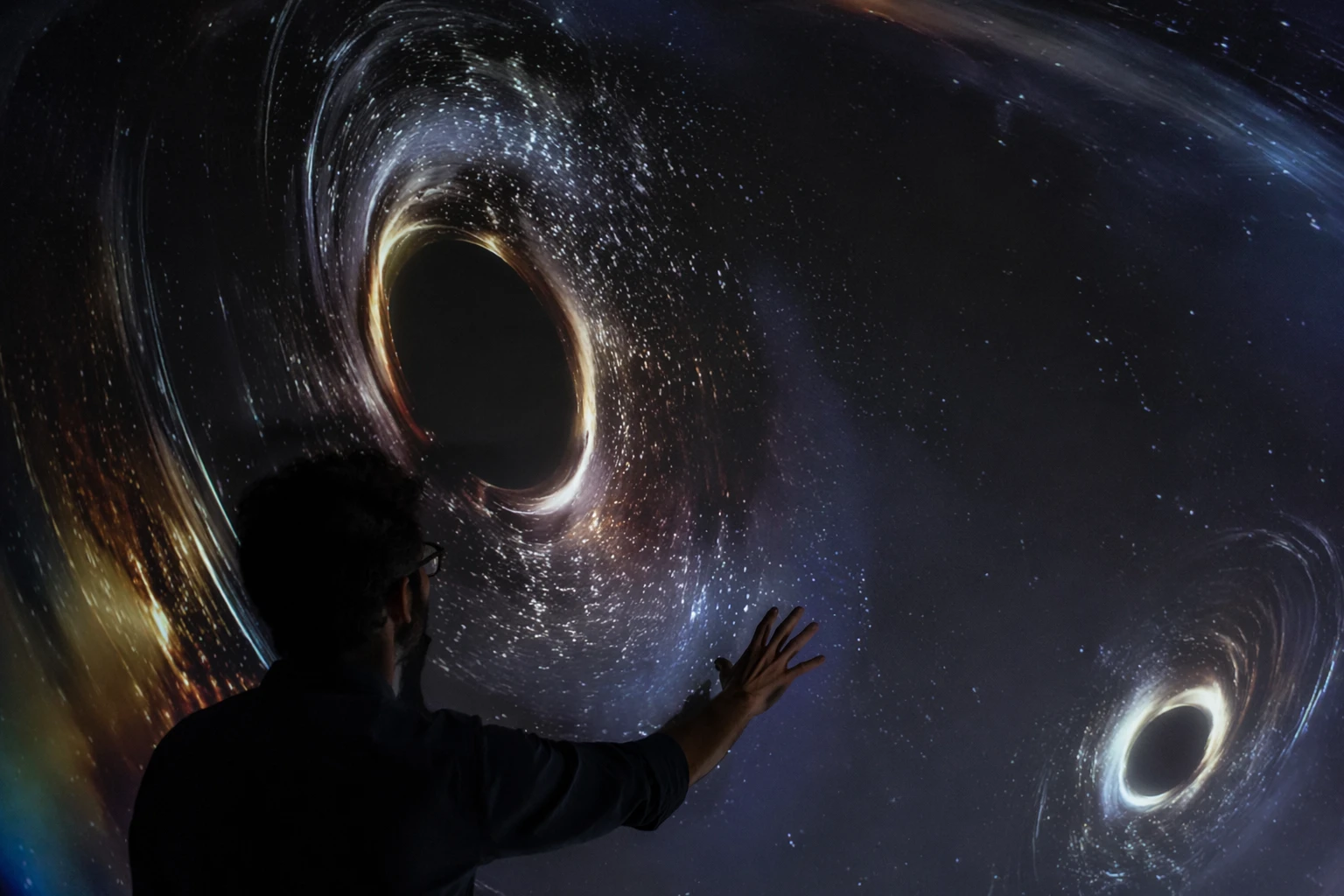
That matters because the most interesting black holes are rarely static. The clearest test cases come from gravitational-wave astronomy, where observatories such as LIGO have recorded violent mergers that force black holes through rapid change rather than quiet balance. LIGO’s first detection, GW150914, was announced in 2016 and came from two black holes of about 30 solar masses each merging about 1.3 billion light-years from Earth. The LIGO Scientific Collaboration described it as the first direct observation of gravitational waves and the first observation of a binary black hole merger.
The new framework is designed to make black hole thermodynamics look more like those events. Penn State says the work could help researchers better understand evaporation and merging black holes, two processes that lie at the center of modern black hole physics. Abhay Ashtekar, Daniel E. Paraizo and Jonathan Shu authored the paper, building on Ashtekar’s long-running work on quasi-local horizons, which Penn State says is widely used in numerical simulations of black hole collisions and in studies of quantum evaporation.
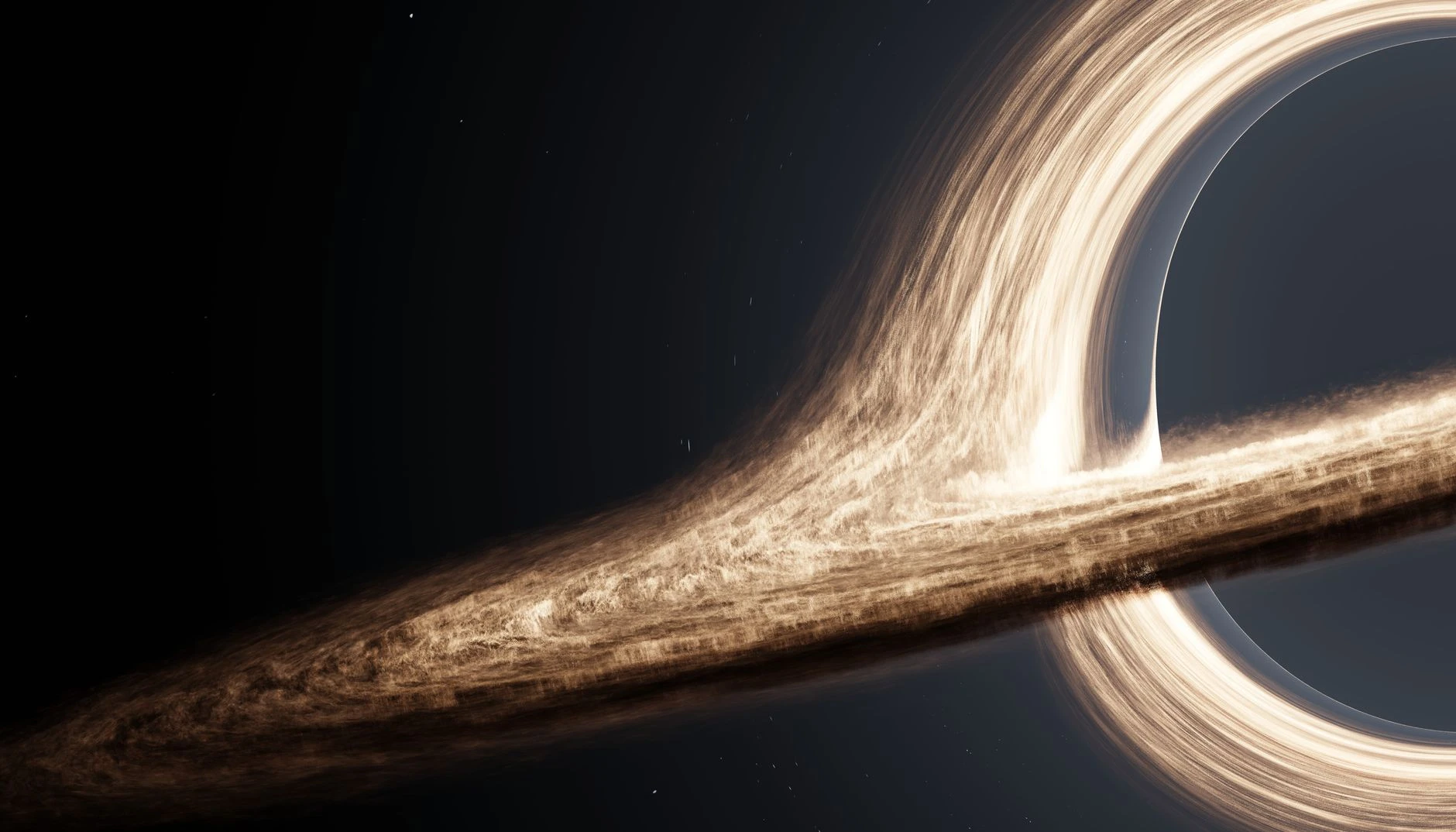
The result also fits a scientific path that began well before gravitational-wave detectors existed. In 1969, Roger Penrose proposed a way to extract rotational energy from a Kerr black hole, helping launch black-hole thermodynamics. Jacob Bekenstein later argued in the early 1970s that black holes possess entropy, and Hawking’s 1974 radiation prediction gave black holes a temperature and made the Bekenstein-Hawking entropy relation central to the field. The Penn State framework keeps that lineage intact while pushing it toward the messy, changing black holes that astronomers actually observe.
Sources
- [1]sciencedaily.com
- [2]psu.edu
- [3]link.aps.org
- [4]arxiv.org
- [5]ligo.org
- [6]pmc.ncbi.nlm.nih.gov