Business
Pentagon Adds Alibaba and BYD to Chinese Military Ties List
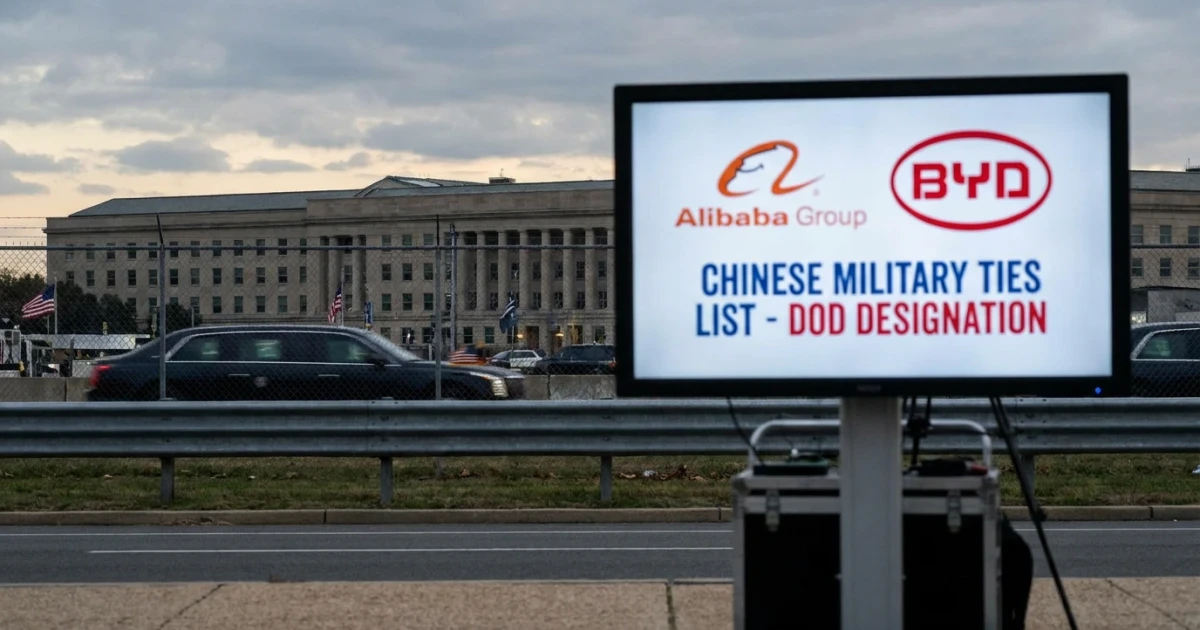
Alibaba Group Holding and BYD Company, two of China's most prominent technology and automotive firms, have been officially labeled by the U.S. Department of Defense as companies with ties to the Chinese military. The announcement, confirmed by the Pentagon and widely reported in outlets including AP News and the BBC, marks a significant escalation in the ongoing scrutiny of Chinese enterprises operating internationally.
U.S. Expands Section 1260H List
The Department of Defense has added these firms to its Section 1260H List of Chinese Military Companies, a designation created under the 2021 National Defense Authorization Act. This list identifies companies alleged to collaborate with or support China’s military and defense industrial base, restricting their access to U.S. investment and, in some cases, government contracts.
- Alibaba is one of the world’s largest e-commerce and cloud computing firms, with a global footprint and extensive SEC reporting.
- BYD is a leading electric vehicle and battery manufacturer, also listed on the U.S. SEC database as a foreign public company.
Allegations of Military Ties
According to the Pentagon, both Alibaba and BYD have been identified as entities that "support the modernization goals of China’s People’s Liberation Army." This designation is part of a broader U.S. effort to address concerns over China's military-civil fusion strategy, which aims to integrate private sector innovation with defense capabilities.
The U.S.-China Economic and Security Review Commission's 2023 report described how several Chinese technology companies, including those in e-commerce, artificial intelligence, and electric vehicles, have increased collaboration with state-linked defense organizations. These ties involve research partnerships, data sharing, and technology development in areas such as cloud computing and autonomous vehicles.
Implications for Global Business
Inclusion on the Pentagon’s list does not immediately ban U.S. companies from doing business with Alibaba or BYD. However, it does increase regulatory scrutiny and could lead to further restrictions or sanctions. Historically, previous designations have prompted heightened due diligence requirements for investors and suppliers, and in some cases, the U.S. government has imposed direct bans on federal procurement from such companies.
- Alibaba’s leadership structure and affiliations have been the subject of ongoing analysis by Western security experts.
- BYD’s global expansion, particularly into electric vehicles and batteries, had already raised concerns in several markets over data privacy and supply chain security.
Broader Context and International Response
The U.S. government’s move is part of a larger pattern of tightening controls on Chinese technology firms, citing national security risks. Recent years have seen similar actions against companies such as Huawei and ZTE. The Chinese government has frequently rejected these allegations, arguing that the measures are politically motivated and unfairly restrict competition.
Europe and other regions are also re-evaluating their relationships with major Chinese technology and manufacturing firms, though policy responses vary significantly across countries.
What Comes Next?
The addition of Alibaba and BYD to the Section 1260H list signals continued U.S. vigilance regarding the intersection of Chinese commercial innovation and military modernization. Analysts suggest the move may affect investor sentiment, supply chains, and the competitive landscape for global technology and automotive industries.
As the situation develops, stakeholders will be watching for any follow-up actions from the U.S. Treasury, Commerce Department, or international regulators, as well as any reciprocal measures from China. The ongoing debate over economic security and technological sovereignty between the world’s two largest economies is likely to remain a pivotal issue for the foreseeable future.