Business
Pentagon backs Sila with $1.4 billion loan for battery supply chain
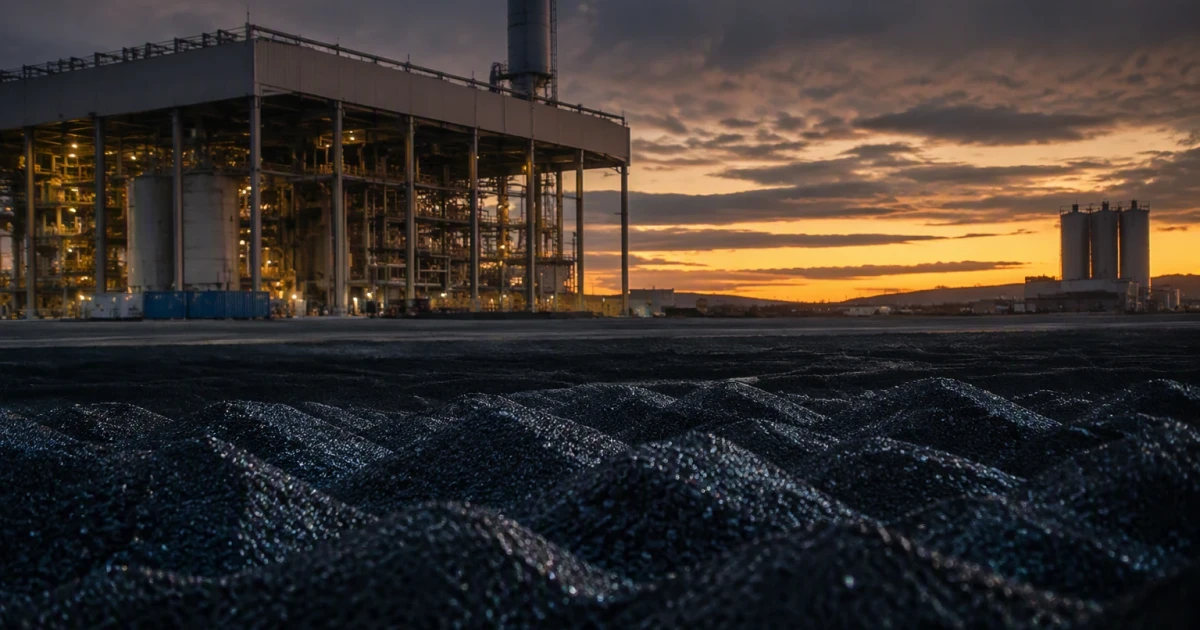
The Pentagon committed a conditional $1.4 billion loan to Sila Nanotechnologies on Friday, tying military finance directly to the domestic battery supply chain. The U.S. Department of War’s Office of Strategic Capital said the money was meant to expand production of advanced battery materials at Sila’s Moses Lake, Washington, facility and support output of Titan Silicon, the company’s silicon anode material.
The deal put a defense seal on a business that has been moving from development toward scale. Sila said in April 2025 that commissioning had begun at Moses Lake and that the plant was on track for 2025 production of Titan Silicon. A draft environmental assessment from the Department of Energy in February 2024 said the project could support up to 2,300 tons a year of production. Sila describes its next-generation anode material as the first significant chemistry improvement to lithium-ion batteries to reach the market in 30 years.
Sila has already built commercial ties that show why Washington is treating battery chemistry as a strategic asset. Panasonic Energy said in December 2023 that it had signed an agreement with Sila to boost electric-vehicle battery performance and strengthen local supply chains in North America. The partnership centered on Sila’s nano-composite silicon anode for lithium-ion batteries, a product aimed at improving battery performance while reducing dependence on imported inputs.
The new federal backing also follows private capital. Reuters-linked reporting in 2026 said Sila had secured $300 million in funding to expand U.S. silicon anode production, adding more money to a sector where manufacturing scale and supply security matter as much as lab performance. At Moses Lake, Sila is trying to turn a technology promise into industrial output, with the Pentagon’s loan commitment giving that effort a public-sector stamp of approval.
For defense planners, the stakes go beyond electric vehicles. Advanced anodes and energy-storage materials can affect military platforms, logistics systems and backup power infrastructure, all of which depend on reliable batteries and stable supply chains. The loan commitment reflects Washington’s broader push to bring more of that capacity back onto U.S. soil, where battery know-how, manufacturing and critical materials are increasingly treated as strategic assets rather than just clean-energy inputs.
Sources
- [1]reuters.com
- [2]war.gov
- [3]morningstar.com
- [4]energy.na.panasonic.com
- [5]silanano.com
- [6]energy.gov
- [7]linkedin.com
- [8]downloads.regulations.gov