US News
Pentagon Deploys 2,000 Airborne Troops to Middle East
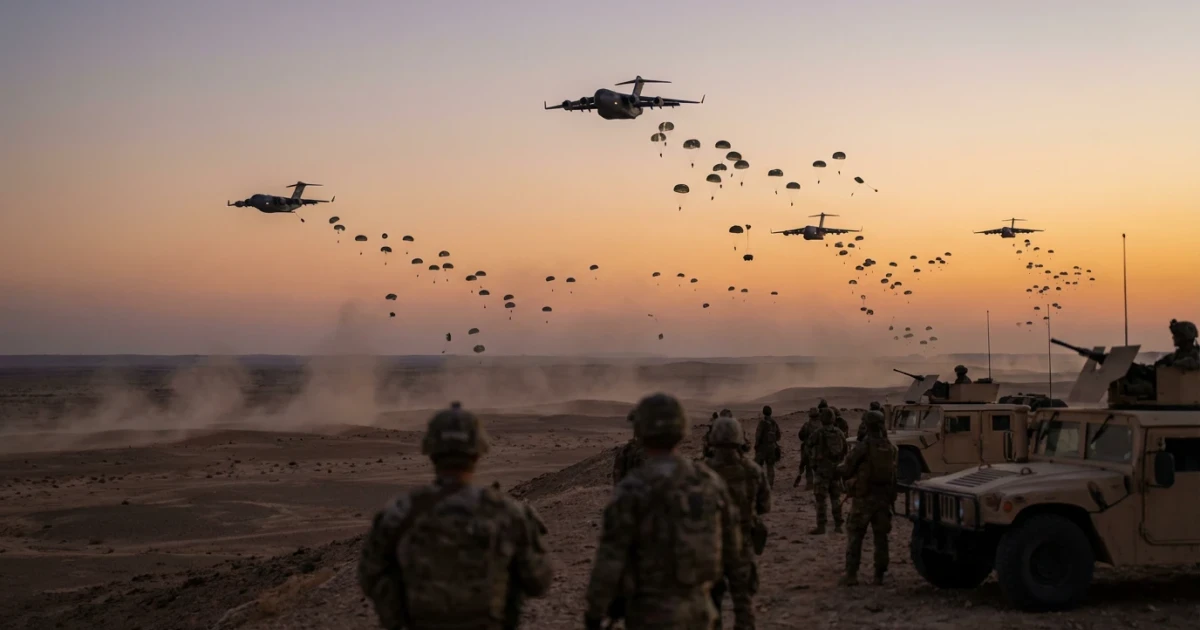
The Pentagon has ordered the deployment of 2,000 airborne troops to the Middle East, marking a significant adjustment in the U.S. military’s force posture in the region. The move underscores ongoing security concerns and the United States’ commitment to its strategic interests and allies across the Middle East.
Details of the Deployment
The order, first reported by The New York Times, involves the rapid mobilization of 2,000 airborne personnel. While the Pentagon has not publicly disclosed the specific units involved or their precise destination, such deployments typically draw from the U.S. Army’s Airborne and rapid response forces, which are capable of mobilizing on short notice and providing a flexible presence in volatile situations.
This deployment comes amid ongoing military operations and persistent tensions across the Middle East, including threats to U.S. personnel and interests. The Pentagon’s decision reflects both a deterrence strategy and a readiness to respond to evolving security challenges. Official statements emphasize the temporary nature of the deployment, describing it as a precautionary measure to bolster regional security.
Context: U.S. Military Presence in the Middle East
The U.S. maintains a significant military footprint in the Middle East, with tens of thousands of personnel stationed across bases in countries such as Kuwait, Bahrain, Qatar, and Saudi Arabia. These deployments support a range of missions, from counterterrorism operations to securing vital maritime routes and assisting allied forces.
- According to Government Accountability Office reports, the U.S. military has maintained a consistent presence in the region, with force levels fluctuating in response to operational needs and geopolitical developments.
- In recent years, the U.S. has also adjusted troop numbers in Iraq and Syria as part of Operation Inherent Resolve, the ongoing campaign against ISIS and related groups.
This latest deployment of airborne troops is part of a broader pattern of force adjustments intended to address emerging threats, reassure partners, and maintain freedom of navigation and commerce in critical waterways such as the Persian Gulf and Red Sea.
Strategic Implications
Defense analysts note that the movement of airborne troops—who are trained for rapid insertion and crisis response—sends a strong signal to both adversaries and allies. The deployment is likely designed to deter potential escalations and provide U.S. commanders with additional options if the security environment deteriorates.
According to the Council on Foreign Relations, periodic surges in U.S. force levels are not uncommon, especially when intelligence indicates a heightened risk to American personnel or regional partners. These moves are typically accompanied by diplomatic engagements and coordination with host nations.
Congressional Oversight and Public Accountability
Deployments of this scale are subject to oversight by the House Armed Services Committee and other congressional bodies, which review the strategic rationale, costs, and risks associated with overseas military operations. Lawmakers often call for transparency regarding the objectives and expected duration of such missions.
Looking Ahead
While the Pentagon has not specified how long the 2,000 airborne troops will remain in the Middle East, officials emphasize that force posture will be continually reassessed based on the security situation. The deployment highlights the enduring challenges of balancing deterrence, diplomacy, and force protection in a complex and often volatile region.
For further updates and official statements, readers can follow U.S. Central Command news releases and consult the latest Department of Defense personnel reports for ongoing data on troop movements and military operations.