US News
Pentagon says US drone output still lags far behind Ukraine's wartime surge
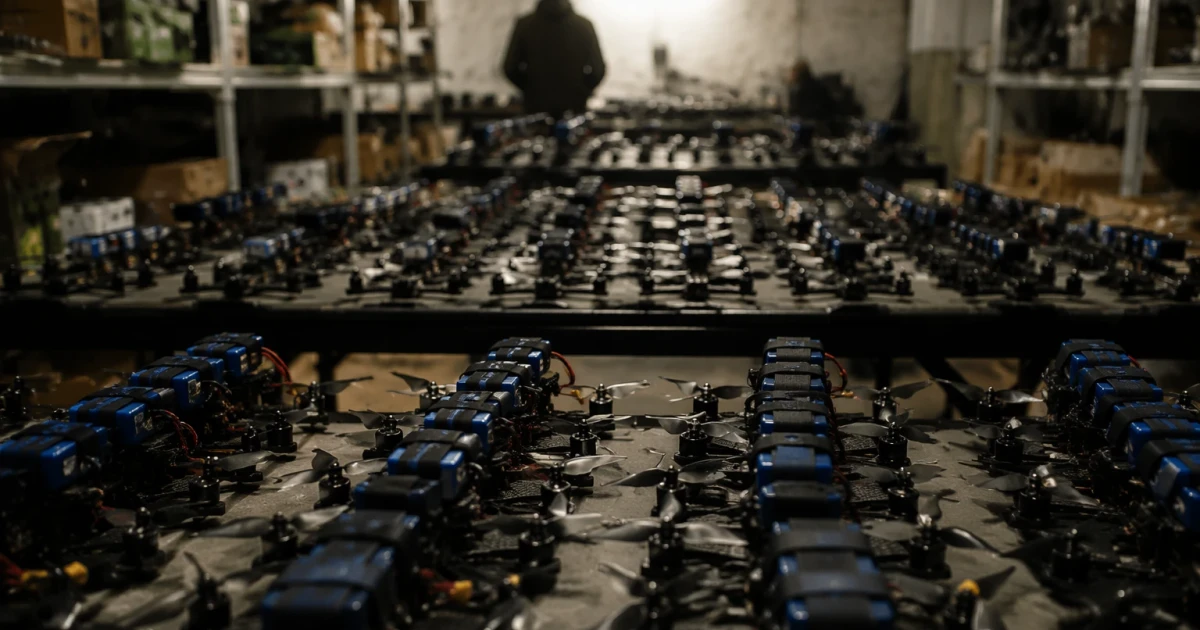
A Pentagon official tasked with building a domestic drone industry said the United States was still in the earliest, hardest phase of that effort, even as Ukraine was on track to produce 6 million to 7 million small first-person-view attack drones in 2026. U.S. output remains only a fraction of Ukraine’s wartime production, a gap that exposes how hard it still is for the world’s biggest defense spender to surge manufacturing at battlefield speed.
The Trump administration is tightening rules that require drones to be built in the United States, but the industrial base is still fighting the same obstacles that have slowed other defense programs: long procurement cycles, bureaucratic delay, and supply chains that were not built for a war-driven production tempo. The Pentagon first outlined its goal of putting the U.S. industrial base on a wartime footing in November 2025, according to a CSIS analysis published July 6, underscoring how recent the push remains.
Ukraine’s scale is striking because it has been forced to adapt under attack. Its drone industry has roughly doubled output each year, producing at least 2.2 million drones in 2024 and at least 4 million in 2025. The 2026 pace, around 500,000 drones a month, reflects a manufacturing system built around rapid iteration, dispersed production and immediate battlefield feedback, exactly the traits Washington now wants to import into its own planning.
That urgency has already reached bilateral cooperation. Ukraine agreed on July 22 to export drones to the United States for the Pentagon’s Drone Dominance programme, and Volodymyr Zelenskiy said on July 24 that the two countries were moving forward on joint drone production. The same lessons that have reshaped Ukraine’s defense industry are now feeding into U.S. thinking on drones, munitions, electronics and more agile supply chains.
For Washington, the production gap is more than a comparison of factories. It affects how quickly the United States could replenish stocks in a high-intensity conflict, support Taiwan or NATO allies, and sustain deterrence if demand suddenly spikes. The strategic vulnerability is not a lack of capacity in the abstract, but the inability of peacetime industry to move as fast as a wartime economy.