Science
Persistent Hydrogen Leaks Force NASA to Delay Artemis II Launch Until March
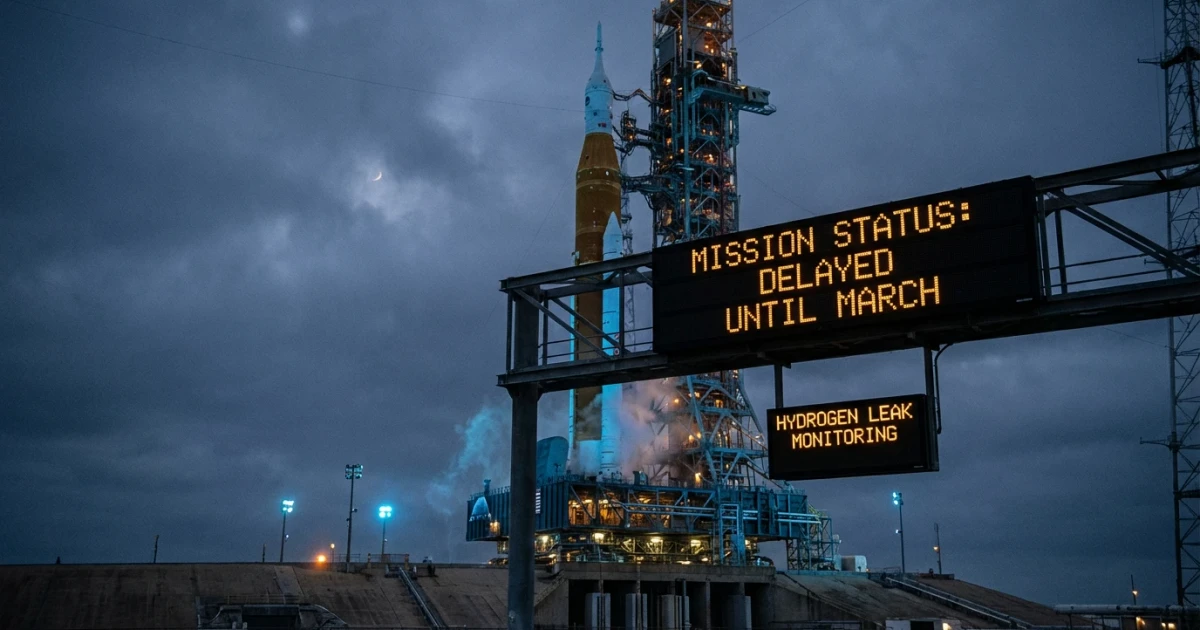
NASA has once again delayed the launch of Artemis II, the agency's first planned crewed mission around the Moon in over fifty years, citing ongoing challenges with hydrogen leaks in the launch system. The new target launch window is now set for March 2026, marking another setback in the ambitious effort to return humans to lunar orbit.
Hydrogen Leaks Stall Progress
The Artemis II mission, which will send astronauts on a ten-day journey around the Moon, has faced repeated technical hurdles during pre-launch testing. The most recent obstacle was a persistent hydrogen leak discovered during the Wet Dress Rehearsal, a critical test that simulates every stage of the countdown without actually igniting the engines. According to reports, the test was aborted at T-5:15 (five minutes and fifteen seconds before a simulated liftoff) when teams detected the leak—forcing NASA to halt the rehearsal and reassess the situation.
- Hydrogen leaks have been a recurring issue for the Artemis program, previously causing delays in the Artemis I mission.
- Hydrogen, while an efficient rocket fuel, is notoriously difficult to contain due to its small molecular size, which can escape through microscopic seal imperfections.
- The repeated leaks have raised concerns about the reliability of the Space Launch System (SLS) fueling infrastructure.
Impact on Artemis Program Timeline
The delay of Artemis II represents a significant adjustment to NASA's lunar exploration roadmap. Originally scheduled for late 2025, the mission is now expected to launch no earlier than March 2026. This postponement also affects subsequent missions, including Artemis III, which aims to land astronauts on the lunar surface.
- The last time humans orbited the Moon was in December 1972 with Apollo 17.
- NASA's Artemis program is designed to establish a sustainable human presence on the Moon and pave the way for eventual crewed missions to Mars.
- Delays in Artemis II may compress the timeline for lander development and astronaut training for Artemis III.
Technical and Safety Considerations
NASA officials emphasize that safety remains the top priority, even as the agency contends with schedule pressures. Addressing the hydrogen leak issue is critical for crew safety and mission success, particularly as Artemis II will carry humans beyond low Earth orbit for the first time in decades. Engineers are currently diagnosing the source of the leaks and considering design changes or revised fueling procedures to mitigate risks before proceeding with launch operations.
Looking Ahead: Challenges and Optimism
While the delay is a setback, NASA remains committed to its lunar ambitions. The agency is leveraging lessons learned from these technical challenges to improve hardware reliability and mission assurance in future flights. The Artemis II crew, once cleared for launch, will test all systems critical for deeper space exploration, including life support and navigation technologies. Their successful mission will be a pivotal step toward humanity's return to the Moon and, eventually, Mars.
For those following the Artemis program's progress, the new launch window in March 2026 is a critical milestone. NASA's continued transparency about technical setbacks underscores both the complexity of deep space exploration and the agency's resolve to overcome obstacles en route to a new era of human spaceflight.
Sources
- [1]Ars Technica