Business
Pfizer beats quarterly estimates on stronger demand for Eliquis, raises outlook

Pfizer beat second-quarter profit estimates as stronger demand for Eliquis helped carry results, and the company raised the midpoint of its full-year 2026 revenue guidance by $500 million. The drugmaker said adjusted diluted earnings held up even as it continued to manage pressure from fading pandemic-era revenue and patent risks across its portfolio.
Pfizer posted second-quarter revenue of $15.03 billion and adjusted diluted earnings per share of $0.77. On a GAAP basis, the company reported a loss of $0.04 a share, driven by non-cash intangible asset impairments. Pfizer also said operational revenue growth from launched and acquired products reached 18%, a sign that newer and recently added medicines are helping offset declines elsewhere in the business.
Eliquis, the blood thinner Pfizer develops and commercializes with Bristol Myers Squibb of Princeton, New Jersey, remains one of the company’s most important mature brands. Its continued strength matters because blockbuster drugs can steady revenue when newer launches are still scaling, and investors have been watching whether Pfizer’s legacy products can keep doing that work after the pandemic windfall faded.
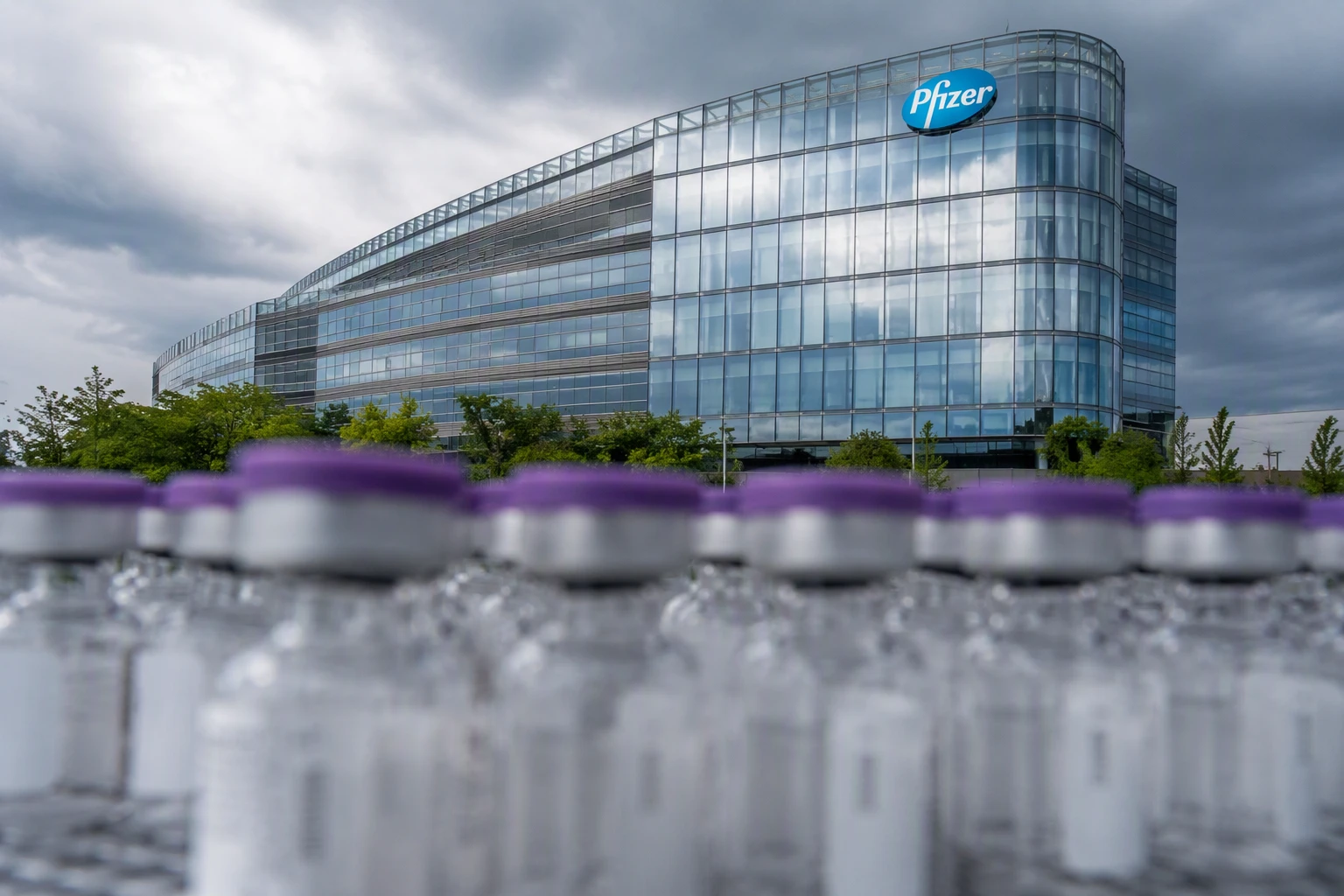
In its latest outlook, Pfizer reaffirmed full-year 2026 guidance for adjusted diluted EPS while lifting the revenue midpoint. The company also said it would expand productivity enhancement initiatives and had several key pivotal readouts expected over the next 12 months, underscoring how much of Pfizer’s next phase now depends on execution beyond COVID-related products.
The company’s latest numbers fit a broader reset that has been underway for several years. Pfizer has been working to replace pandemic-era sales with a mix of established medicines, acquired assets and later-stage experimental drugs, while also tightening costs. In that effort, the company said it planned an additional $2.5 billion in savings through ongoing cost-cutting.

For investors, the quarter offered evidence that demand for a major chronic-care medicine like Eliquis still has enough momentum to support earnings. For patients and health systems, it also shows that cardiovascular treatments remain central to the company’s portfolio and to broader pharmaceutical demand, even as drugmakers face pricing scrutiny and patent expiration risks.
Sources
- [1]reuters.com
- [2]aol.com
- [3]pfizer.com
- [4]tradingview.com
- [5]lasvegassun.com