Science
Phage Lysis Proteins Target MurJ Flippase in Bacteria
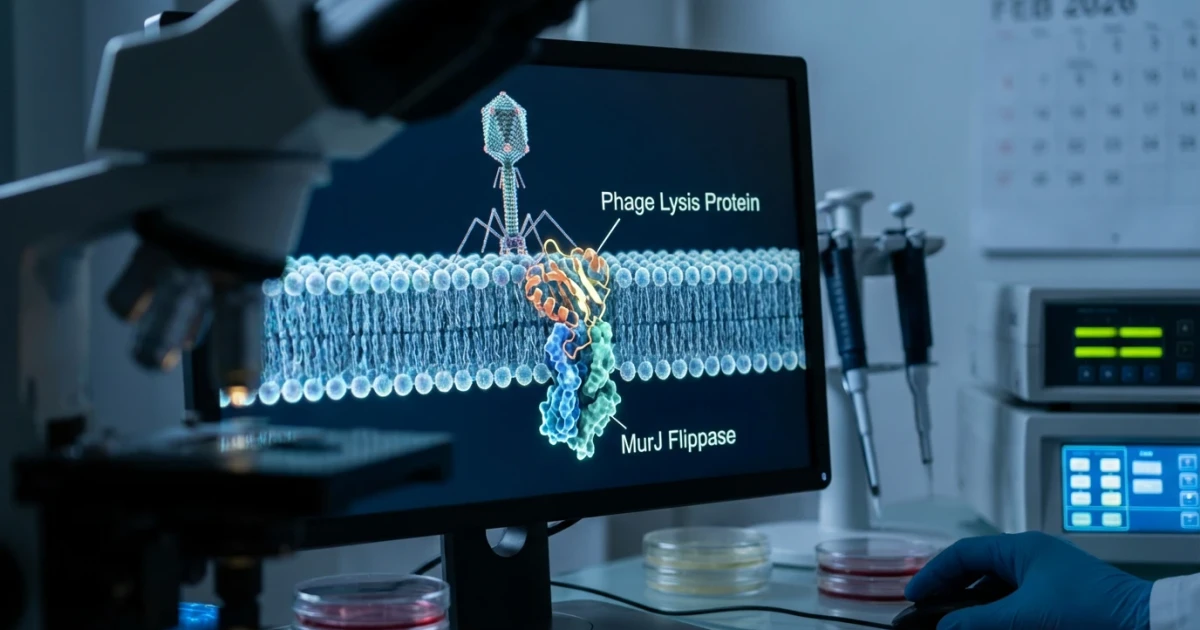
Recent findings published in Nature shed light on the sophisticated strategies bacteriophages use to breach bacterial defenses, focusing on the convergent inhibition of the MurJ flippase by phage lysis proteins. This discovery reveals a pivotal mechanism by which viruses that infect bacteria (bacteriophages) can disrupt bacterial cell wall biosynthesis, with significant implications for antibiotic research and our understanding of bacterial immunity.
MurJ: A Key Player in Bacterial Cell Wall Synthesis
The MurJ flippase is an essential membrane protein in Gram-negative bacteria such as Escherichia coli. Its primary role is to transport lipid-linked peptidoglycan precursors from the inner to the outer leaflet of the cytoplasmic membrane, a crucial step in cell wall biosynthesis. Without functional MurJ, bacteria cannot assemble their protective cell wall, rendering them susceptible to environmental stress and, notably, to lysis.
- MurJ is encoded by the murJ gene, which is highly conserved among many bacterial species.
- Structural studies, such as those using the crystal structure of MurJ (PDB: 6CC4), have revealed how the protein facilitates the flipping of peptidoglycan precursors across the membrane.
Phage Lysis Proteins and Convergent Inhibition
Bacteriophages (phages) have evolved diverse mechanisms to lyse their bacterial hosts at the end of their replication cycle. One prominent strategy involves the expression of phage lysis proteins that specifically disrupt cell wall synthesis or integrity. The recent Nature study highlights a remarkable example of convergent evolution, where unrelated phages independently develop proteins that target the same bacterial machinery—MurJ.
- These lysis proteins inhibit MurJ by binding to and blocking its function, effectively halting the export of peptidoglycan precursors.
- The result is a rapid breakdown of cell wall synthesis and subsequent bacterial lysis, releasing new phage particles.
Analysis of multiple phage genomes shows that MurJ-targeting lysis proteins are widespread but display diverse sequences and structures, underscoring the evolutionary pressure on phages to overcome bacterial defenses.
Implications for Antibiotic Development
The convergent inhibition of MurJ offers exciting possibilities for drug discovery. Since MurJ is conserved in many pathogenic bacteria and essential for viability, it represents a promising antibiotic target. By mimicking the inhibitory strategies of phage lysis proteins, researchers may be able to design novel antimicrobials that exploit the same vulnerabilities.
- Current antibiotics often target other steps in cell wall synthesis, but resistance is rising. New MurJ inhibitors could provide a much-needed alternative.
- Understanding the mechanisms and diversity of phage-derived MurJ inhibitors provides a blueprint for rational drug design.
Future Directions and Research
While the Nature study advances our understanding of phage-bacteria interactions, several questions remain:
- How do bacteria evolve to resist phage-encoded MurJ inhibitors?
- Can synthetic versions of these lysis proteins be developed as antimicrobial agents for clinical use?
- What other essential bacterial proteins are targeted by convergently evolved phage lysis systems?
Ongoing research into phage biology and bacterial cell wall synthesis continues to reveal the intricate evolutionary arms race between these ancient adversaries. As the search for new antimicrobial strategies intensifies, the lessons learned from nature’s own molecular weapons may prove invaluable.