Entertainment
Philadelphia artist Stacey Lee Webber turns money into sculptures and jewelry
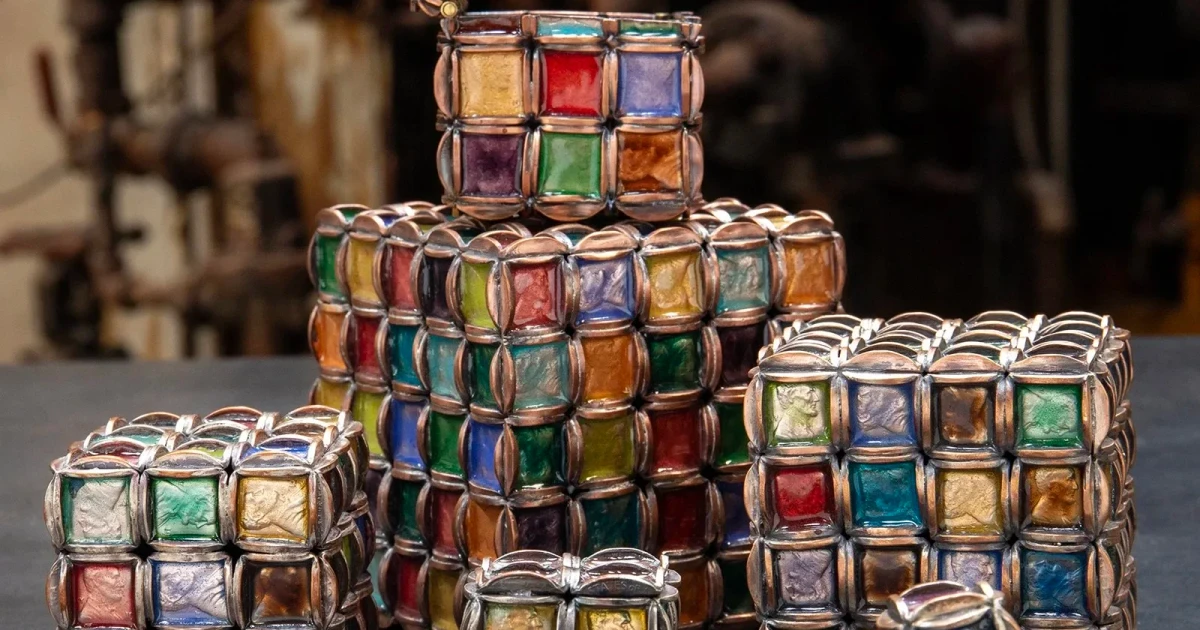
Philadelphia-based artist Stacey Lee Webber has spent more than 15 years building one-of-a-kind works by hand, and her chosen medium is money itself. In June 2026, Bureau of Labor Statistics data showed the Consumer Price Index for All Urban Consumers fell 0.4 percent after a 0.5 percent rise in May, with annual inflation at 3.5 percent, and her work feels especially pointed: currency is still spending power, but it is also a symbol that can be cut, stitched, soldered, and worn.
Money as material, money as message
Webber’s practice begins with a simple reversal. A penny, bill, or coin that normally moves quickly through the economy is slowed down, altered, and made to stay in place. Webber’s work appeared on CBS Sunday Morning in a segment with Nancy Giles, and the point is not just novelty. It is the tension between what cash does and what cash represents, especially when every purchase is filtered through inflation and the price of everyday goods.
Her portfolio and shop are built around that idea of transformation. Webber says every piece is one of a kind and made by hand, which matters because the work depends on recognizing the original object even after it has been remade. The coin or bill is never erased completely; its former life is visible enough to keep the viewer thinking about circulation, wear, and the history embedded in a small denomination.
The series that define her language
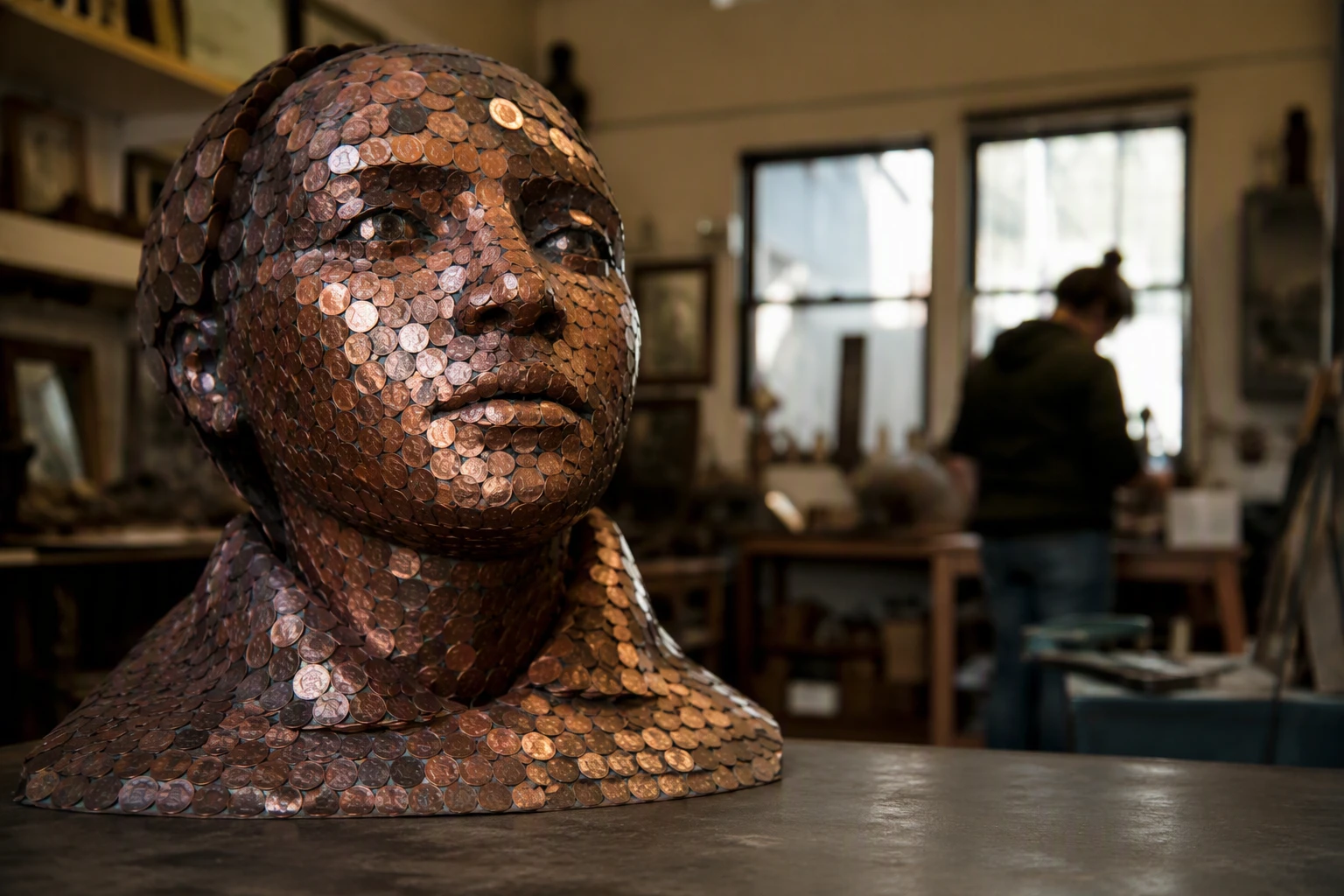
Webber has turned that concept into several distinct bodies of work, each using currency in a different way. The series use money by stitching, cutting, bending, or soldering.
• Patterned Bills, which began in 2006, uses stitched paper money. The printed surfaces stay recognizable, but the needlework changes the bill from transaction tool to textile.
• The Core Collection has been evolving since she first started working with coins in 2006. It focuses on coin-based jewelry made from circulated vintage silver, nickel, or solid copper coins that have been cut, chained, sliced, and diced.
• The Clowns and Costumes embroidery series hand-embroiders fantastical disguises onto currency, turning the ordinary face of money into a theatrical surface.
• The Craftsmen Series builds life-sized tools entirely from copper pennies, pushing the material from pocket change into the language of labor.
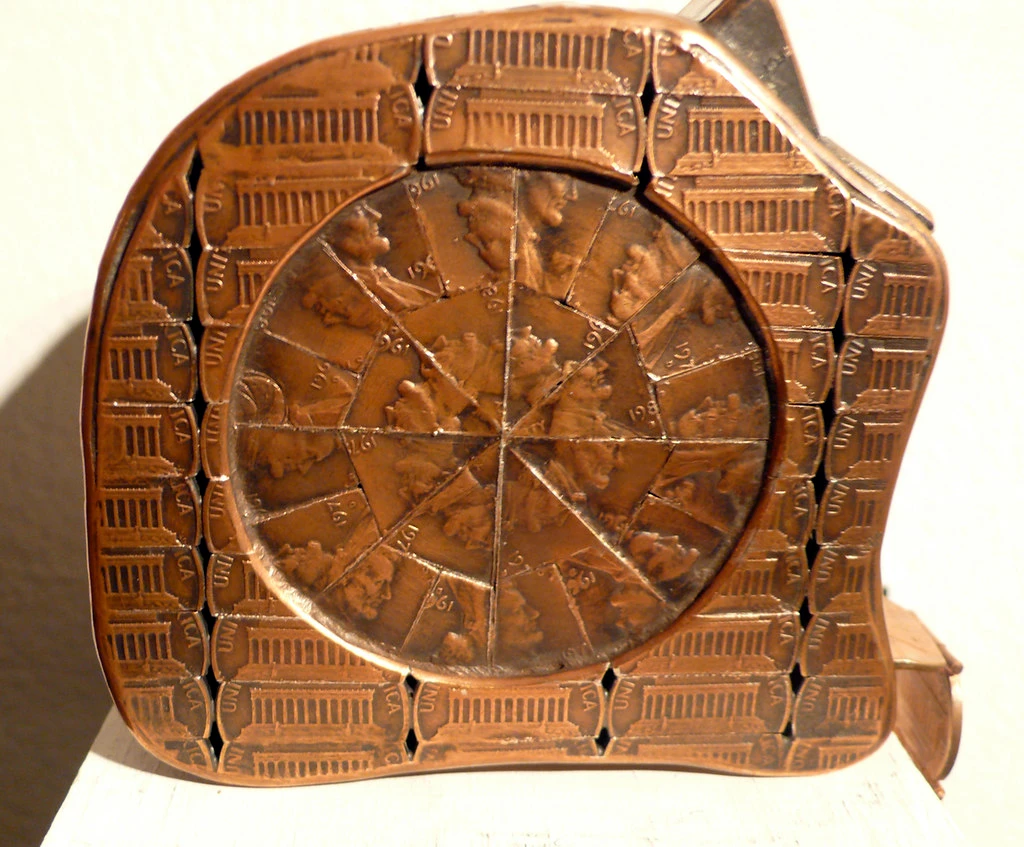
• Coin Vessels transform U.S. coins into hollow sculptural tableware, a useful form that still resists normal use because the material is itself the subject.
• God Bless America is an ongoing sculpture series made from hand-soldered vintage circulated coins and draws on familiar American symbols.
• The Imagine Series uses hand-cut foreign and American coins to create imaginary scenes, extending the idea of currency beyond national borders and into fiction.
A coin has an issuer, a date, and a face value, but it also has wear marks, tarnish, and handling marks that carry evidence of use. That is part of the appeal for Webber, who says she cherishes working with found materials whose history is physically evident.
A Philadelphia studio with national reach
Webber’s biography helps explain the mix of industrial process and handmade detail in her work. Born in 1982 in Indianapolis, Indiana, she earned a BFA from Ball State University in 2005 before building her practice in Philadelphia. In 2017, she worked at Globe Dye Works in Northeastern Philadelphia, a fitting environment for an artist working in metal, thread, and repurposed material.
Her Philadelphia base has not kept her work local. The Smithsonian American Art Museum maintains a dedicated artist page for her, and she has also been associated with the Philadelphia Museum of Art Contemporary Craft Show. In 2026, her website listed solo exhibitions at Chicago Expo in Chicago, Illinois, from April 9 to 12, and at the Smithsonian Craft Show in Washington, DC, from April 23 to 26.
Why cash feels different now
Inflation has made that story easier to see. Money is constantly being compared with what it can still buy. In Webber’s work, a coin that would normally disappear into a register or a jar becomes a sculptural component, and a bill becomes stitched surface instead of spending power.