Technology
Philips Hue Bridge Pro adds motion sensing and smarter scene control
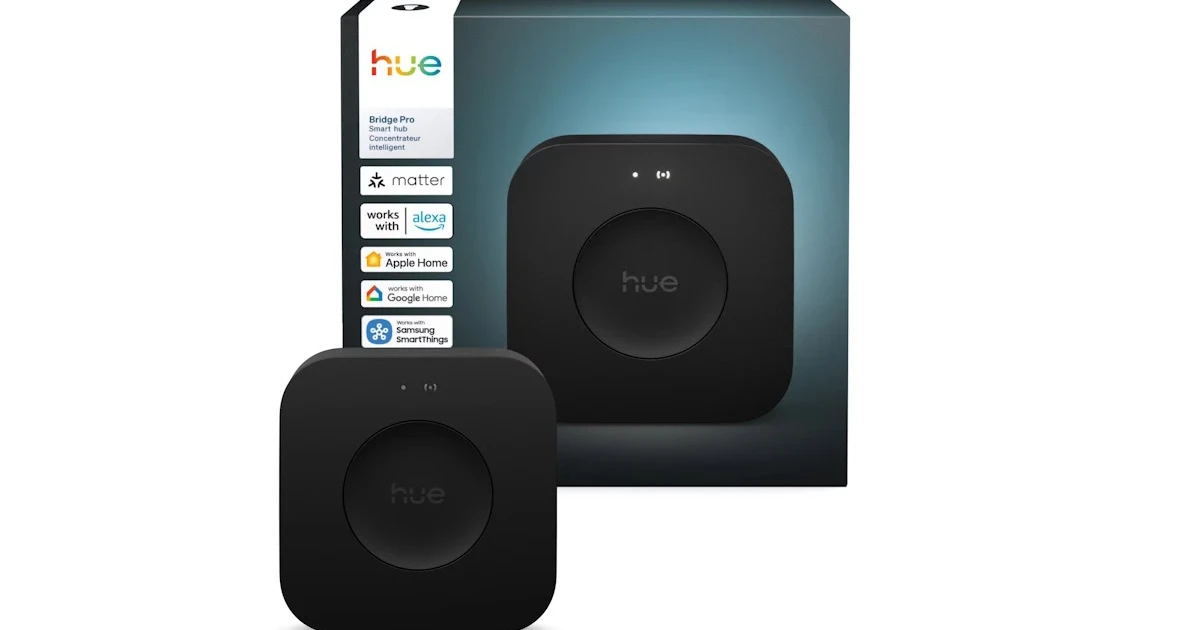
Philips Hue’s Bridge Pro is trying to do more than manage lights. It turns compatible bulbs into motion sensors, promises smarter scene control across a room, and pushes the Hue system far beyond the old bridge’s limits with support for 150-plus lights and 50-plus accessories. The real question is whether those gains make the platform easier for ordinary households to live with, or simply more impressive on paper.
The motion feature, called MotionAware, is the clearest sign that Signify wants to remove setup friction. Instead of adding separate sensors, cameras, or physical installation, MotionAware watches fluctuations in Zigbee wireless signals between at least three compatible Hue lights and uses that pattern to detect movement. Philips Hue says most products support it, though some older devices and battery-sensitive devices do not. For homes already built around Hue bulbs, that could make motion-triggered lighting feel less like a project and more like a default setting.
The Bridge Pro itself is built for a much larger footprint than the older hub. Signify said the new model launched on September 4, 2025, and described it as the next generation of the Hue ecosystem. It uses a processor five times more powerful and memory 15 times larger than the prior bridge, can store more than 500 custom lighting scenes, and includes advanced encryption with Zigbee Trust Center. It also unlocks Hue Sync surround lighting and connects with Apple Home, Amazon Alexa, Google Assistant, Samsung SmartThings and Matter.
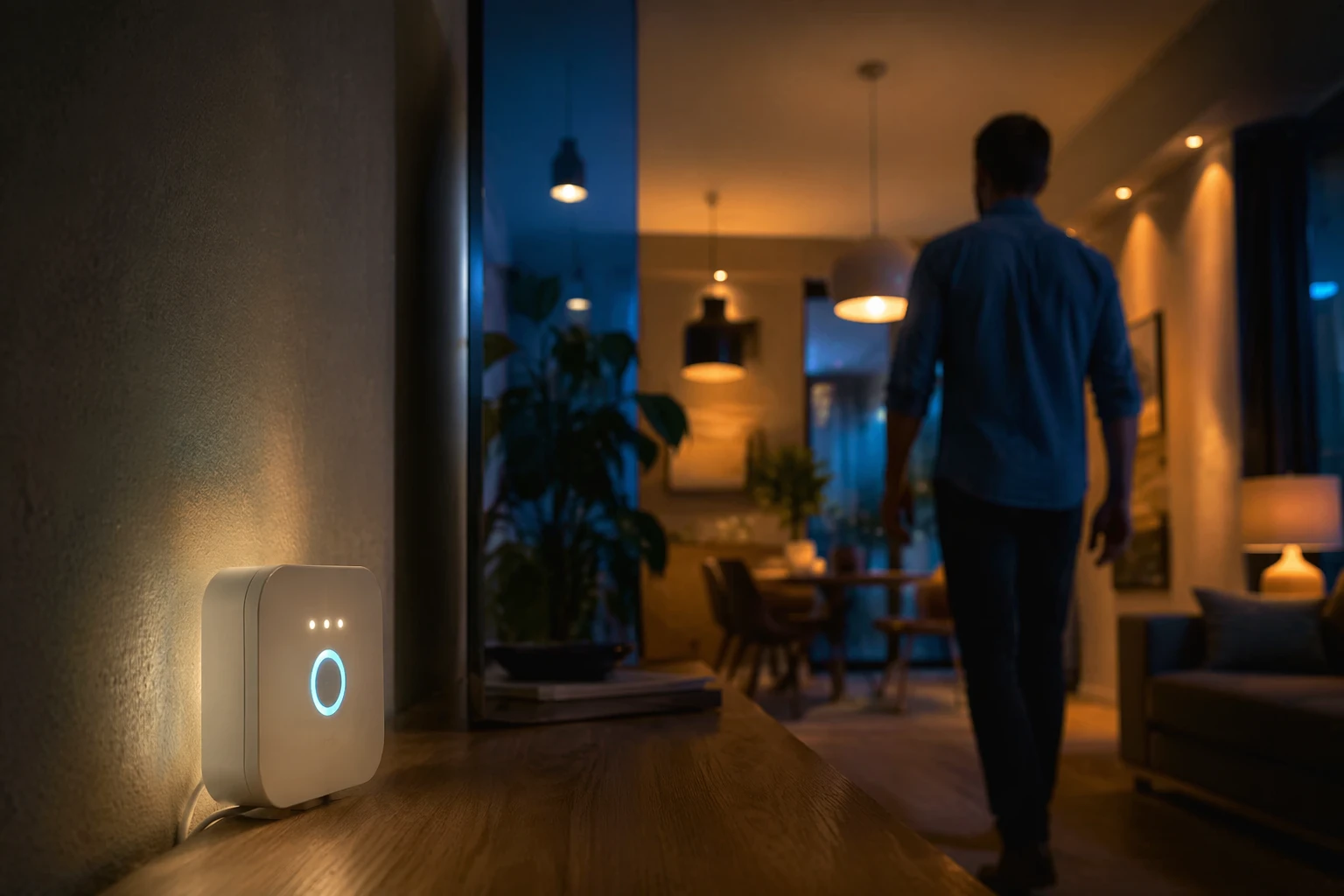
In January, Signify added another layer with Hue SpatialAware, a Bridge Pro-exclusive feature scheduled to arrive in spring 2026. SpatialAware uses the layout of the room and the placement of Hue lights to distribute scenes more naturally across a space, and Philips Hue says it will rescan and recalibrate when lights are moved or added. That matters because the hardest part of smart lighting is not buying the bulb. It is making a room feel intentionally lit without constant tinkering.
Price remains the catch. Philips Hue listed the Bridge Pro at $139.99 in its U.S. store, with launch-period availability and pricing reportedly fluctuating around an introductory level closer to $89.99. For smaller homes, the old bridge still covers basic control well enough. For larger setups, or for households that want motion sensing without another wall-mounted sensor, the Bridge Pro is the first Hue hub that starts to justify its premium by reducing clutter rather than adding features for their own sake.
Sources
- [1]theverge.com
- [2]signify.com
- [3]philips-hue.com