Business
Phillip Jeffries turns wallpaper into a booming luxury design business
Phillip Jeffries turned a narrow decorating category into a luxury design business by making wallcovering feel scarce, tactile, and trade-worthy. Founded by Eric Bershad in 1976 with just 10 grasscloth wallcoverings in a garage, the family-owned company now sells itself as a global leader in natural, textured, and specialty wallcoverings, with a showroom footprint, a sizable inventory, and a brand story built around craftsmanship and speed.
From garage startup to design-category brand
The company’s origin story is unusually specific, and that precision matters to the brand. Eric Bershad started with a single material focus, grasscloth, rather than trying to compete broadly across home decor, and Phillip Jeffries still points back to that beginning as the foundation for its identity. Public-facing company posts in 2020 and 2021 marked 44 and 45 years in business, with Philip and Jeffrey Bershad writing letters of gratitude and signaling that the company’s growth remained tied to its family ownership.
That family framing is central to the business model. Phillip Jeffries describes itself as still proudly family-owned, and that message helps it occupy a space between heritage craft and modern premium retail. In a category where many products are treated as commodity finishes, the company has built a narrative around continuity, taste, and specialized expertise.
Why wallpaper became a luxury product
Phillip Jeffries has spent years repositioning wallcovering away from the idea of a simple decorative layer and toward an interior-design statement. Its product messaging emphasizes wallcoverings that can turn houses into dream homes and commercial spaces into luxury experiences, which places the brand squarely inside the high-end interiors market rather than the mass-market paint aisle.
That positioning helps explain the company’s emphasis on natural, textured, and specialty materials. Grasscloth, textured surfaces, and specialty finishes are more labor-intensive and visually distinctive than flat printed wallpaper, and they fit the needs of designers working on custom homes, hospitality, and commercial projects where materials signal status as much as function. The appeal is not just pattern, but feel, depth, and the sense that the wall itself has become part of the room’s architecture.
Scale, inventory, and the logistics of luxury
The business has grown far beyond the garage, but it still leans on a trade model built around availability and service. Company profiles place Phillip Jeffries in Fairfield, New Jersey, and third-party data from ZoomInfo lists revenue at about $25.7 million. LinkedIn describes the company as having 201 to 500 employees, while Revelio Labs estimates about 417 employees worldwide as of March 2026, up 16.2 percent from 358 in 2023.
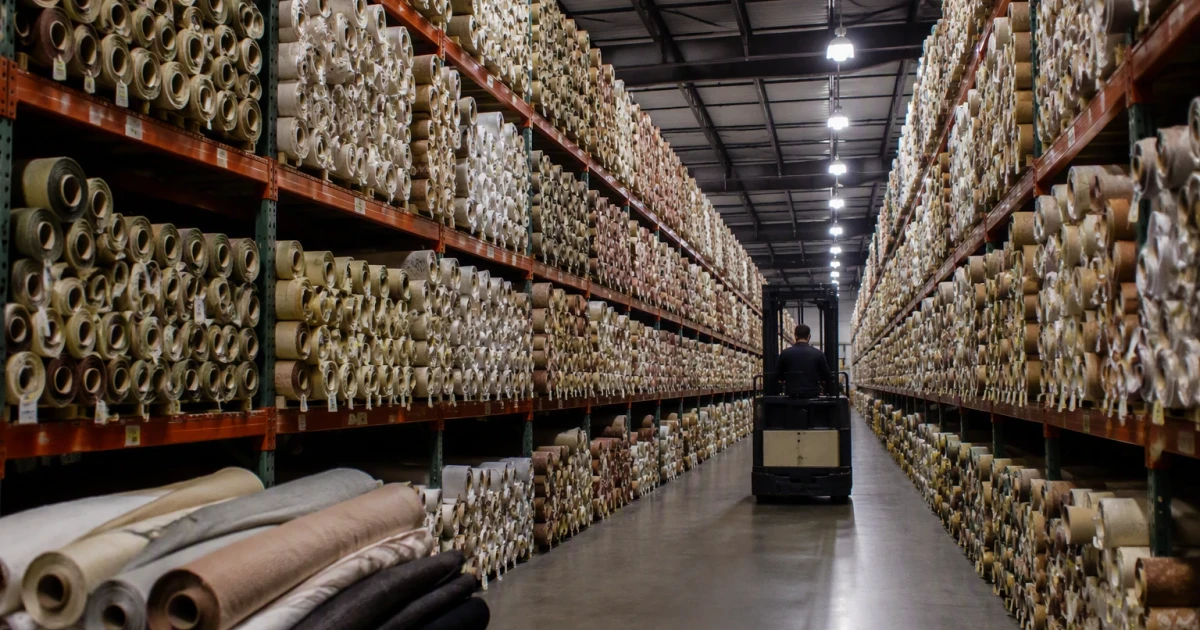
Those numbers matter because luxury design depends on execution. Phillip Jeffries says it stocks approximately one million yards of wallcovering and can ship many products the same day, a combination that suggests it is serving designers and contractors who need both choice and reliability. In a project-based business, holding inventory at that scale can be a competitive advantage: it shortens lead times, supports custom work, and makes the brand more useful to trade professionals who cannot wait months for material.
A showroom strategy built for the trade
The company’s New York presence reinforces that model. Phillip Jeffries has a showroom in the Decoration & Design Building in Suite 1115, placing it in one of the best-known trade destinations for interior designers and specifiers in New York City. That location signals that the brand is not selling wallpaper as a consumer impulse buy, but as a design material that gets selected alongside fabric, lighting, and furniture.
The showroom strategy complements the company’s broader trade-facing identity on platforms such as LinkedIn and workplace listings. Those profiles present Phillip Jeffries as a desirable employer and a leading luxury wallcoverings brand, which helps recruit talent while strengthening credibility with designers and commercial buyers who often prefer established, service-oriented vendors. In this market, reputation travels through showrooms, trade relationships, and sample books as much as through traditional advertising.
Marketing through collections, not commodity inventory
Phillip Jeffries has also leaned heavily on product storytelling. The company highlighted Husk, a collection that was reintroduced with new color introductions for Fall 2022, and it announced PJ Plants in a PR Newswire release, both examples of how it keeps wallcovering in the language of design launches rather than standard catalog replenishment. That approach makes the business feel closer to a fashion brand or a materials house than a wallpaper supplier.
Social media extends that strategy. Phillip Jeffries’ Instagram account listed about 555,000 followers, a sizable audience for a niche wallcovering company and a sign that it reaches far beyond a small circle of wholesalers. A company social post described the brand as dedicated for 44 years to being the world’s best wallcovering company, and that kind of message works because it ties product launches to a long-running identity rather than a one-off trend.
What the numbers say about consumer demand
The endurance of a company like Phillip Jeffries suggests that consumers with means are still spending on the parts of home design that turn a room into a statement. Wallpaper is a relatively small part of a renovation budget compared with cabinets or stone, but it can have an outsized visual impact, which makes it an attractive place for homeowners and designers to trade up.
That is the strategic lesson inside Phillip Jeffries’ growth: niche products can become premium businesses when they combine craftsmanship, inventory discipline, fast fulfillment, and branding that speaks to aspiration. In a market where many discretionary purchases remain cautious, luxury interiors continue to reward companies that make a specialized material feel both exclusive and easy to source.
Sources
- [1]cbsnews.com
- [2]blog.phillipjeffries.com
- [3]topworkplaces.com
- [4]linkedin.com
- [5]reveliolabs.com
- [6]zoominfo.com
- [7]phillipjeffries.com
- [8]ddbuilding.com
- [9]perennialsandsutherland.com
- [10]prnewswire.com
- [11]instagram.com