US News
Photographer Tom Murphy explores Yellowstone’s wildlife and preservation efforts
Tom Murphy’s Yellowstone photographs do more than capture grizzlies, bison and wide-open vistas. In Kelly O’Grady’s conversation for CBS News’ “USA to Z,” the park becomes a way to talk about preservation itself, and about why Americans keep fighting over land, wildlife and access in places that are meant to belong to everyone.
Yellowstone as a living system, not a backdrop
Yellowstone National Park remains one of the clearest examples of why public lands matter. Yellowstone Forever describes the park as home to more than 10,000 thermal features, the largest concentration of mammals in the lower 48 states, and a vast range of wildlife that includes over 67 species of mammals and 322 species of birds. Those numbers explain why the park attracts visitors, but they also explain why it is so vulnerable: every animal encounter, every road corridor and every surge of tourism adds pressure to an ecosystem already carrying extraordinary biological weight.
The park’s scale can make it feel indestructible, yet its management demands constant restraint. Yellowstone Forever frames the park’s wildlife viewing as one of the world’s most remarkable experiences, while also emphasizing that animals must be treated as wild at all times. That balance, between access and protection, is where the real preservation story begins.
Murphy’s Yellowstone, built over decades
Murphy’s work is closely tied to that story. His photography site says Yellowstone’s wildlife and landscapes are the special focus of his work, and that he has led tours and taught workshops in and around Yellowstone since founding Wilderness Photography Expeditions in 1986. Yellowstone National Park Lodges says he arrived in Yellowstone in 1975, which places him in the park across more than four decades of change, from shifting wildlife policies to rising visitor demand.
His biography also says he donated many photographs for educational use at the Old Faithful Visitor Education Center and the Mammoth Visitor Center. That matters because it shows his images were never meant to be only decorative. They have also served as teaching tools, helping visitors understand the park’s species, its habitats and the responsibilities that come with being close to them.
For a photographer, Yellowstone is not just a place to frame beauty. It is a place to document the tension between wonder and stewardship, and Murphy’s long presence in the park gives him a view shaped by seasons, migrations and the repeated pressure of people moving through the same wildlife corridors.
What safe wildlife viewing really means
Yellowstone Forever says the park’s Wildlife and Visitor Safety Education program aims to preserve wildlife in their natural habitat while teaching visitors how to safely and respectfully view wild animals. That is not a soft suggestion. The park warns that approaching wildlife is both dangerous and illegal, a reminder that the animals people come to see are not props, pets or guarantees.
This is where preservation becomes a public health and community issue as much as a wildlife issue. Unsafe encounters can injure visitors, stress animals and lead to management responses that harm the very species people hope to see. Education programs try to prevent that cycle before it starts, especially in a park where the draw of a close-up sighting can override judgment.
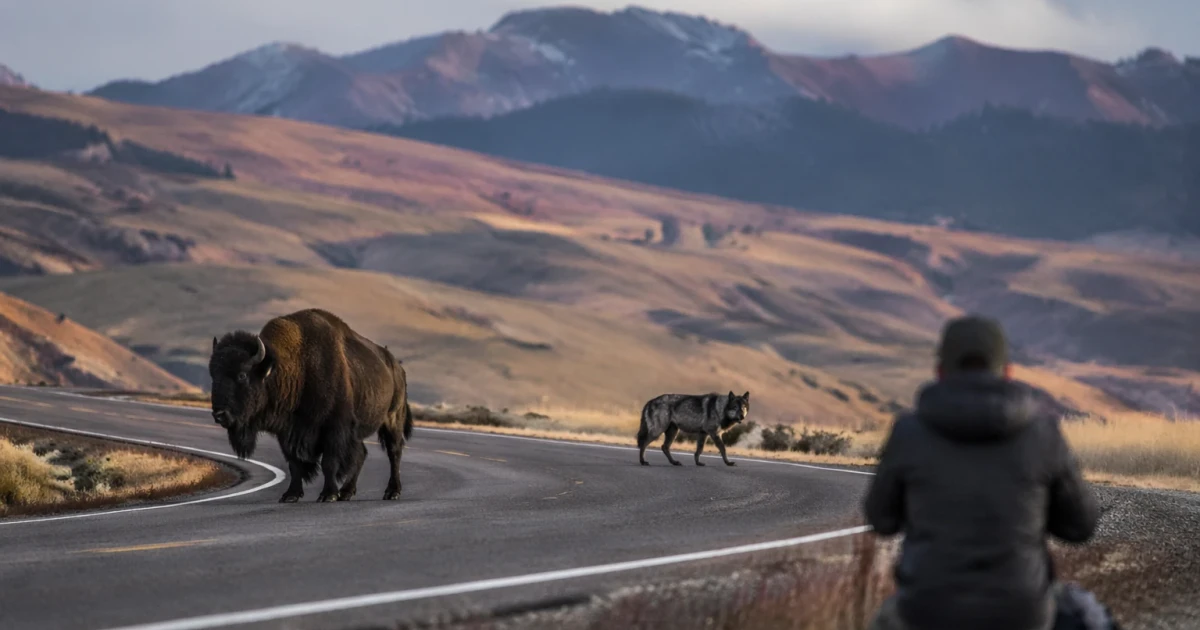
The rule is simple, but the stakes are not. Keeping distance protects bison that can charge without warning, wolves that live under intense scrutiny and bears that can defend territory or food with little notice. It also protects the idea that public lands remain wild even when they are heavily visited.
Wolves, science and a long-running policy fight
Wolf management remains a high-priority issue in Yellowstone, both for the regional public and for the National Park Service, according to Yellowstone Forever. The organization supports the Yellowstone Wolf Project, which focuses on research, monitoring and management of wolves. That combination reflects a broader reality in the American West: conservation is rarely just about protecting a species in the abstract. It is about deciding how much human control belongs in a landscape where animals range across political, ecological and economic boundaries.
The wolf debate also shows how public lands become arenas for competing values. Some people want maximum protection, others want more active management, and both positions affect what happens in the park and beyond its borders. Yellowstone’s wolves are watched not only as wildlife, but as symbols of whether conservation can survive sustained political pressure.
Bison, relocation and the politics of survival
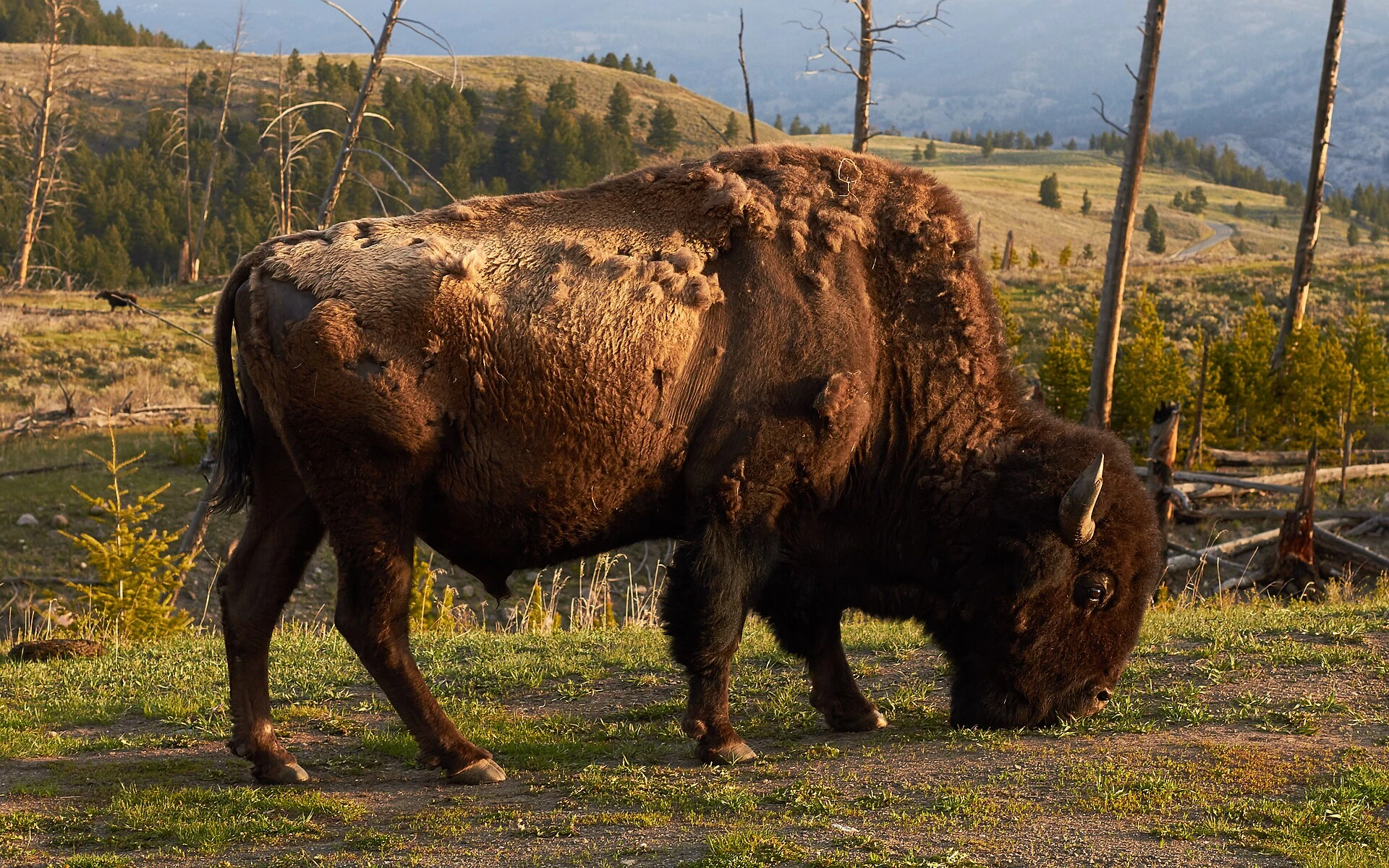
Yellowstone’s bison story makes the stakes even more concrete. In August 2019, the park moved 55 bison to the Fort Peck Indian Reservation in northeastern Montana. Yellowstone said the transfer was the first direct relocation of Yellowstone bison to a new home as an alternative to slaughter.
That moment captured a hard truth about preservation: keeping a species alive often means choosing between imperfect options. Bison are one of the park’s signature animals, yet their management has long been entangled with concerns about population, migration and what happens when wild animals move into surrounding lands. Relocation to Fort Peck offered a path that recognized the value of the herd without defaulting to killing animals simply because they exceeded a boundary.
It also pointed toward a wider national question. If Yellowstone, one of the country’s most visible parks, must negotiate the survival of its wildlife through education, science and relocation, then preservation is not an abstract ideal. It is a daily act of policy, patience and public commitment, one that reaches far beyond the park gates and into the future of America’s public lands.