Technology
Physical AI Expands Role in Robotics and Industry
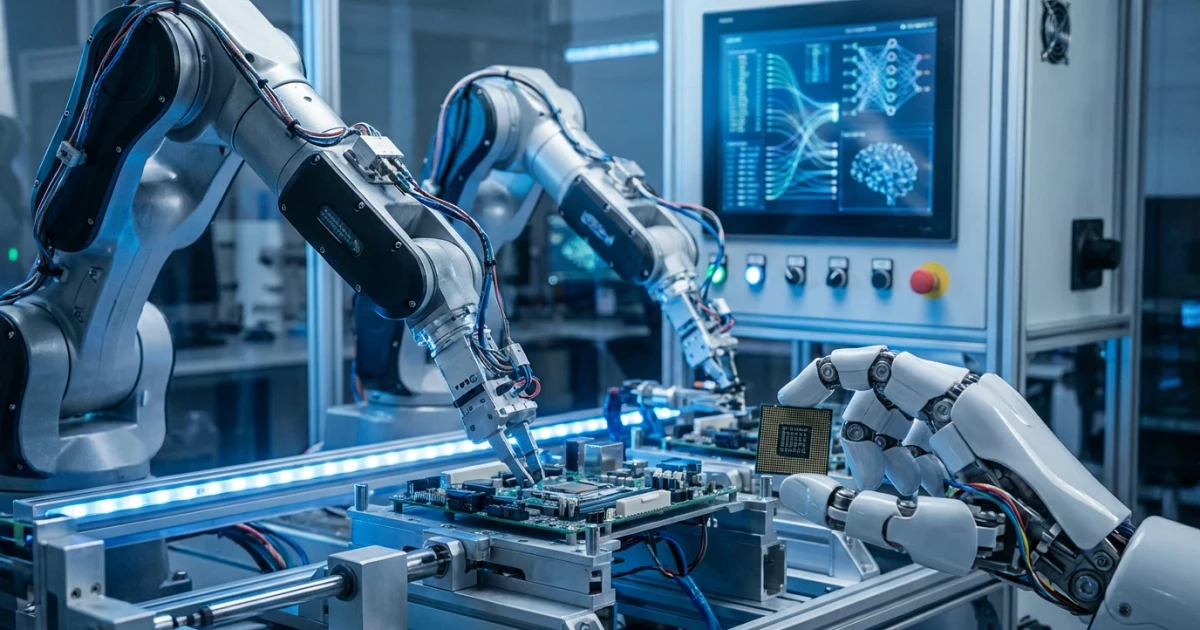
Physical artificial intelligence (AI) is quickly moving from research labs into factories, warehouses, and public spaces, driving a new wave of innovation in robotics and automation. While much attention has centered on generative AI and software-based breakthroughs, recent developments highlight the significant impact of AI that interacts with the physical world—machines that can sense, move, and adapt to complex environments.
Defining Physical AI and Its Advancements
Physical AI refers to systems that combine advanced artificial intelligence algorithms with robotics, sensors, and actuators, enabling machines to perform tasks in the real world. Unlike traditional automation, which relies on rigid programming, physical AI harnesses machine learning and feedback to adapt to changing conditions—making it possible for robots to pick irregular produce, navigate crowded warehouses, or collaborate safely with humans.
- According to industry data, the global market for physical AI solutions is expected to surpass $60 billion by 2030, with strong growth in logistics, healthcare, and manufacturing.
- The European Commission has launched the PHYSICAL AI project to accelerate research, emphasizing applications in smart factories and adaptive automation.
- The U.S. National Institute of Standards and Technology’s AI program is developing benchmarks and safety standards for physical AI systems deployed alongside humans.
Applications and Industry Adoption
Physical AI’s versatility is fueling adoption across sectors:
- Manufacturing: Robots with physical AI can handle more diverse tasks, improving productivity and reducing downtime.
- Healthcare: Assistive robots are using AI to help with patient mobility, drug delivery, and even surgery.
- Logistics: Warehouse robots powered by physical AI dynamically route around obstacles and optimize inventory movement.
- Service Industries: From cleaning robots to autonomous delivery vehicles, physical AI is entering public spaces.
Peer-reviewed research in IEEE Robotics and Automation Letters highlights how adaptive grasping, tactile sensing, and reinforcement learning are overcoming previous limitations in dexterity and perception.
Challenges: Safety, Ethics, and Technical Hurdles
Despite its promise, physical AI faces significant challenges. McKinsey & Company’s analysis points to high development costs, integration complexity, and the need for robust safety frameworks as major hurdles. Ensuring that robots can safely operate in dynamic human environments remains a top priority for regulators and industry stakeholders.
Ethical concerns are also emerging, particularly regarding the impact on jobs and the potential for bias in AI-driven decision-making. As physical AI systems become more autonomous, questions about liability and transparency are gaining attention among policymakers and the public.
Future Outlook
The pace of innovation in physical AI shows no signs of slowing. As research advances and industry adoption grows, experts predict that robots will become even more capable—handling delicate tasks, learning on the job, and working collaboratively with humans in new ways. Initiatives like the EU’s PHYSICAL AI project and standards efforts by organizations like NIST will play a crucial role in shaping the technology’s evolution.
For businesses, workers, and consumers, the rise of physical AI brings both opportunities and responsibilities. As the field matures, continued collaboration among researchers, industry, and regulators will be essential to ensure that physical AI delivers on its promise—enhancing productivity, improving safety, and expanding the potential of intelligent machines.