Technology
Physical AI training needs more than video, researchers say
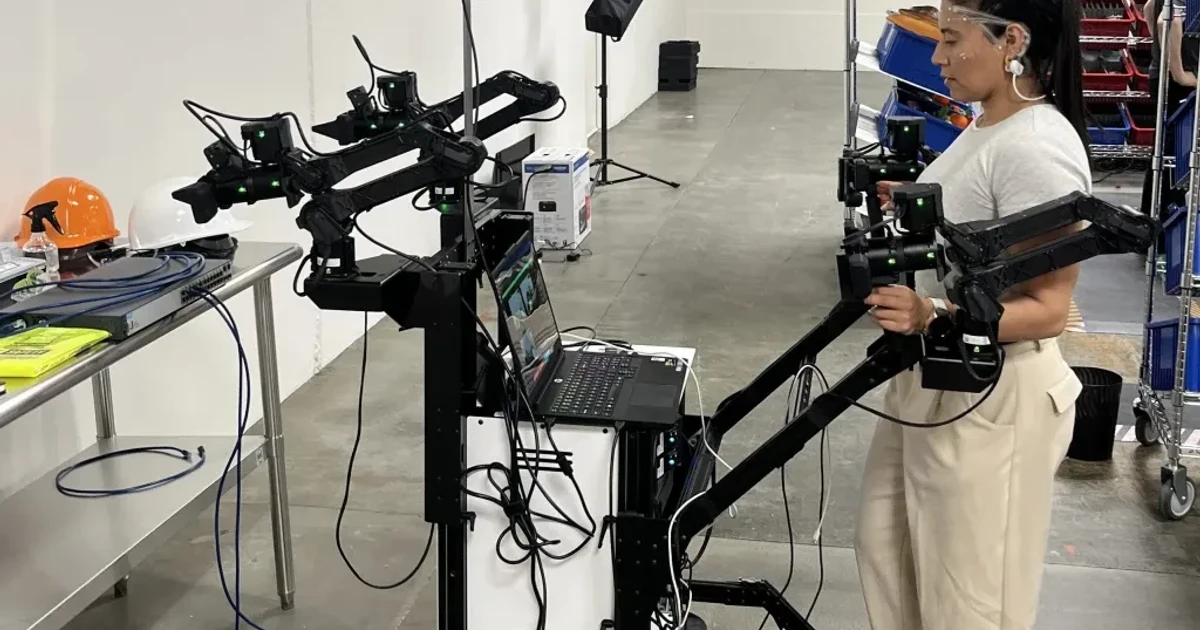
DatraAI is training a world model on real, egocentric human demonstrations to learn geometry, object dynamics, contact physics and cause-effect structure. That work shows how far physical AI has already drifted from generic web clips because embodied systems have to learn what changes when a hand closes around a mug, a robot bumps a surface or two agents coordinate a task.
Why multi-view video is becoming the baseline
The practical data stack for physical AI now leans on multiple camera angles, dense annotation and long-horizon labeling workflows. Encord’s physical AI documentation organizes robotics work around multi-view data collection and structured annotation rather than single-camera footage. A manipulator dataset has to capture where contact begins, how an object moves after the grip and what happens when the scene changes over time.
A 2024 robot-learning dataset includes 76,000 teleoperated demonstrations across 86 lab environments and 564 tasks, using third-person and wrist cameras to record the action from more than one angle. That kind of corpus is built to teach coordination and precision, not just object recognition. Physical AI teams are now treating camera placement and labeling density as core infrastructure.
What EEG can add that video cannot
EEG enters this picture for a narrower reason: it can track the human side of interaction, not just the visible movement. PhysioNet’s EEG Motor Movement/Imagery Dataset, published Sept. 9, 2009, contains 64-channel EEG recordings from subjects performing motor and imagery tasks, and it became a staple of brain-computer interface research because it offered a standardized way to study motor intention from neural signals.
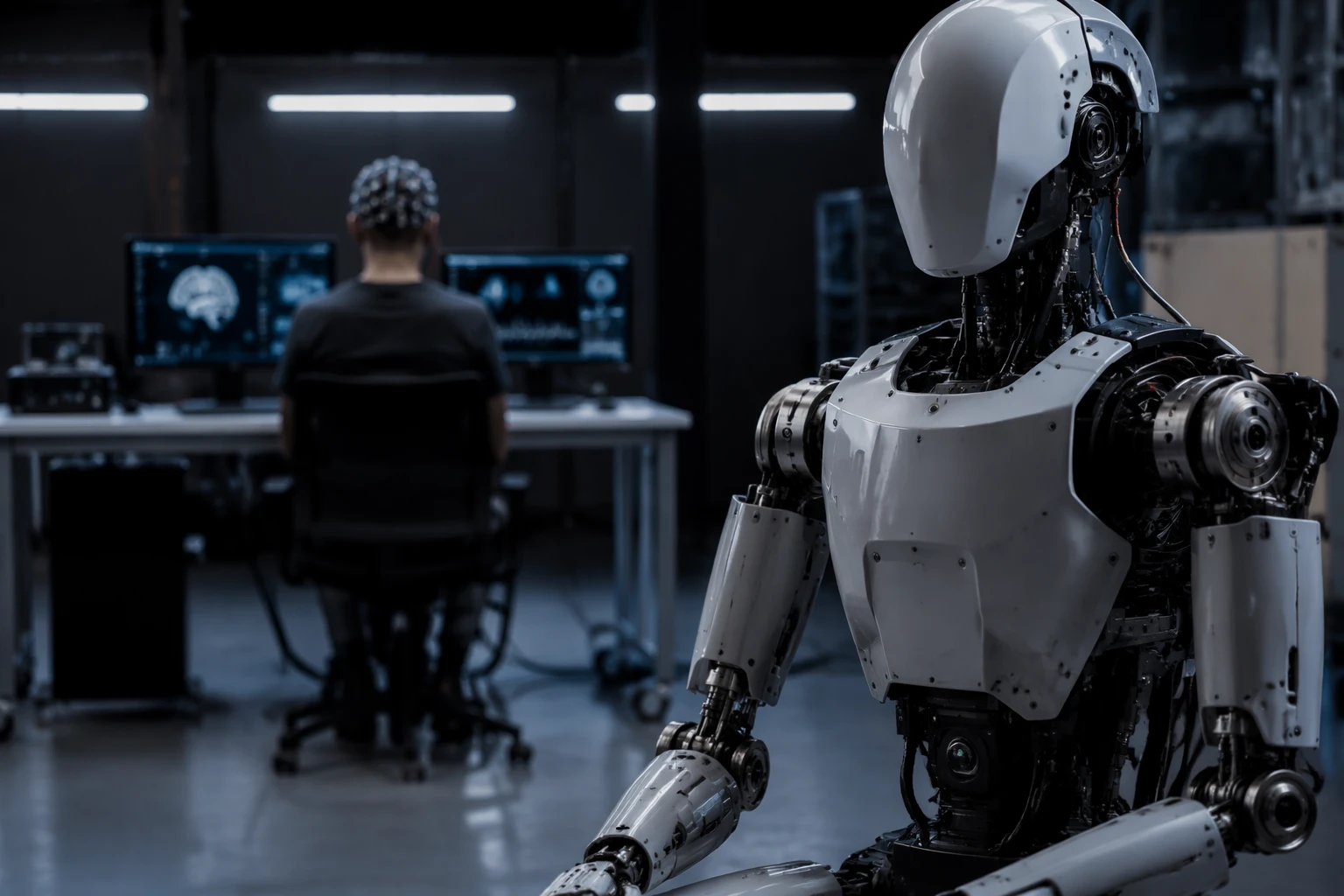
The modern HRI work pushes that idea into live interaction. Neuroelectrics posted a webinar on April 3, 2025 titled “Investigating Stress Patterns in Human-Robot Interaction (HRI) through EEG Analysis,” featuring Simone Borghi, Ph.D., on using EEG to probe how people respond during robot interaction. A 2024 arXiv paper, “EEG-Based Analysis of Brain Responses in Multi-Modal Human-Robot Interaction: Modulating Engagement,” from Suzanne Oliver, Tomoko Kitago, Adam Buchwald and S. Farokh Atashzar, uses EEG to study engagement in multimodal settings, not to replace vision or force sensing.
EEG may help a robot infer stress, attention or engagement in real time, especially when a human and machine are sharing a task, but it does not solve the core manipulation problem of learning geometry, contact physics or object dynamics.
The brain-wave research ecosystem is already in motion
On May 1, 2023, UC Berkeley published work showing that comparing brain waves in participants and AI systems can provide a window into AI’s black box, using neural signals not only to read people but also to interpret complex model behavior. A Stanford University brain-wave imaging technique revealed three previously unseen wave types in mice and could help research into epilepsy, Alzheimer’s, Parkinson’s and artificial intelligence.
Google Research published a post on June 9, 2025 about ZAPBench and called it one of the most ambitious datasets in brain activity research.
Where the shortcut stops and the risk begins
The notion that brain waves could become a shortcut for teaching robots human intent is attractive because it promises something video cannot: direct access to an operator’s internal state. That could help a robot distinguish hesitation from approval, or stress from smooth cooperation, in situations where behavior alone is ambiguous. But the current evidence points to augmentation, not substitution, and the strongest live examples still sit in HRI studies rather than production robot training.
That creates a new privacy problem. EEG is not just another sensor feed from a factory floor or a teleoperation rig; it is a record of neural activity, including the kinds of signals researchers use to study motor imagery, stress and engagement. Once cognition becomes training data, the hard questions are about consent, retention, secondary use and whether a person understands that the system may infer more than the immediate task required.
The likely near-term model is hybrid rather than radical: egocentric human demonstrations, teleoperated robot trials, wrist and third-person cameras, dense labels and, in a few research settings, EEG layered on top.
Sources
- [1]techcrunch.com
- [2]datraai.com
- [3]docs.encord.com
- [4]physionet.org
- [5]youtube.com
- [6]arxiv.org
- [7]vcresearch.berkeley.edu
- [8]humsci.stanford.edu
- [9]blog.google
- [10]encord.com
- [11]robocloud-dashboard.vercel.app