Technology
Physicists find workaround for modeling bird flocks and swarms
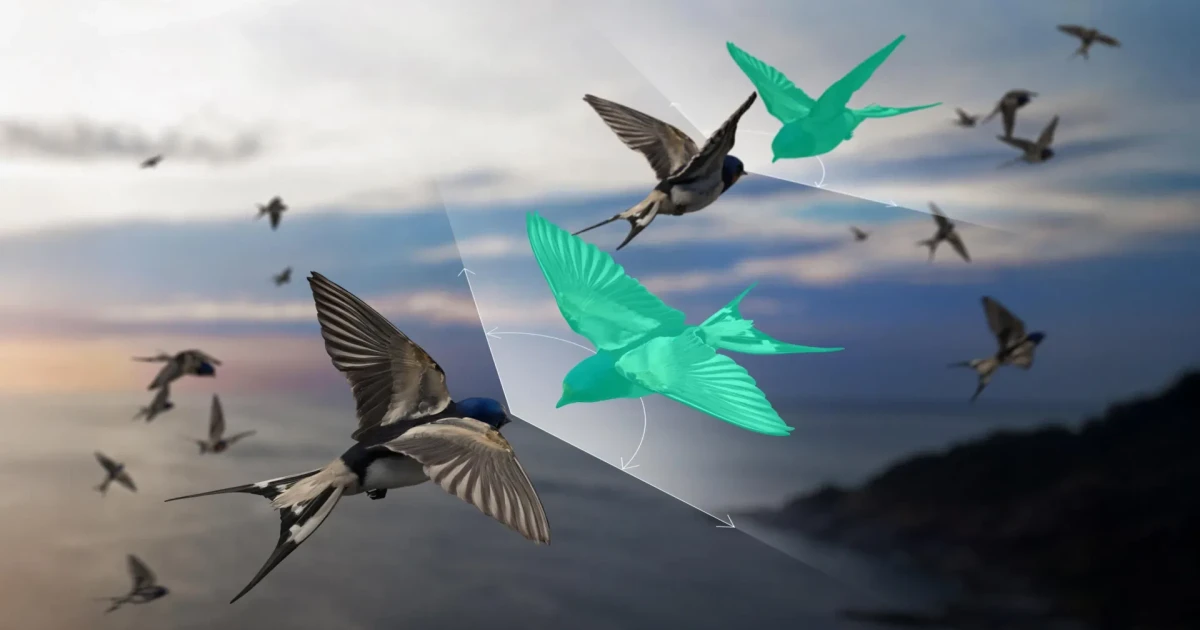
Bird flocks and bacterial swarms have long stumped physicists because one animal or cell may react to neighbors ahead or beside it while effectively ignoring others behind. That uneven response makes these living systems look as if they break the action-reaction rule taught in basic physics, even though the deeper problem is that they are driven, sensing, out-of-equilibrium systems that do not behave like passive objects.
A June 12 paper in Nature Physics offered a mathematical workaround: a constrained Hamiltonian embedding that adds auxiliary variables so non-reciprocal dynamics can be rewritten in reciprocal form. The authors, including Yu-Bo Shi, Roderich Moessner, David Martin, Daniel Seara, Yael Avni, Michel Fruchart and Vincenzo Vitelli, showed that the same kind of standard machinery used in statistical mechanics can be brought back into play for systems with pairwise non-reciprocal forces. In Dresden, the Cluster of Excellence ct.qmat described the result as going beyond the action-reaction principle.
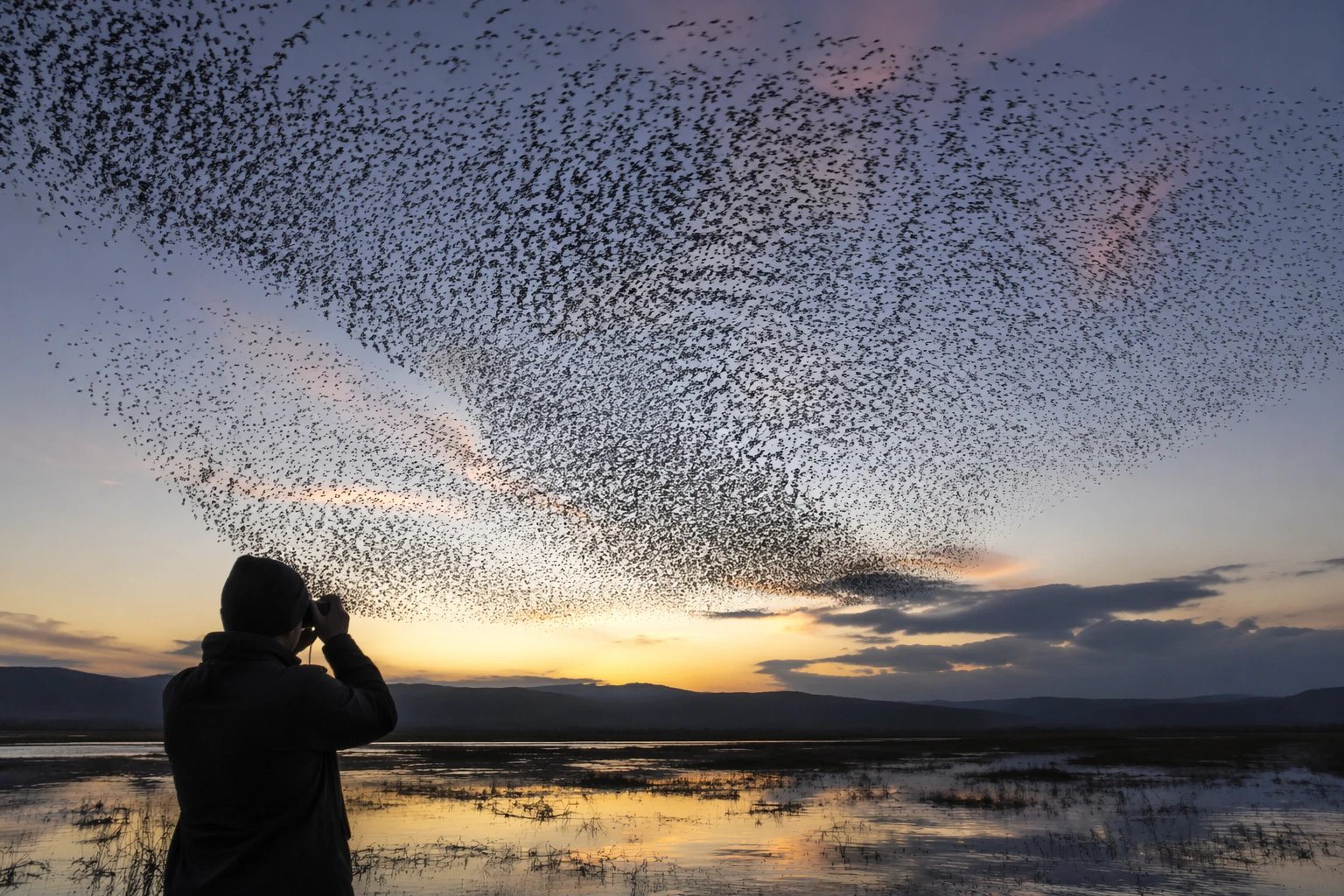
Ricard Alert, a biophysicist involved in the Dresden work, put the logic plainly: "The original non-reciprocal interactions are replaced by reciprocal interactions with these auxiliary degrees of freedom." The point is not that Newton was wrong. It is that physicists now have a better way to describe living and active systems that respond selectively, whether the subject is a flock of birds, a bacterial swarm, migrating cells or a coordinated robot team.
That matters because the same modeling problem shows up across ecology, robotics, materials science and crowd dynamics. Bird flocks are a clear example: each bird may respond to what it sees ahead or to the side, but not to birds behind it. Bacteria and cells follow local cues in similarly asymmetric ways, and those rules are awkward to force into equations built for equilibrium systems.
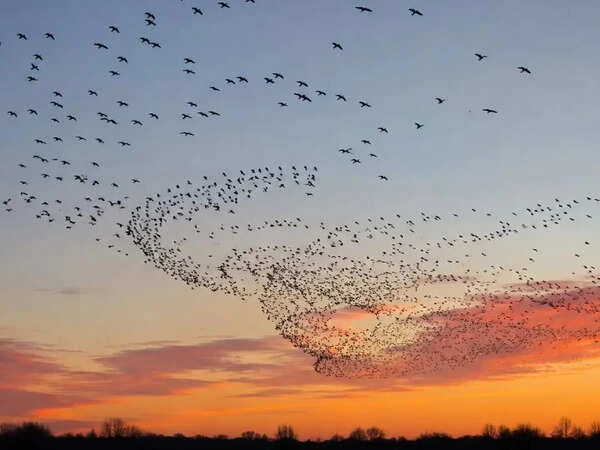
The new framework arrives as a fast-moving field is already filling in the gaps. A 2025 Physical Review X study on nonreciprocal active matter found that weak nonreciprocity can accelerate flocking and synchronize bands, while strong nonreciprocity can produce a chase-and-rest phase. A 2025 Nature Communications paper on active-passive mixtures called nonreciprocal interactions generic in active matter because they are not constrained by Newton’s third law. A 2026 Nature Physics article on living matter made the same broader point: these interactions are hard to describe with standard methods.

For physicists, the payoff is practical as much as theoretical. A more flexible language for nonreciprocal motion could improve simulations of collective animal behavior, sharpen predictions in crowd modeling and help engineers design swarms of robots that move with the coordination seen in nature.
Sources
- [1]sciencedaily.com
- [2]nature.com
- [3]ctdqmat.de
- [4]link.aps.org