Science
Physicists Unveil New Clues to How Matter Emerges from the Quantum Vacuum
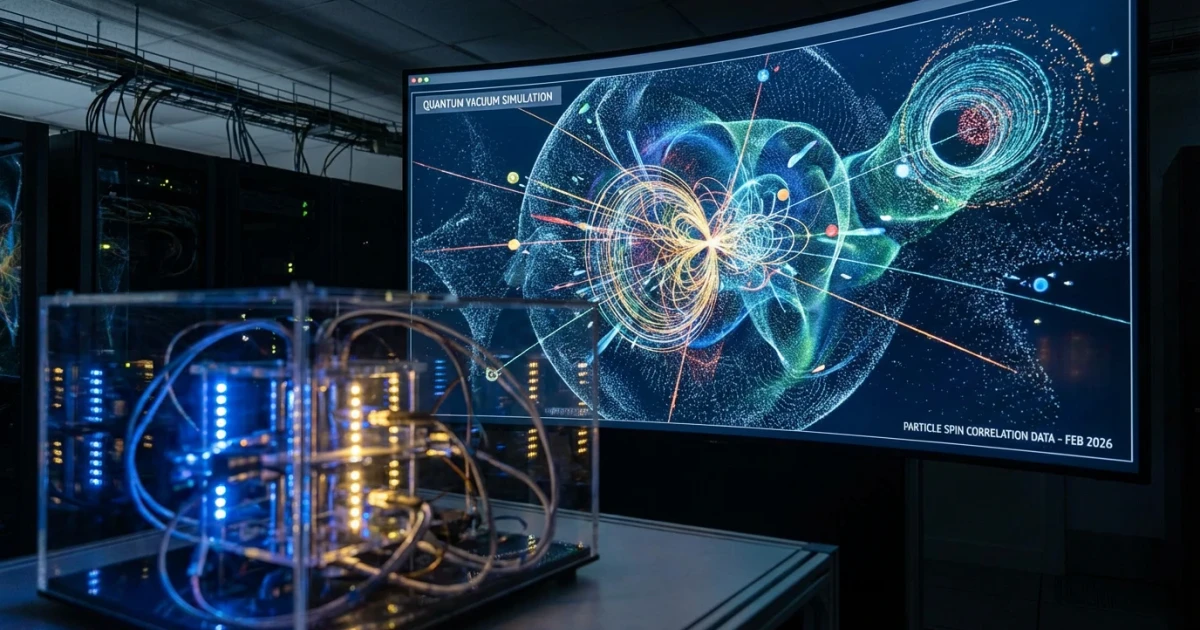
The mysterious process by which the universe’s visible matter arises from seemingly ‘nothing’ has long captivated physicists. In a groundbreaking leap, researchers have now peered into the quantum vacuum, uncovering how particle spin correlations illuminate the birth of matter itself—a finding heralded as a major advance in quantum physics.
The Quantum Vacuum: More Than Empty Space
Contrary to everyday intuition, the quantum vacuum is far from empty. Instead, it seethes with fleeting energy fluctuations, where pairs of particles and antiparticles continually pop in and out of existence. This phenomenon is central to quantum field theory, which describes how all matter and forces interact at the most fundamental level.
- The quantum vacuum underpins the structure of space-time, providing a foundation for the emergence of real particles.
- These fluctuations are believed to play a role in phenomena ranging from the Casimir effect to the origin of the universe itself.
New Insights from Particle Spin Correlations
The recent study highlighted by Phys.org focuses on the role of particle spin correlations in the quantum vacuum. Spin—a fundamental property of elementary particles—affects how particles interact and how observable matter forms from the vacuum.
By investigating these spin correlations, physicists have gained unprecedented insight into the mechanisms that transform quantum fluctuations into tangible matter. The research suggests that specific patterns in spin alignment are key to understanding how matter emerges from the void, offering a rare glimpse into processes that have shaped the universe since the Big Bang.
- This research provides experimental evidence for theoretical models of vacuum polarization and matter creation.
- The findings could help refine our understanding of quantum field theory and the Standard Model of particle physics.
Implications for Physics and Cosmology
The insights gained from particle spin correlations have far-reaching implications. Not only do they shed light on the fundamental question of why there is something rather than nothing, but they also inform future research into the early moments of the universe, the behavior of exotic states of matter, and potentially the development of new technologies based on quantum principles.
- Understanding matter’s origins could illuminate mysteries such as dark matter, dark energy, and the asymmetry between matter and antimatter in the universe.
- These discoveries may influence the design of quantum computers and sensors that exploit vacuum fluctuations for practical applications.
Looking Ahead: The Quest to Unravel the Quantum Fabric
While this research marks a significant step, much remains to be discovered about the quantum vacuum’s role in shaping the universe. As experimental techniques advance, physicists hope to further dissect the interplay of forces and particles that govern the cosmos at its most fundamental level. The latest findings on spin correlations offer a vital piece of the puzzle, bringing us closer to understanding the profound connection between nothingness and the vibrant tapestry of matter that fills our universe.
Sources
- [1]Phys.org