Technology
Pichai, Huang and Clark warn students about AI's changing future

Three of the most influential figures in artificial intelligence spent early June telling students to treat the technology as a challenge to master rather than a force to fear. Sundar Pichai, Jensen Huang and Jack Clark each offered a different version of that warning, but all three framed the same reality: young graduates are entering a labor market where AI is already reshaping expectations, skills and power.
Pichai delivered Stanford University’s Class of 2026 commencement address on June 14, drawing on his path from Chennai to Silicon Valley and urging graduates to keep their ambitions grounded in hard problems. The most durable advice he said he had learned was “technology agnostic,” a phrase that pointed less to any single product cycle than to the broader choices students make about the lives they want to build. Stanford’s own account said Pichai emphasized the value of pursuing difficult work, even as he largely sidestepped direct discussion of AI.
The setting was not without tension. Reports said some Stanford graduates walked out during Pichai’s remarks to protest Google’s contracts with the Israeli government, a reminder that AI leaders are increasingly being asked to defend their companies’ public role as well as their technology. Pichai’s speech, while personal and forward-looking, unfolded against that wider political backdrop.
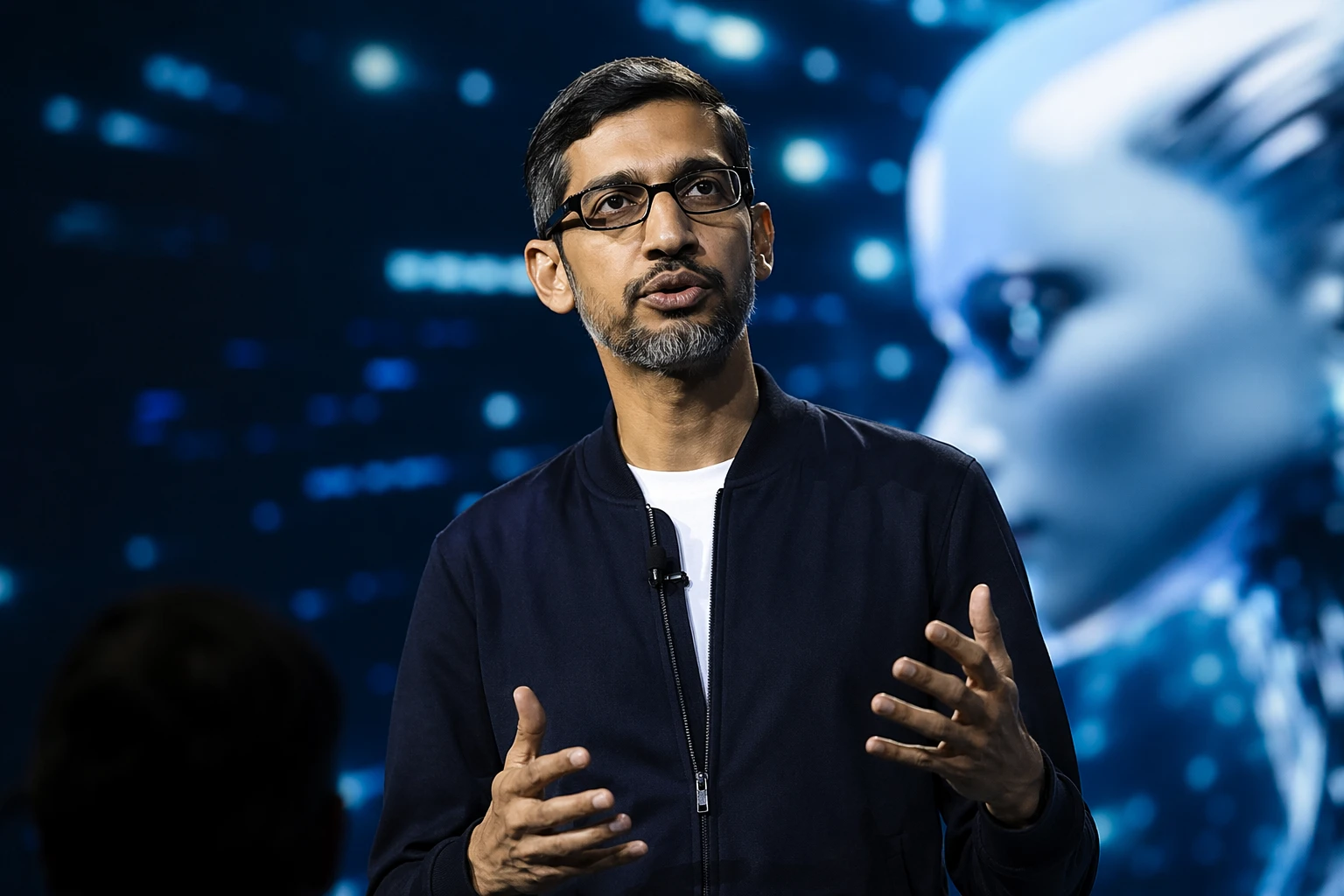
Jensen Huang’s message at Carnegie Mellon University was more direct. Speaking at the school’s 128th commencement keynote on May 10, the Nvidia chief told graduates: “AI is not likely to replace you, but someone using AI better than you might.” He pressed them to “run, don’t walk,” and cast the current moment as a computing shift larger than the eras of mainframes, PCs, the internet, mobile and cloud. Carnegie Mellon’s long history in AI research made the warning especially pointed, turning a graduation speech into a plea for technical fluency and speed.
Jack Clark, Anthropic’s co-founder and head of policy, took a less upbeat line in a June 5 interview on BBC Newsnight with Faisal Islam. Clark said AI systems were moving toward development with less and eventually no human input, and said Anthropic’s Claude already runs on code that is 80% written by the system itself. He estimated that could become fully self-generated within two years, and argued that society needs a “brake pedal” for AI development.
Clark also offered a different kind of advice for young people unnerved by the technology: develop a hobby and study the liberal arts. Together, the three men sketched a common message for students and new graduates across the country. AI is no longer a distant career trend. It is the operating condition of the next one.
Sources
- [1]bbc.com
- [2]news.stanford.edu
- [3]forbes.com
- [4]observer.com
- [5]care.org.uk
- [6]msn.com