Politics
Pijush Hazarika Criticizes Congress Over 'Copy-Paste Politics'
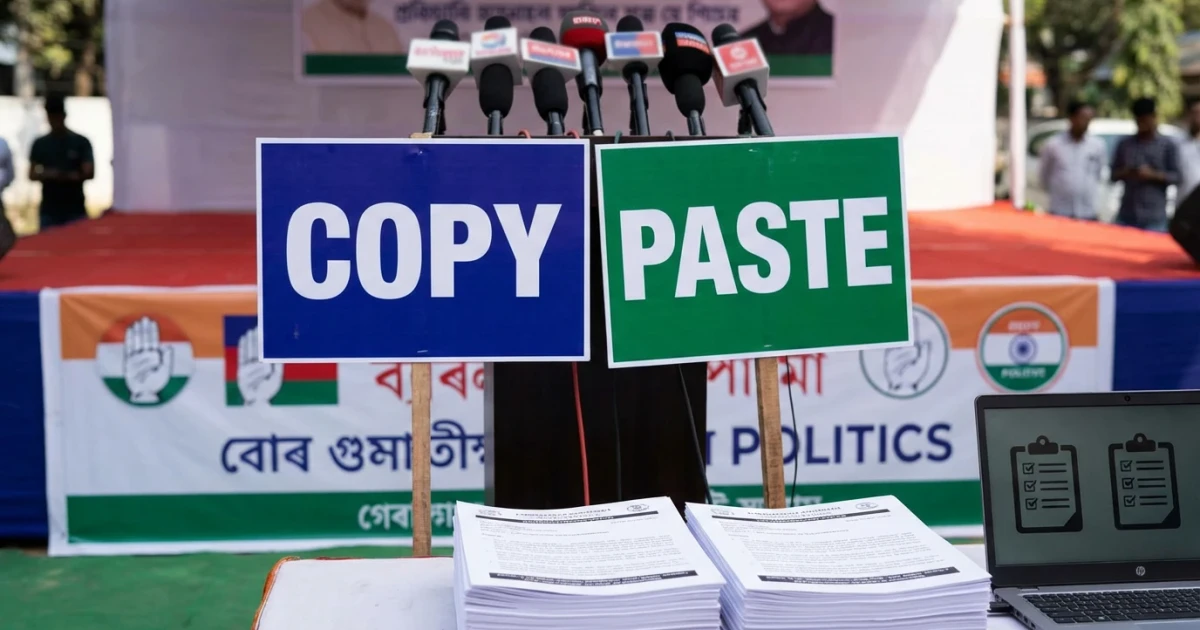
Pijush Hazarika, a prominent leader of the Bharatiya Janata Party (BJP) in Assam, has publicly criticized the Indian National Congress for engaging in what he described as 'copy-paste politics'. His remarks, reported by Tripuratimes, come amid intensifying political discourse as Assam heads into a crucial electoral phase.
Hazarika's Critique of Congress Strategies
Addressing recent developments, Hazarika accused the Congress party of lacking originality and vision in their political approach. He argued that Congress leaders have been replicating policies, slogans, and campaign strategies from other states and parties, rather than crafting solutions tailored to Assam's unique needs. This criticism highlights an ongoing narrative among BJP leaders, who have frequently characterized Congress's actions as reactive rather than proactive.
Background on Assam's Political Landscape
Assam's political arena has long been marked by a rivalry between the BJP and Congress, with both parties vying for influence across the state's diverse constituencies. The BJP has emphasized its focus on development initiatives and governance reforms, while Congress has sought to regain ground by appealing to social welfare concerns and minority communities.
- Recent Assam election data shows competitive races in several key constituencies.
- According to LokDhaba's political database, Congress's vote share has fluctuated in recent cycles, increasing pressure on party leaders to refine their messaging.
- Analysis from Sabrang India points to evolving voter behavior in Assam, with young and urban voters seeking clear, locally relevant agendas.
Congress's Response and Implications
While the Congress party has not issued a direct response to Hazarika's recent remarks, leaders have previously dismissed BJP criticisms as attempts to deflect from core governance issues. The exchange underscores broader tensions over policy originality and the effectiveness of campaign tactics in a state with complex social and economic challenges.
Assam's electorate is closely watching both parties' promises and track records. Official records, such as the PRS Legislative Research profile of Pijush Hazarika, allow voters to scrutinize legislative performance, while government initiative pages detail the outcomes of flagship state programs.
Voter Priorities and Election Outlook
With the next election cycle approaching, parties are intensifying outreach efforts. Data from the 2021 Census of India reveals shifting demographics in Assam, including growing urbanization and a youthful population base. Political analysts, referencing the Economic Survey of India, note that economic issues—such as employment, infrastructure, and education—are at the forefront of voter concerns.
Key Issues Shaping the Debate
- Jobs and economic opportunities for youth
- Implementation and impact of state government initiatives
- Protection of indigenous rights and cultural identity
- Law and order, especially in border and rural districts
Conclusion
As Assam's political debate intensifies, accusations like Hazarika's highlight the contest over authenticity and vision in electoral politics. Voters are expected to scrutinize not just campaign rhetoric, but the originality and relevance of party platforms. With the stakes high, all eyes remain on how parties translate promises into action as the election approaches.