Politics
Platner’s primary margin could shape Democrats’ Senate fight in Maine
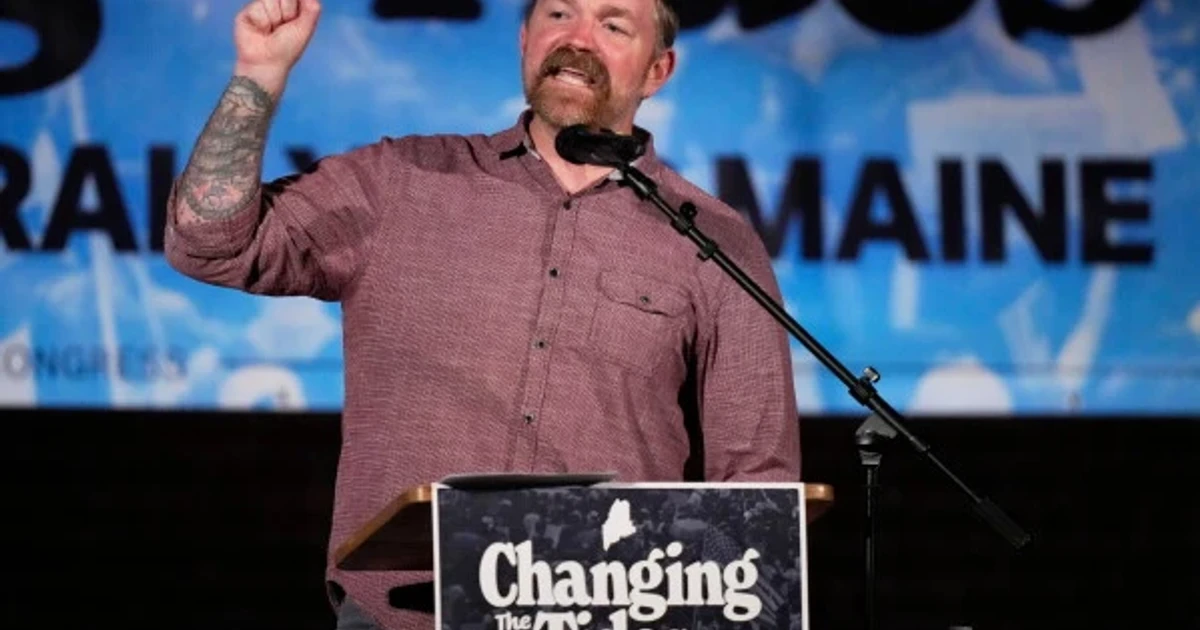
Graham Platner’s margin in Maine’s Democratic Senate primary mattered as much as the victory itself. A big win would have strengthened his claim that rank-and-file Democrats were behind him despite the scandal cloud hanging over his campaign, while a narrow one would have fed doubts about whether he could beat Republican Sen. Susan Collins in November.
That calculation carried weight far beyond Maine. Democrats need to net four Senate seats to take control in 2026, and Maine is one of their clearest opportunities. Collins remains a formidable incumbent with a history of frustrating Democratic hopes, which is why every vote Platner added, or failed to add, became a test of his broader appeal rather than just a tally in a state primary.

Platner entered the race as a political newcomer and surged quickly, helped by endorsements from Bernie Sanders and Elizabeth Warren and by a message that caught fire with many Maine Democrats. Janet Mills, backed by the Democratic Senatorial Campaign Committee and Senate Minority Leader Chuck Schumer as the party’s preferred general-election choice, struggled to close the gap and suspended her campaign on April 30, 2026, citing a lack of financial resources. Her exit cleared the field, but it did not end the debate over whether Platner was the strongest nominee for the fall.
The timing of the controversy also shaped how the primary was being read. Early voting in Maine began on May 11, more than two weeks before scrutiny over Platner’s sexually explicit text messages became public, and five days later another round of reporting described behavior that ex-girlfriends called toxic and unsettling. By the Friday before the primary, more than 30,000 Democrats had already voted. That mattered because early voting typically accounts for about 25 percent of all Democratic primary ballots in Maine, meaning Platner had already banked a large share of the vote before the backlash could fully settle in.
Even with the turbulence, Maine Democrats had largely stood by him. At a June 6 event in Bar Harbor, a crowd of 600 gave Platner an enthusiastic reception, and he told supporters, “Maine had my back.” Eight of the 20 Democratic state lawmakers who had endorsed him earlier in the spring said they still supported him, and his campaign said its best fundraising day in more than a month came after the latest round of damaging coverage. That made the margin more revealing than the outcome itself: a large victory would suggest the controversy had not broken his hold on the party, while a weak one would show that the doubts in Washington had spread closer to home.
Sources
- [1]nbcnews.com
- [2]pressherald.com