Science
PLATO Mission Nears Launch in Search for Earth-Like Worlds
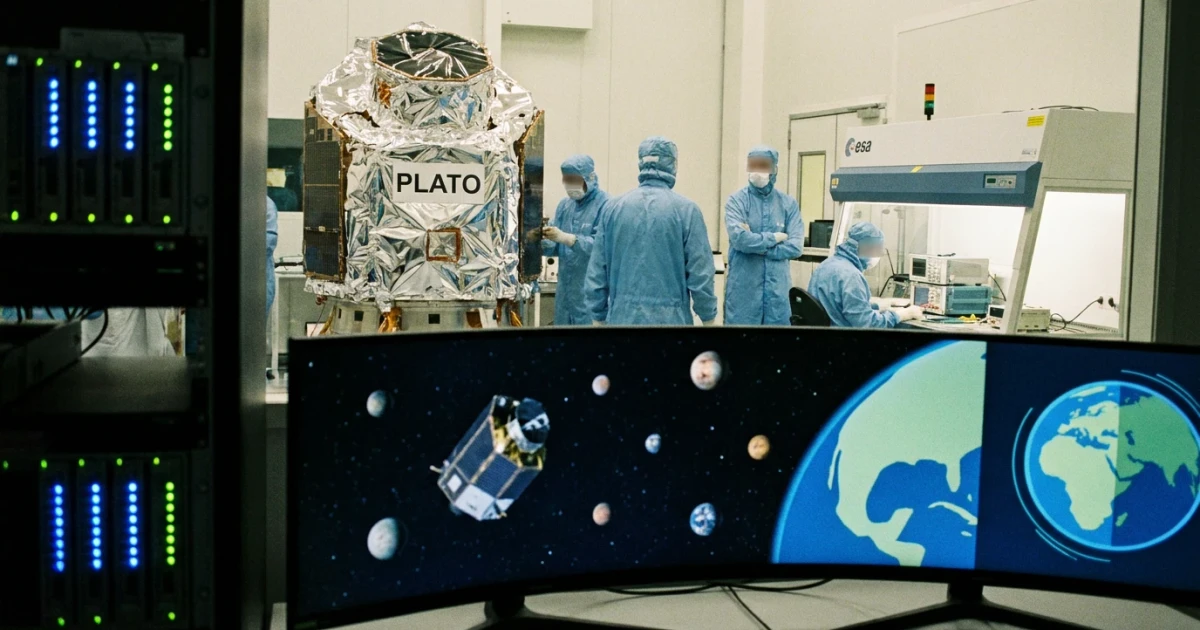
The European Space Agency’s PLATO mission has cleared critical engineering milestones, putting it on track for launch in 2027 as the search for habitable exoplanets—so-called 'Earth 2.0s'—intensifies.
PLATO Passes Key Space-Readiness Tests
The PLATO spacecraft (PLAnetary Transits and Oscillations of stars) recently emerged from rigorous vacuum and thermal trials, according to the Financial Times and the European Space Agency. These tests, designed to simulate the harsh conditions of space, represent one of the final technical hurdles before PLATO’s scheduled launch window in 2027. Clearing these engineering trials demonstrates the mission’s readiness to withstand the extreme temperatures and vacuum of deep space, a vital step before integration and launch preparations ramp up.
Mission Goals: Finding 'Earth 2.0'
PLATO is set to build on the legacy of previous missions like NASA’s Kepler and TESS, but with a targeted focus: identifying potentially habitable, Earth-sized exoplanets orbiting Sun-like stars. The spacecraft will use an array of 26 cameras to monitor the brightness of over 200,000 stars, searching for the characteristic dimming that occurs when a planet passes in front of its host star—a technique known as transit photometry.
According to the latest data from the NASA Exoplanet Archive, over 5,500 exoplanets have been confirmed to date, but only a small fraction are Earth-sized and located within their stars’ habitable zones, where conditions could allow liquid water to exist. PLATO aims to dramatically expand this catalog, focusing on systems where rocky planets with temperate climates could be found.
Engineering and Scientific Impact
- Thermal and Vacuum Testing: PLATO’s success in these tests assures its scientific instruments can function reliably in the vacuum and temperature extremes of space, as reported by both the Financial Times and the ESA.
- Wide Field of View: Its 26-camera array gives PLATO an exceptionally broad observational reach, allowing for high-precision photometry across a large swath of the sky.
- Focus on Bright, Nearby Stars: PLATO is uniquely optimized to study bright stars close to Earth, making any habitable planets it finds prime targets for future atmospheric characterization by telescopes like the James Webb Space Telescope.
Why PLATO Matters
Previous missions have revolutionized our understanding of planet formation and the diversity of planetary systems. However, as the Financial Times highlights, the discovery of a true “Earth 2.0”—a planet similar in size, composition, and orbit to our own—remains elusive. By searching specifically for Earth-sized planets in Sun-like systems, PLATO seeks to answer one of science’s most profound questions: How common are worlds like ours?
Looking Ahead
With its launch set for 2027, PLATO promises to deliver a wealth of new data, potentially transforming our understanding of how common habitable worlds are in the Milky Way. Its discoveries will feed into global efforts to characterize exoplanet atmospheres and, ultimately, to search for signs of life beyond our solar system.
As the engineering milestones are cleared and anticipation builds, the scientific community and the public alike await PLATO’s findings—which could bring us closer than ever to discovering another Earth.