Politics
Political Tensions Flare in Karnataka Hijab Debate
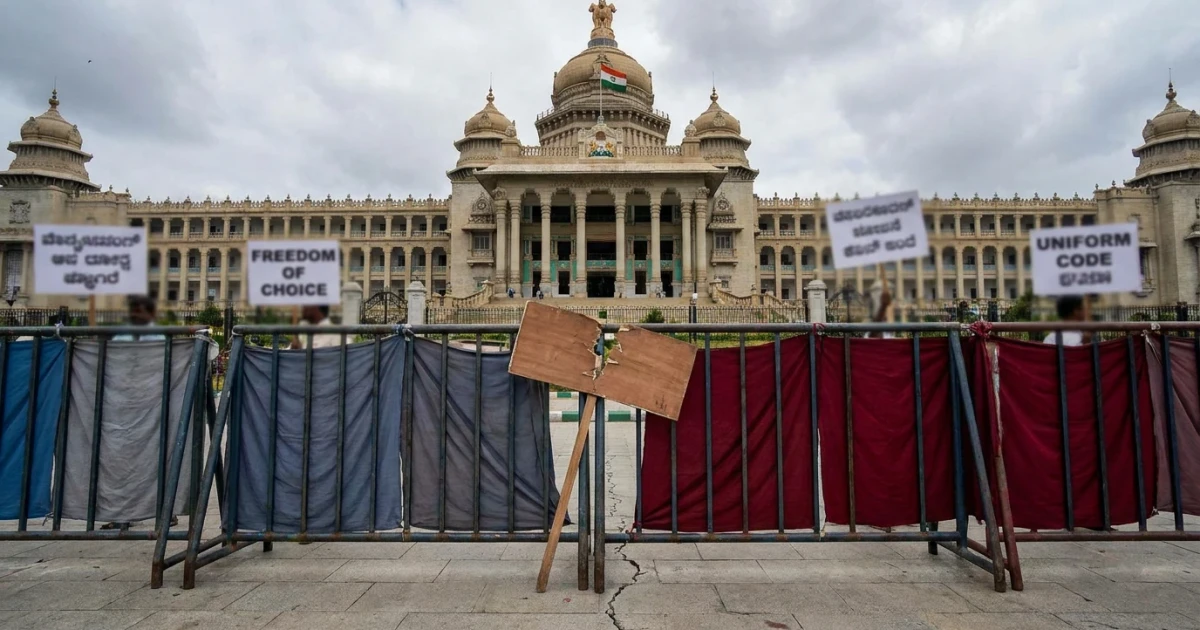
Political tensions in Karnataka have intensified following renewed debate over the state's hijab ban in educational institutions, with the Bharatiya Janata Party (BJP) accusing the Congress party of 'appeasement politics.' The controversy, which has simmered since its inception in early 2022, continues to reflect deeper divisions over religious expression, educational policy, and party strategies in the region.
BJP Accuses Congress of Appeasement
The BJP has publicly criticized Congress for what it considers attempts to curry favor with minority communities by advocating against the hijab ban. As reported by Devdiscourse, BJP leaders argue that Congress’s position undermines uniformity in school dress codes and stokes communal tensions. This accusation comes at a time when political parties are gearing up for upcoming elections, making religious and educational issues especially sensitive.
Background of the Hijab Row
The hijab controversy in Karnataka began when several Muslim students were barred from wearing hijabs in government colleges, citing enforcement of dress code regulations under the Karnataka Education Act, 1983. The issue quickly escalated, drawing national attention and sparking legal challenges around the constitutionality of such bans under Article 25 of the Indian Constitution, which guarantees freedom of religion.
- Karnataka's religious demographics show 13% Muslim population, according to the Pew Research Center.
- State education data from the Karnataka State Education Department reveal a diverse student body across government-run schools and colleges.
Legal and Social Implications
Legal analysis from the Supreme Court Observer notes that the core issue revolves around whether wearing the hijab is an essential religious practice and if state regulations can override individual rights guaranteed by the Constitution. The courts have yet to reach a definitive resolution, leaving the dispute open and fueling political rhetoric.
Scholarly analysis in the Economic and Political Weekly highlights how the hijab controversy has become a proxy for larger debates on secularism, identity, and the role of religion in public spaces. The BJP’s recent statements underscore their commitment to uniformity and discipline in educational settings, while Congress’s advocacy for religious rights signals its outreach to minority voters.
Crime and Communal Context
Data from the National Crime Records Bureau suggest that communal incidents in Karnataka have fluctuated over recent years, often correlating with political and social flashpoints such as the hijab row. Analysts at Brookings Institution argue that such controversies can escalate into broader challenges to India’s secular tradition.
Political Strategies and Public Response
Both BJP and Congress are leveraging the hijab issue to mobilize their respective bases. The BJP frames its stance as a defense of uniformity and law, while Congress positions itself as a protector of minority rights. The public response has been mixed, with student protests, parental concerns, and widespread debate across social media platforms.
- BJP’s criticism of Congress for 'appeasement politics' aims to consolidate its support among Hindu voters.
- Congress’s calls for reconsideration of the ban are seen as efforts to regain trust among Muslim communities.
Looking Ahead
The Karnataka hijab row is expected to remain a contentious issue as courts deliberate its legal merits and political parties continue to campaign around it. Policy outcomes will likely depend on judicial decisions, evolving public opinion, and the complex interplay of religion and politics in Karnataka. For readers seeking more context on the legal framework, the full text of Article 25 and the Karnataka Education Act are available for review.
As Karnataka’s hijab controversy evolves, it remains a barometer for wider debates about secularism, identity, and the boundaries of religious freedom in India’s democracy.