Science
Pompeii archaeologists reconstruct banquet hall ceiling with Greek myths
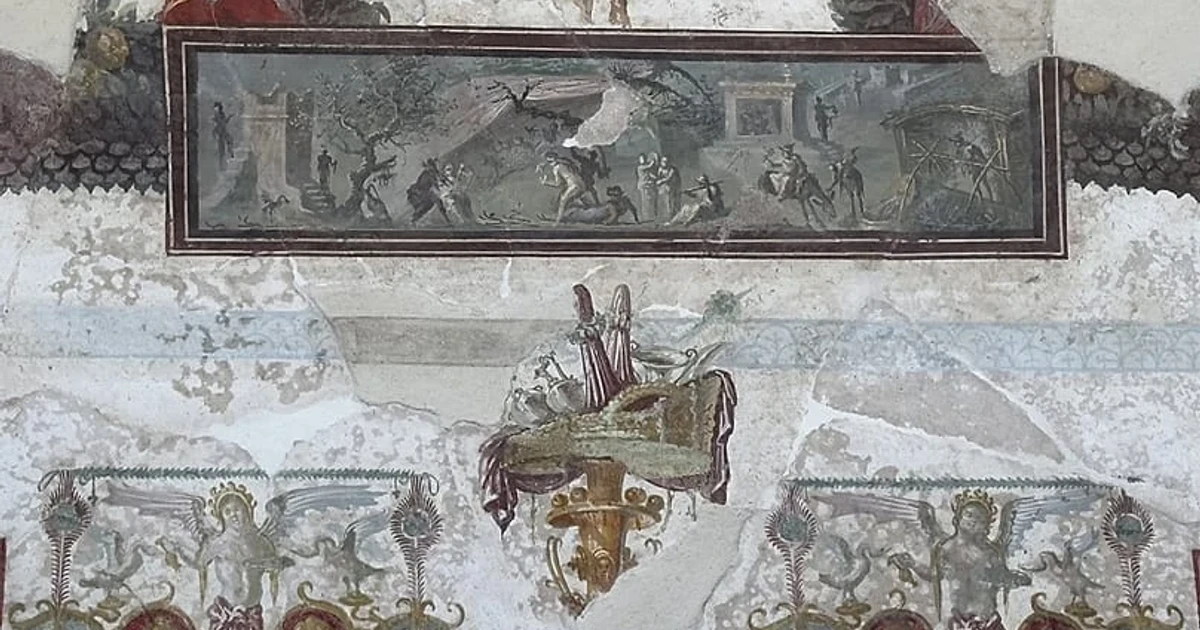
Archaeologists at Pompeii unveiled a partially reconstructed frescoed ceiling vault from a banquet hall, piecing the image together from about 1,000 fragments and restoring a scene of Dionysus and Ariadne.
The ceiling, believed to have belonged to a dining room in an elite home, turns scattered plaster into evidence of how wealth was performed inside Pompeii. Mythological imagery was not just ornament: in a city buried by Mount Vesuvius in A.D. 79, such scenes signaled learning, taste and social rank at the table, where hospitality itself was part of the display.
The reconstruction is part of continuing restoration work at the Pompeii Archaeological Park and shows how conservation has become a precise technical discipline. Fragments had to be cleaned, matched and stabilized before the vault could be reassembled, making the surviving colors and edges legible again after nearly two millennia. What emerges is not only a restored surface, but a clearer record of how Roman households shaped the experience of a meal with architecture and art.
The choice of Dionysus and Ariadne fits a long Pompeii tradition in which banquet rooms carried strong mythological programs. In April 2024, archaeologists in Regio IX uncovered a sumptuous black banquet hall decorated with frescoes inspired by the Trojan War and a mosaic floor, during work to shore up the divide between excavated and unexcavated parts of the site. Together, the two finds show that Pompeii’s elite dining spaces were designed as stages for culture, status and controlled intimacy.
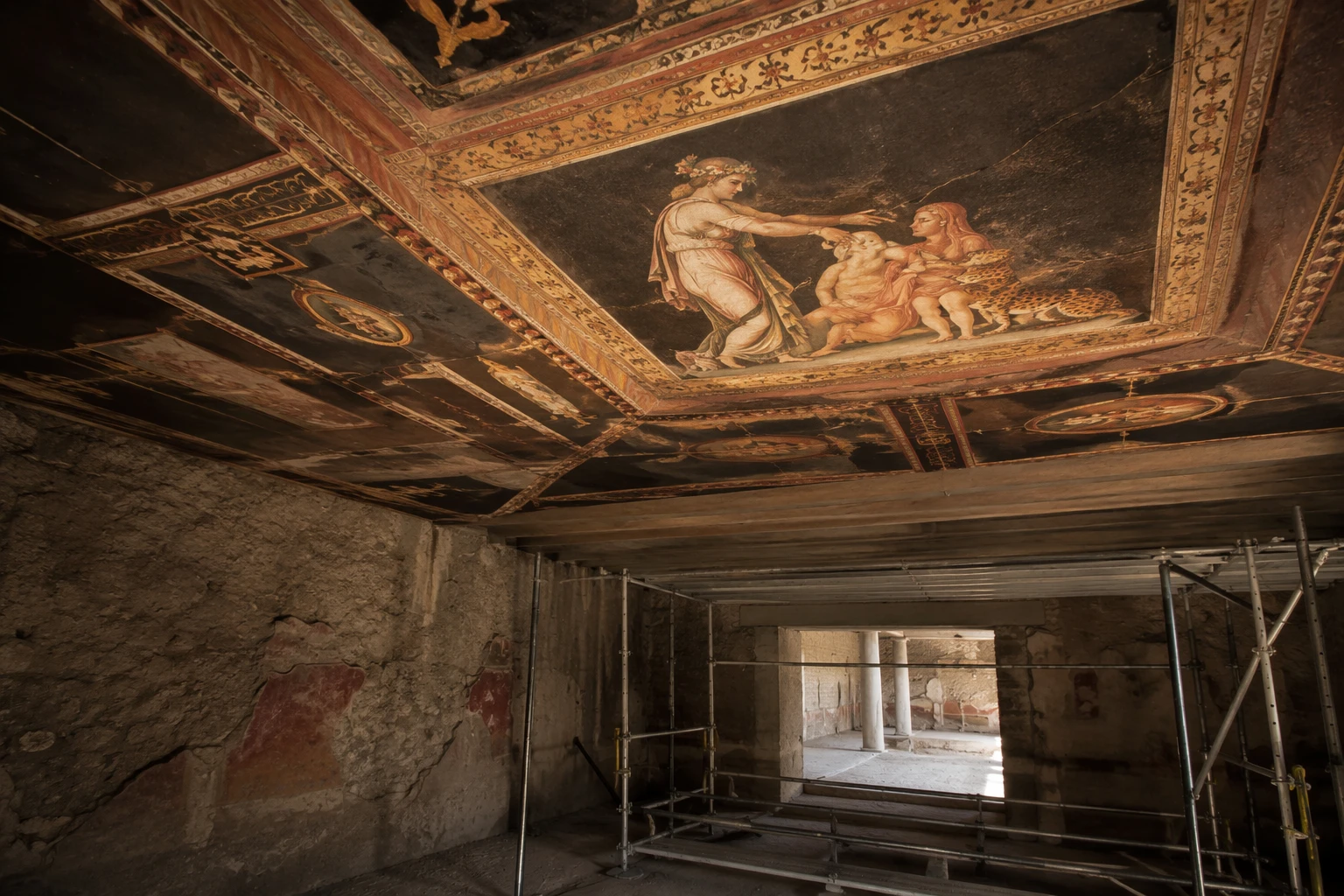
Pompeii’s preservation gives those interiors unusual power. Ash from Vesuvius froze homes, streets, wall paintings and decorative objects in place, leaving conservators to reconstruct what once filled the city’s most private rooms. The newly rebuilt ceiling adds another layer to that record, showing how an affluent household used painted myth to turn a banquet into a performance of refinement and power.
The city remains one of Italy’s most visited sites, after the Colosseum in Rome, and each major reconstruction carries both scholarly and public weight. Here, the fragments do more than complete a ceiling. They reveal how an ancient household used art to turn hospitality into status, and how modern archaeology now rebuilds that world piece by piece.
Sources
- [1]apnews.com
- [2]abcnews.com
- [3]nytimes.com
- [4]euronews.com
- [5]yahoo.com
- [6]rmoutlook.com
- [7]wlns.com
- [8]gulfnews.com
- [9]pompeiisites.org