Technology
Pope Leo Calls for Global Disarmament of Artificial Intelligence
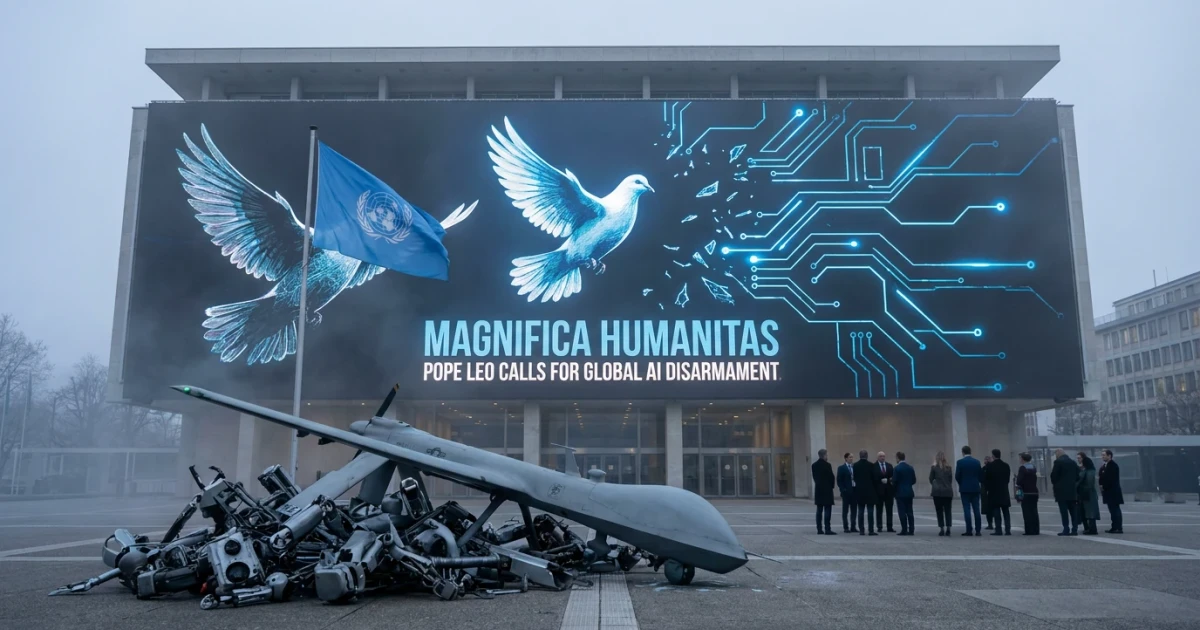
Pope Leo has presented a landmark initiative, 'Magnifica Humanitas,' urging the international community to pursue the disarmament of artificial intelligence (AI) in military and security contexts. The announcement underscores growing concerns among global leaders and civil society over the rapid development and deployment of AI-enabled weapons and decision-making systems.
The Message of 'Magnifica Humanitas'
In his address, Pope Leo called on governments, scientists, and citizens worldwide to recognize the inherent dignity of every person and the need for ethical stewardship in technological advancement. The pontiff's initiative focuses on mitigating the risks posed by autonomous weapon systems and ensuring that international disarmament efforts keep pace with rapid innovation in AI.
Ethical and Humanitarian Concerns
Pope Leo's statement aligns with growing concerns highlighted in recent United Nations reports on the impact of new technologies, including AI, on peace, security, and human rights. The Vatican's position emphasizes that delegating life-and-death decisions to algorithms threatens to undermine human responsibility and moral judgment, echoing the warnings of humanitarian organizations such as the International Committee of the Red Cross (ICRC).
- The UN Office for Disarmament Affairs has documented ongoing debates about regulating autonomous weapons and enhancing transparency around military AI research.
- The Stockholm International Peace Research Institute (SIPRI) has found that global spending on military AI now exceeds $20 billion annually, with investments accelerating in unmanned systems and automated targeting platforms.
- Recent analysis by UNIDIR underscores the need for robust governance frameworks to prevent the uncontrolled proliferation of AI-enabled weapons.
International Response and the Path Forward
Pope Leo’s call comes amid intensifying negotiations at the United Nations, where member states are debating protocols for the regulation and potential ban of autonomous weapons. While some nations advocate for a complete prohibition, others argue for a more measured approach, focusing on transparency and accountability rather than outright bans.
According to data from Statista, the number of countries actively developing military AI has doubled in the past five years, reflecting its growing strategic significance. This trend has prompted experts to warn of a new arms race, with risks not only to global security but also to civilian populations if AI-enabled weapons are used without effective oversight.
Ethical Frameworks and Calls for Action
Organizations like the ICRC have outlined legal and ethical frameworks for the use of AI in military decision-making, stressing the importance of preserving human control over critical functions. The Vatican’s intervention reinforces these calls, urging a broad coalition of stakeholders—including faith communities, scientists, and policymakers—to work toward the universal disarmament of autonomous systems.
Looking Ahead
Pope Leo’s 'Magnifica Humanitas' initiative has injected new momentum into the global debate over AI and military power. As negotiations continue at the United Nations and other international forums, the challenge will be to balance national security interests with ethical imperatives and the protection of fundamental human rights.
For readers seeking to explore the international legal and policy context of this issue, key resources include the UN Office for Disarmament Affairs, the SIPRI analysis on emerging military technologies, the UN OHCHR report on technology and human rights, and background papers from UNIDIR.
As the world grapples with the ethical challenges and security risks of AI in warfare, Pope Leo’s appeal for 'Magnifica Humanitas' may serve as a catalyst for renewed international cooperation and responsible innovation.