World
Pope Visits Angola Shrine Linked to Slave Trade
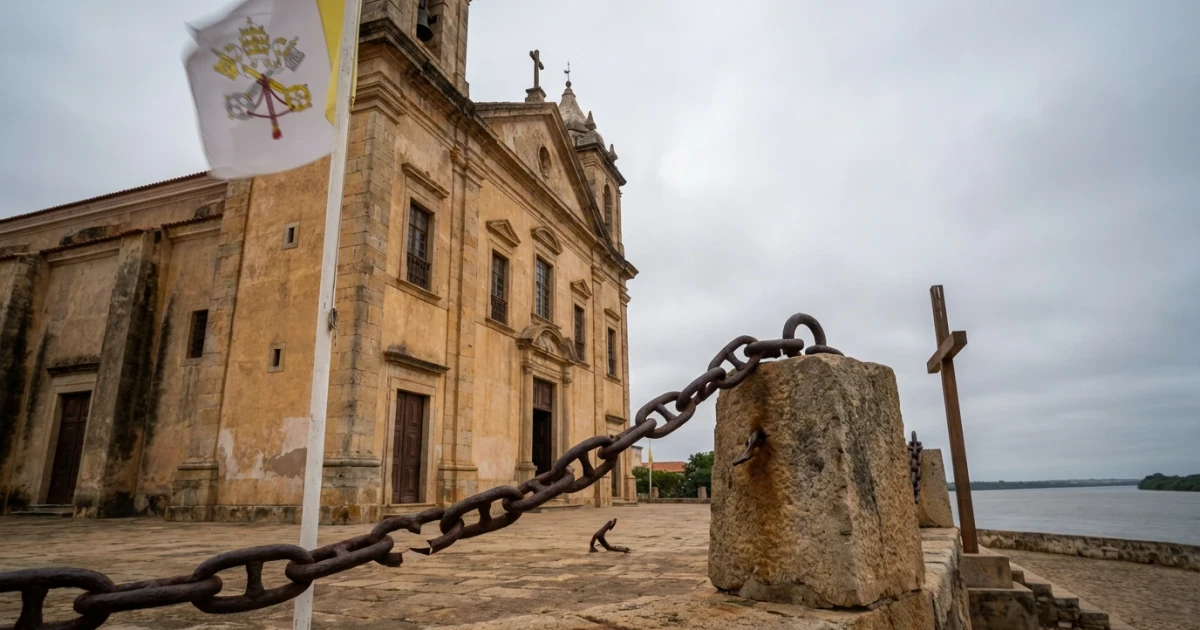
Pope Francis made a symbolic visit to the Muxima shrine in Angola this week, a revered Catholic site that once stood at the heart of the transatlantic slave trade. The Pope’s prayers at the shrine underscored both the tragic legacy of slavery in Angola and the ongoing efforts toward reconciliation and remembrance.
The Muxima Shrine’s Historical Significance
The Muxima shrine, perched on the banks of the Kwanza River, is Angola’s most important Catholic pilgrimage site. Founded in the late 16th century, it became a focal point for the region’s colonial-era Catholic community. However, the shrine’s history is deeply entwined with the slave trade, as it stood adjacent to one of Angola’s largest embarkation points for enslaved Africans bound for the Americas. According to the Trans-Atlantic Slave Trade Database, Angola was among the principal regions supplying enslaved people, with hundreds of thousands forcibly shipped overseas from ports near Muxima.
- The shrine was built by the Portuguese in 1599.
- It became a center for both evangelization and, tragically, the blessing and departure of enslaved Africans.
- Records show tens of thousands were sent from this region during the 17th and 18th centuries.
UNESCO recognizes Muxima as a site of memory and education about the slave trade, reflecting both its spiritual importance and painful past.
Papal Visit: Prayer and Reflection
Pope Francis’s visit to Muxima was marked by solemn prayer and a call to acknowledge the suffering inflicted during the centuries of the slave trade. The Pope’s presence at the shrine highlighted the Catholic Church’s complex historical role in Angola, where missionaries both evangelized and, at times, participated in the systems that enabled slavery. Reports from AP News noted the emotional resonance of the event, with local worshippers gathering in large numbers to witness the ceremony.
The Pope’s visit was not only a religious gesture but also a moment of historical reckoning. Angola’s government, Catholic clergy, and UNESCO have all emphasized the importance of confronting this legacy as part of national healing. The shrine itself remains a place where many Angolans come to seek solace, remembering ancestors who passed through its doors under duress.
Legacy of the Slave Trade in Angola
Angola’s role in the transatlantic slave trade is well documented. As outlined in the Encyclopaedia Britannica’s history of Angola, the region was a central hub in the forced migration of millions of Africans. The Kwanza River was a vital route for transporting captives from the interior to coastal embarkation points. The slave trade database documents thousands of voyages originating from Angolan ports, underscoring the scale of this human tragedy.
- From the 16th to 19th centuries, Angola accounted for nearly 40% of all Africans taken to the Americas.
- The Catholic Church’s role in this history has been debated, with missionaries sometimes acting as both spiritual guides and agents of colonial power.
Despite this, Angolans have worked to preserve Muxima as a site of spiritual strength and remembrance. Research published by UNESCO and academic studies continue to examine how places like Muxima can foster deeper understanding of the slave trade’s impact on African societies and the diaspora.
Contemporary Importance and Healing
Today, the Muxima shrine attracts thousands of pilgrims each year, serving as both a religious destination and a memorial to those lost to slavery. Pope Francis’s visit is expected to renew global focus on Angola’s history and encourage efforts to educate new generations about the realities of the slave trade. The event also reinforces Angola’s ongoing dialogue about the role of faith, memory, and reconciliation.
As Angola continues to confront its historical wounds, the Pope’s prayer at Muxima stands as a call for reflection and unity. The shrine endures not only as a religious landmark but also as a symbol of the resilience of the Angolan people and their commitment to remembering the past while shaping a more just future.