Business
Portable hot showers turn luxury camp gear into a booming market

A boxed shower system with a pump, a gas burner, and a tank now follows campers to campsites, vans, and job sites far from plumbing. Hot water in the backcountry used to mean a stove, a pot, and enough patience to wait for it. That shift has turned portable showers into a niche-luxury category with a real consumer test: whether convenience and comfort are worth hundreds of dollars.
Why this gear exists at all
After several days at a music festival, a week on a remote work site, or a long overlanding stretch, the ability to rinse off with warm water stops feeling like excess and starts looking like utility. The category also fits camping, surfing trips, and vanlife, where sand, sweat, and limited access to showers make a reliable wash-up more valuable than a novelty purchase.
Backpackers, car campers, vanlifers, and overlanders are all looking at portable showers differently, and they do not need the same setup. A weekend camper may only want a light, cheap rinse system. Someone living out of a van or working away from infrastructure may care more about repeatability, water pressure, and heat than about saving a few pounds.
What a $700 shower actually buys
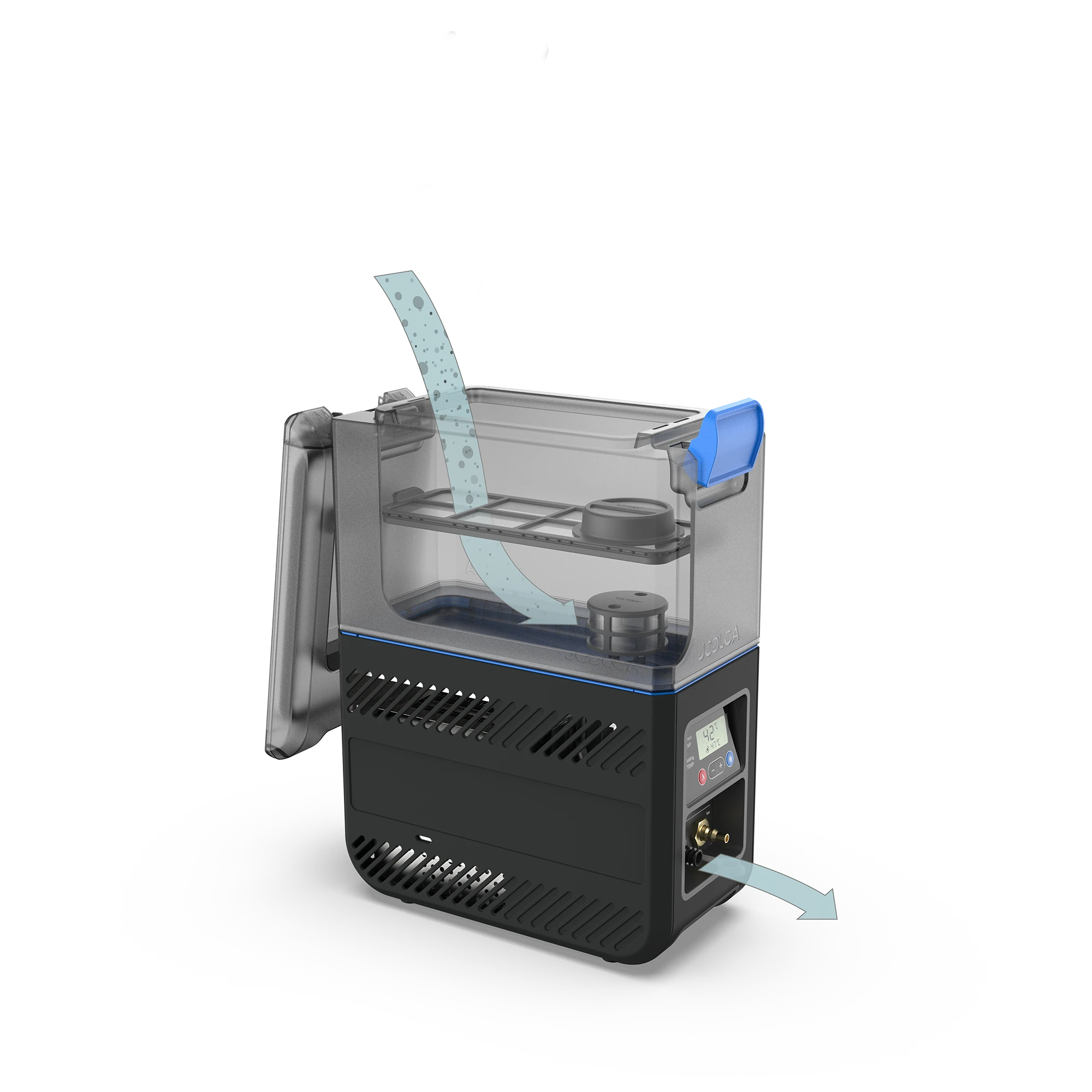
Joolca’s HOTTAP Go is the clearest example of where the category sits now. On the company’s U.S. site, the standalone kit is listed at $554, while bundled versions go higher, including the Outing Kit at $733.50 and the Nomad Kit at $797.30. The base system includes a 12-liter, or 3.2-gallon, tank, a built-in pump, and a gas burner.
The unit is closer to a compact hot-water appliance than a simple camp accessory. Joolca says the unit recirculates water until it reaches the selected temperature, and it can run from a vehicle’s 12V socket or another portable power source. The company also offers free returns, a 30-day trial, and a two-year warranty.
At $554, the HOTTAP Go is already in the territory of a midrange appliance or a premium camp stove system, and the bundled versions climb into the range where many people would instead upgrade a tent, buy a power station, or pay for a high-end roof rack accessory.
How the portable shower market has changed
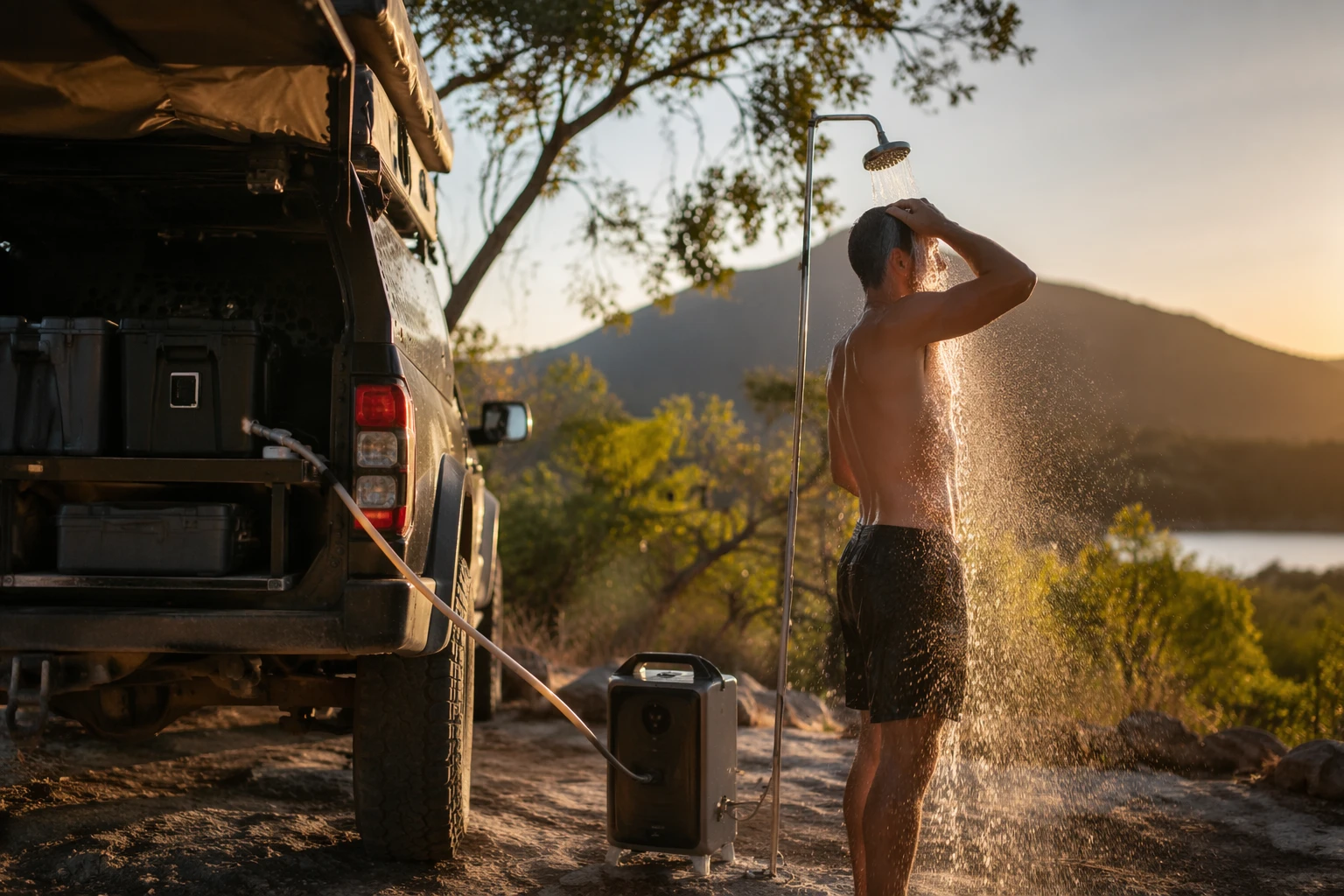
Portable showers are no longer limited to gravity-fed bags slung from a tree. The market includes heated systems, pressurized setups, roof-mounted units, battery-powered models, and even products that adapt from water bottles. The category has evolved from simple gravity and solar bags into instant-heat and pressurized systems, turning a low-cost convenience item into a distinct gear segment.
The market now splits into clear tiers. Gravity bags are the cheapest and simplest, but they depend on sun, height, and patience. Pressurized and heated systems cost more, yet they deliver a steadier experience that better matches repeated use.
What real-world testing says about durability and use
Treeline Review spent four years testing solar shower bags and electric camping showers with a dozen campers across Montana, California, Nevada, and Oregon. Portable showers are tested in dust, cold mornings, awkward camp setups, and the kind of conditions that reveal whether the spray is strong enough and the heating system is dependable.
A failed home water heater created a week-long stress test that forced the gear into everyday household use, not just campground use, showing the boundary between camping gear and emergency gear.
Who really needs one, and who does not
The strongest case for a portable hot shower is for people who will use it repeatedly in places without dependable facilities. That includes overlanders spending entire summers on the road, van dwellers who want a better wash routine than a gym membership, and remote workers at dispersed job sites. For those users, the higher initial price spreads out over repeated use, and the ability to heat water on demand becomes a real quality-of-life upgrade.
The weaker case is for occasional weekend campers who can tolerate cold rinses, use a solar bag, or plan trips around established campgrounds. A basic gravity or solar shower may be enough if the goal is simply to get grime off after a hike. Premium systems make the most sense when hot water, pressure, and repeatability are part of the routine rather than a rare treat.
How to compare a premium shower with cheaper alternatives
Before paying for a $554 system or a bundled kit closer to $800, the decision comes down to a few concrete tradeoffs:
• Gravity bags cost less and need no burner, but they rely on sun and elevation.
• Solar bags are simple for warm-weather trips, yet they are less dependable when the weather turns.
• Heated, pressurized systems add comfort and consistency, but they require fuel, power, and more money upfront.
• Roof-mounted or battery-powered options can improve convenience, though they usually make sense only if the vehicle setup and travel style justify them.
• Water-bottle-adapter showers are compact and cheap, but they are closer to a rinse tool than a full bathing solution.
Sources
- [1]theverge.com
- [2]joolca.com
- [3]fieldmag.com
- [4]treelinereview.com
- [5]joolca.co.uk