World
Powerful 6.3 earthquake in Qinghai kills one, rescue teams search survivors
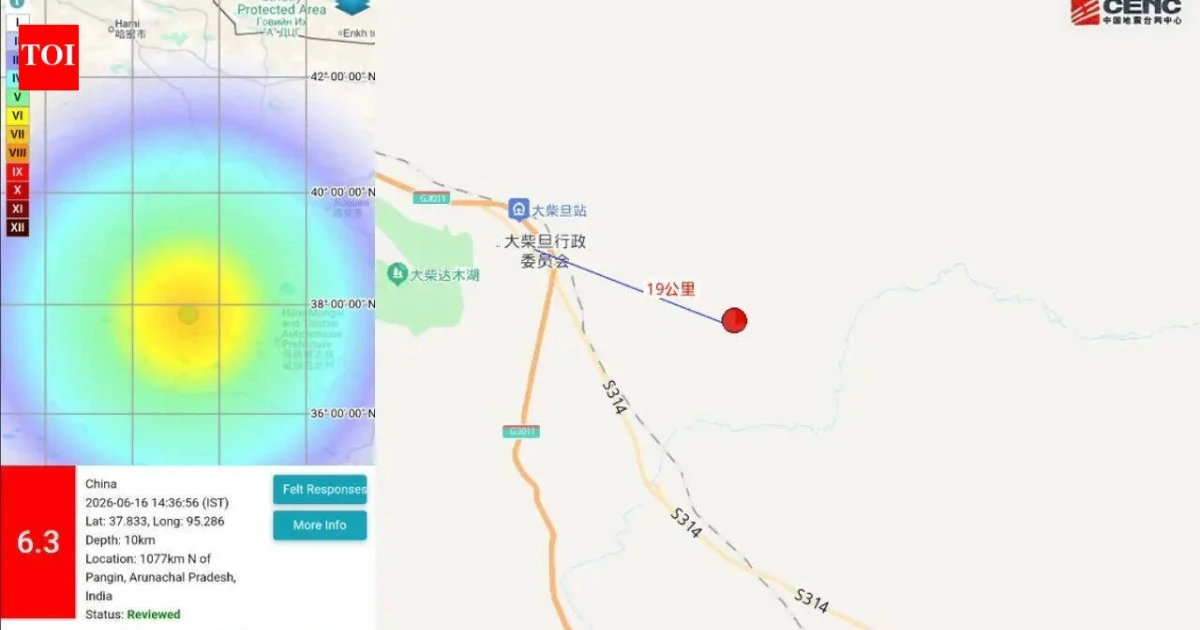
A 6.3 earthquake in Qinghai’s high-altitude Haixi prefecture killed at least one person, injured four and sent rescue crews into a remote, sparsely populated stretch of western China where thin air, scattered settlements and difficult access can slow the search for trapped survivors. Chinese authorities deployed about 320 people to the area as the State Council earthquake relief headquarters and the Ministry of Emergency Management activated a Level-IV emergency response.
The quake struck at 5:06 p.m. Beijing time with a depth of 10 kilometers, according to Chinese seismologists. The U.S. Geological Survey logged the event at magnitude 6.3 at 09:06:55 UTC, placing the epicenter at 37.889°N, 95.403°E, about 260 kilometers southeast of Dunhuang. It hit near Dachaidan, also known as Da Qaidam, in Haixi Mongolian and Tibetan Autonomous Prefecture.
Officials moved quickly to assess the damage in an area where rescue logistics are shaped by altitude and distance more than by dense urban exposure. Local reports said transport, communication, water and power lines within 50 kilometers of the epicenter were still operating normally, but state media also said workers at nearby coal mining enterprises were evacuated and authorities were checking for more casualties and property damage. By 6:40 p.m. local time, all workers from coal mining enterprises near the epicenter had been evacuated, according to local earthquake authorities.
The initial shock was followed by a burst of activity underground. Chinese media reported seven additional tremors within 40 minutes, including one measured at magnitude 4.9, adding urgency to search teams working in unstable conditions. The sequence underscored that this was not a single jolt but a continuing seismic event that could complicate casualty assessments and delay a clearer picture of the toll.
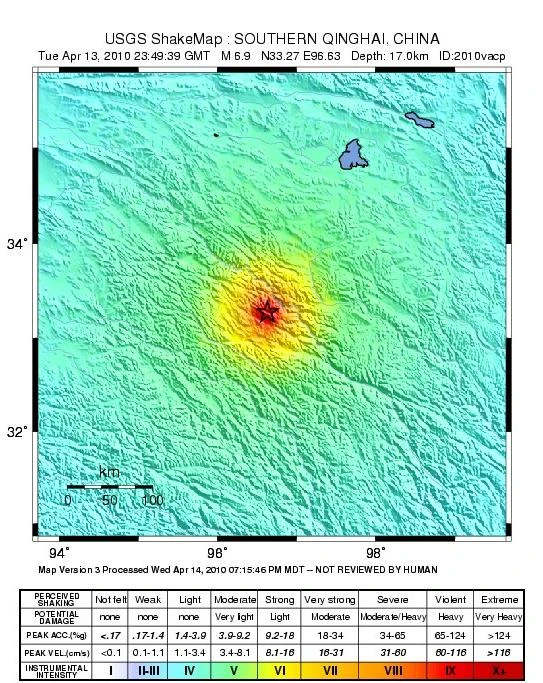
The epicenter lies in the Qaidam Basin, a landscape known for salt lakes, the Gobi desert and wind-eroded yardang formations. That geography helps explain why mining and salt operations are central to the region, and why a quake there carries consequences beyond the immediate loss of life. Shanghai Metals Market said major zinc smelters and mines in Qinghai had not yet reported significant disruption, but industrial exposure remained under close watch.
Qinghai has seen deadly seismic damage before. In December 2023, a 6.2-magnitude quake in neighboring Gansu killed 13 people in Qinghai Province, a reminder of how even remote earthquakes can strain response systems across western China. The latest quake again tested the region’s emergency capacity, where resilience depends on fast coordination across long distances, rough terrain and scattered infrastructure.