US News
Prayer Festival on National Mall Draws Thousands
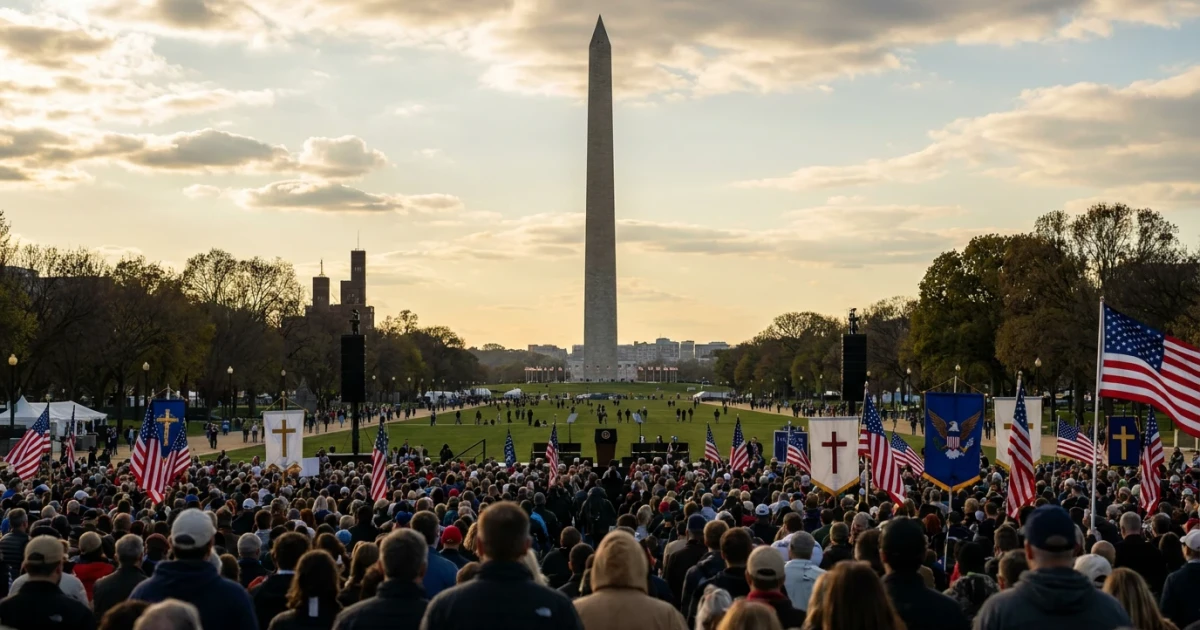
Thousands gathered on the National Mall in Washington, D.C. for a large-scale prayer festival this week, an event that underscored the continued prominence of religion in American public life and drew high-profile support from former President Donald Trump. Organizers and attendees rallied around the theme of welcoming Jesus, reflecting a message that resonated with many participants and sparked discussion about the intersection of faith and politics in the United States.
Event Details and Attendance
The prayer festival, endorsed by Donald Trump, took place on the National Mall, a site historically used for both secular and religious gatherings. According to coverage from The Washington Post, the event drew several thousand attendees, making it one of the larger religious assemblies held in the nation’s capital this year. The National Mall has long served as a venue for significant public expressions of faith, from annual National Day of Prayer observances to one-time gatherings attracting broad national attention. Official event reports confirm the Mall’s status as a site for major religious events with attendance often reaching into the thousands.
- Location: National Mall, Washington, D.C.
- Estimated attendance: Several thousand participants
- Major theme: Public prayer and Christian unity
Political and Religious Significance
The event’s prominence was heightened by the endorsement and involvement of Donald Trump. The Washington Post reported that Trump and his allies used the festival to emphasize a narrative of America as a Christian nation, a theme that has been a point of both inspiration and controversy in recent years. The event’s messaging echoed similar themes seen in previous faith-based rallies, where calls for national unity were closely tied to Christian identity and values.
These public expressions of faith take place against a backdrop of evolving religious demographics in the United States. According to Pew Research Center’s fact sheet on Christians in the United States, Christianity remains the largest religious group in the country, though the share of Americans who identify as Christian has gradually declined over the past decade. Analysis from Pew’s America’s Changing Religious Landscape project highlights both the continued influence of religion in public life and the increasing religious diversity of the population.
Religious Freedom and Legal Context
Religious gatherings on federal property like the National Mall operate within a framework of legal protections and regulations. Federal law, including statutes like the National Day of Prayer Act, recognizes and protects the right to assemble for religious purposes. The U.S. Government Accountability Office details the scope of federal religious freedom protections and enforcement in its official report.
This context has allowed a wide range of religious expressions on the National Mall, from Christian prayer festivals to interfaith services and cultural celebrations. Attendance figures for major religious events, available on Statista, show that such gatherings have been a consistent feature of American civic life, sometimes drawing tens of thousands.
Public Response and Ongoing Debate
The Trump-endorsed prayer festival has sparked debate over the role of religion in public life and the boundaries between faith and politics. Supporters view such events as affirmations of religious freedom and national identity, while critics raise concerns about the implications for religious pluralism and the separation of church and state. This ongoing conversation reflects broader trends in American society, as religious observance continues to shape—and be shaped by—public policy and cultural norms.
Looking Ahead
As America’s religious landscape continues to evolve, large gatherings like the National Mall prayer festival are likely to remain focal points for both community and controversy. Future events will continue to test the balance between public religious expression and the nation’s commitment to pluralism and religious freedom.